Home
/
How to involve small buildings in the energy transition through demand-side flexibility
How to involve small buildings in the energy transition through demand-side flexibility
Enlit Editorial Team
Posted on: 20 October 2023
Antonis Papanikolaou from Que Technologies explains the potential of demand side flexibility for homes and small businesses.
In an exclusive interview with Enlit on the Road in Athens, Antonis Papanikolaou from Que Technologies explains how demand-side flexibility for homes and small businesses has the potential to have a massive impact on the energy transition.
This flexibility stems from the significant quantity of energy consumption data that can be accessed from small enterprises and homes. When we consider that this consumption is happening across millions of buildings at a time, the impact of greater efficiency could be enormous.
Through this data, and technologies such as digital twins, machine learning techniques and AI, insights can be gleamed into “what’s going on in the household, how this energy is used by the people (and) how the appliances use the energy” according to Papanikolaou.
From there, remote monitoring of this data and energy consumption patterns can be enabled by creating what Papanikolaou calls a 'virtual replica' of the building.
“Knowing this, you can also understand how to shift the consumption of appliances, either in time or in power. For example, you understand how people use the appliances and then you can understand what’s the impact of this usage on the building, indoor conditions and so on and then you can also understand how to shift this demand in time.
“And this is what flexibility is all about.”
Also from Enlit on the Road:
Energy communities and the example of the Greek Islands
Preparing for the future of ‘autonomous’ EVs with a digital twin
According to Papanikolaou, the value behind this flexibility is not only in the energy savings potential it offers for small-scale consumers but also in that it enables the participation of communities within the energy transition.
“Demand flexibility is an enabler for several different applications that are relevant for communities.”
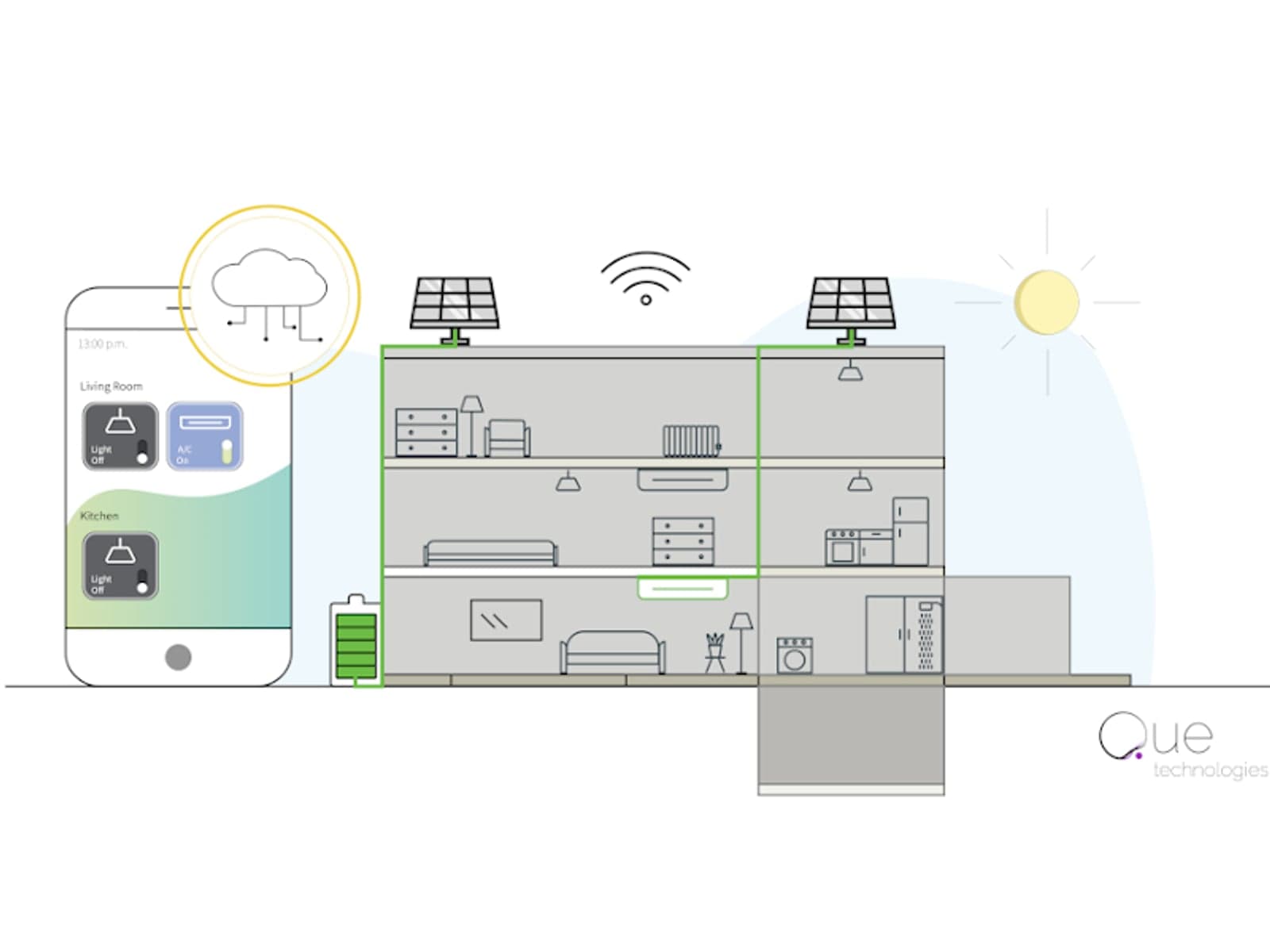
One of these is costs, whereby participating in a tariff scheme allows access to times of cheaper electricity within the day. Community members can then shift consumption of “energy-hungry” appliances to times of cheaper electricity, resulting in lower bills.
“There are demand response markets, even balancing and so on. There are communities which deal with, or have collective self-consumption schemes, so they have their own production and they want to basically maximise the consumption that’s done simultaneously with the generation patterns.”
According to Papanikolaou, this allows energy communities to use flexibility to “match generation and consumption and this results in a benefit for the members, because they’re not exposed to market prices for electricity.
“They have their own production means, stable cost, stable price and they can save on their bills.”
Make sure to watch the rest of the interview to find out about how Papanikolaou and his team are working out the techno-economics behind the business model for this flexibility and the difference in experience between small and large buildings and enterprises when it comes to being flexible assets in the energy transition.
Related tags
Most popular
Join the community for freeAnd get access to all content
Related companies
QUE TECHNOLOGIES
Latest content
+6
DEDALUS: Empowering citizens to shape the future of energy
The DEDALUS project is redefining residential energy demand response by putting end-users at the heart of sustainable energy solutions. Through advanced technology and a user-centred approach, this Horizon project empowers residents to actively manage their energy consumption as part of the green transition, fostering a future where people and technology work together for a resilient energy ecosystem.
- Guest/partner contributor
- 03/02/2025