Partner contentConsumers
How to manage complex water tariffs flexibly and precisely
Guest/partner contributor
Posted on: 18 December 2025
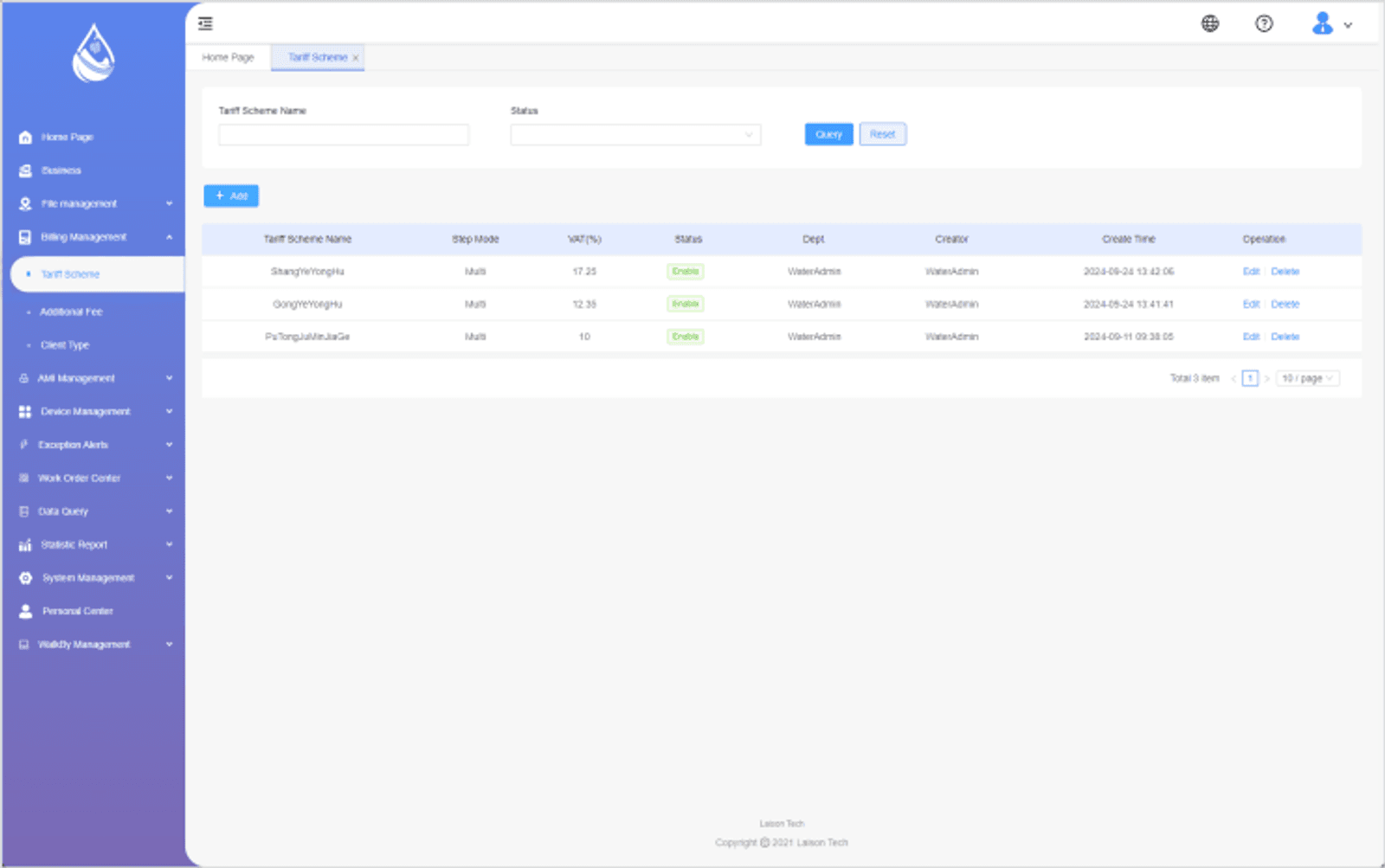
LAISON's powerful billing engine precisely supports complex, multi-tiered tariff configurations and adjustments, adapting flexibly to a range of water pricing policies.

As urbanisation accelerates and the demand for more efficient water management grows, traditional utility billing systems struggle to meet modern needs. Many of these systems rely on outdated technologies that are cumbersome and prone to errors. Manual processes and lack of flexibility in handling complex billing scenarios create inefficiencies and hinder utilities' ability to offer accurate, transparent, and timely billing. These limitations make it difficult to address the diverse needs of modern consumers and to respond quickly to changes in usage patterns, policies, or market conditions.
In response to these challenges, LAISON provides a cutting-edge solution. Its powerful billing engine precisely supports complex, multi-tiered tariff configurations and adjustments, adapting flexibly to a range of water pricing policies. This system effectively overcomes the limitations of traditional management and significantly improves the efficiency and accuracy of water consumption metering and billing.
The advantages of the LAISON system are evident in several key areas:
- Flexible tariff structures
It supports fixed, tiered, and customised solutions, with up to 99 steps of water tariffs to meet various requirements from the water utility. It is designed to handle intricate water pricing scenarios, allowing for dynamic adjustments based on different user groups (e.g., residential, commercial, industrial) and varying usage patterns. - Automated and accurate billing
The intelligent billing engine automatically calculates and applies tiered water rates based on consumption, eliminating manual errors and ensuring billing accuracy for the utility. This automated process helps utilities improve operational efficiency and reduce the risk of errors that can lead to disputes. - Multi-currency support
The system supports multi-currency management, automating exchange rate calculation and currency conversion between primary and auxiliary currencies. This reduces complexity, ensures accurate, and improves overall operational efficiency for global operations. - Flexible water tariff adjustment
The system’s backend interface allows utilities to swiftly modify water prices and fees, ensuring timely adjustments to policy shifts, seasonal changes, and fluctuating market conditions, enabling a responsive and adaptive billing strategy. - Historical debt collection
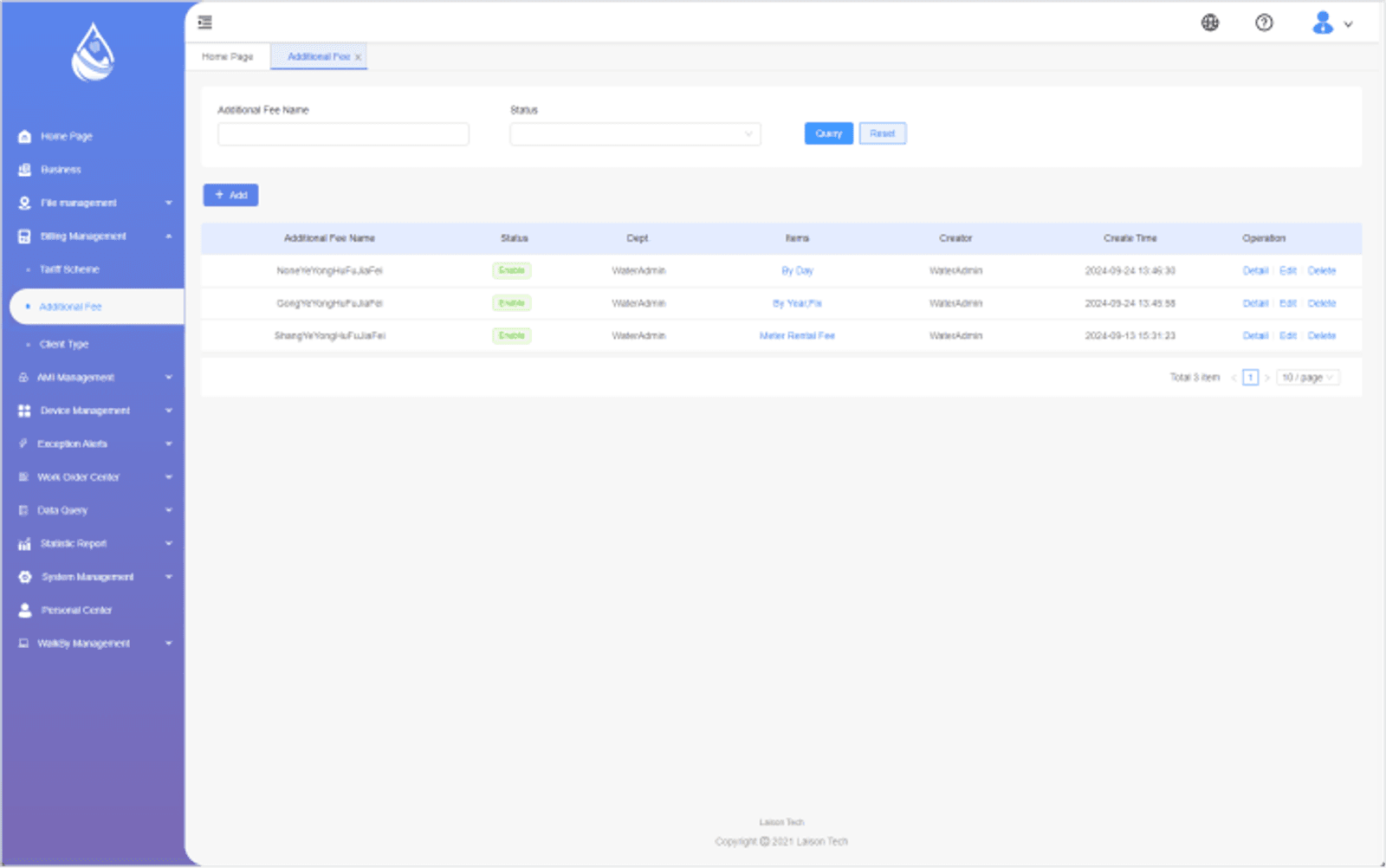
It allows utilities to customise water prices, additional fees (e.g., VAT, meter rent), and historical debts, while automating the calculation and collection of these fees during each water purchase. This helps utilities streamline revenue collection, optimise pricing strategies, and maximise revenue, all while effectively managing different user groups and consumption patterns.
With its intelligent automation and flexible pricing, the system also delivers tangible benefits for end users.
- Enhanced billing transparency
Users can easily access their consumption data via an app, giving them clear, up-to-date information. - Ensured billing accuracy and fairness
By automatically adjusting to tiered pricing, the system ensures fees reflect actual consumption, offering users consistent, predictable billing without unexpected charges. - Optimised usage and cost control
By offering reliable usage data, the system helps both households and businesses manage their expenses, enabling better budgeting and cost control.
The LAISON billing system solves the rigidities and complexities of traditional methods through flexible, automated, and highly accurate tariff configuration. LAISON is committed to delivering the crucial technology upgrade that modernises water management, creating a smarter and more efficient environment for both water utilities and end-users.
Latest content
Partner content
+3
Transforming water management: Shifting from reactive response to proactive leakage management
Non-Revenue Water (NRW) remains one of the most pressing challenges for the global water industry today. The global volume of NRW is estimated at 346 million cubic meters per day, or 126 billion cubic meters annually (Data Source: Liemberger & Wyatt, 'Quantifying the Global Non-Revenue Water Problem'). This shocking figure not only reflects the massive waste of water resources but also severely impacts the financial health of water utilities and restricts long-term sustainable growth.
- Guest/partner contributor
- 13/02/2026