Idaho National Laboratory reveals ‘first-of-a-kind‘ molten salt test loop
Power Engineering International
Posted on: 4 April 2025
-
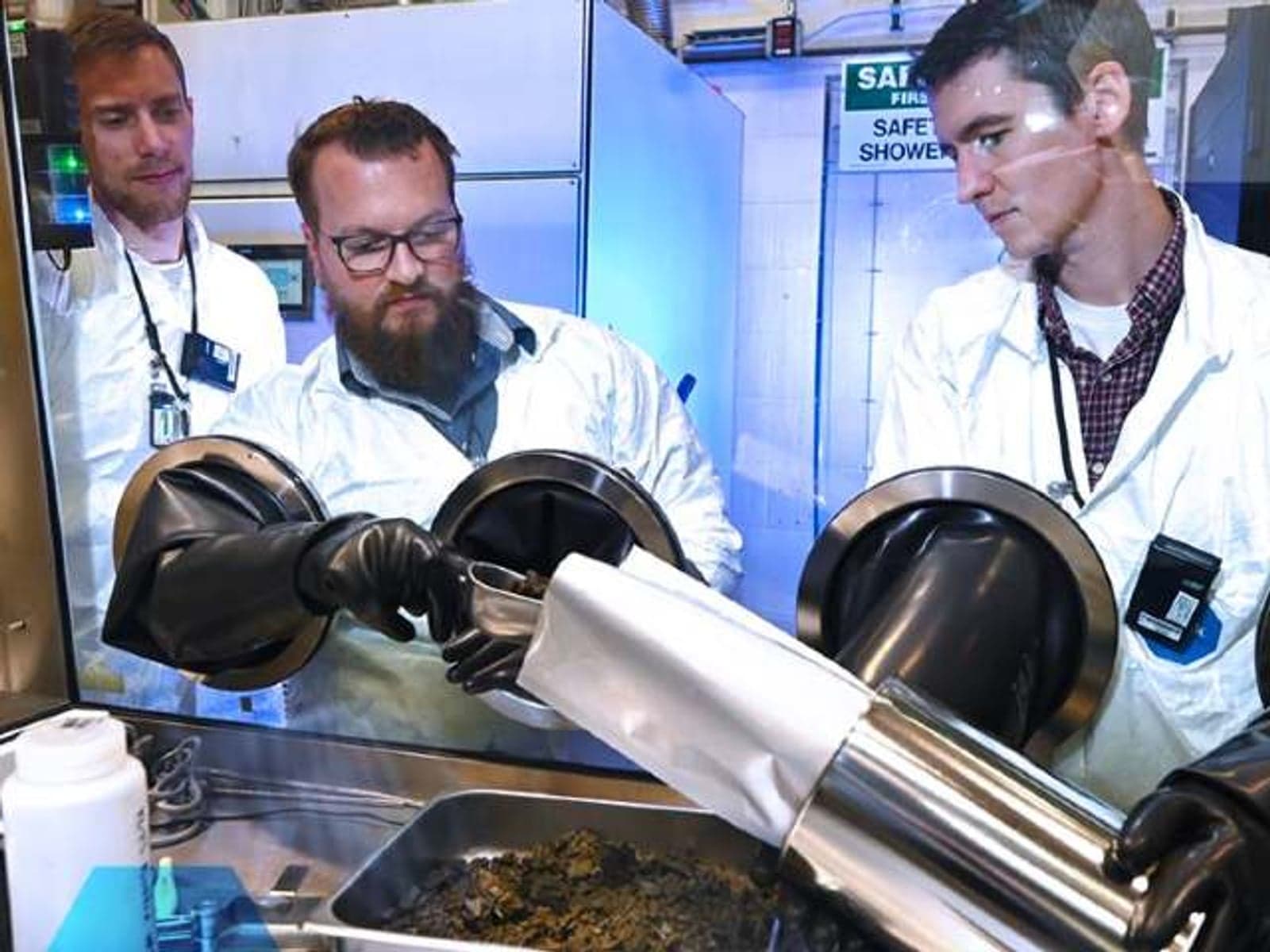
In the US, Idaho National Laboratory (INL) has debuted a new molten salt test loop that will support the development of advanced reactors using molten salts.
The Molten Salt Flow Loop Test Bed is meant to allow for continuous, real-time monitoring and analysis that makes molten salt research more efficient and effective.
It will also be used to help support the “world’s first” fast-spectrum, salt-fueled reactor experiment at the lab scheduled to begin in the 2030s, INL said.
INL researchers recently conducted an inaugural run of the test bed to evaluate the performance of chloride-based, molten salt technology.
“Most test loops focus on testing the structural materials,” said Ruchi Gakhar, lead scientist at INL’s Advanced Technology of Molten Salts department. “After a few hours of operation, they dismantle the loop to study how the materials have degraded. In contrast, our loop at INL is unique because it serves as a test bed for advanced electrochemical sensors and bubbler instruments. These instruments allow us to monitor and investigate material performance in real-time while the loop is still operational. This approach has not been implemented or explored in flow loops at other institutions.”
The new molten salt test flow loop will inform the development of molten salt reactors, such as the Molten Chloride Reactor Experiment (MCRE), by helping to identify corrosion-resistant materials, sensors, and instrumentation capable of persisting in high-temperature environments.
MCRE is one of several advanced reactor designs being supported by the Department of Energy’s Advanced Reactor Demonstration Program to help unleash more energy in the United States.
In addition to creating a flowing environment, where salt moves through heating and cooling conditions, the molten salt test loop can also drain and store salt in a tank when inactive, which is meant to increase the test bed’s usage and longevity.
“The instrumentation and sensor testing in flow loop environment is one-of-a-kind,” said Gakhar. “By understanding how sensors react to high temperature flowing molten salt, we hope to advance the readiness of future molten salt reactors.”
Have you read?
Italy’s government announces support for nuclear start-up newcleo
Finland’s Steady Energy secures funding for heat-only SMR pilot
What are molten salt reactors?
Molten salt reactors use molten salt as a coolant, and in some instances as a liquid fuel too. They offer enhanced safety features and operate at high temperatures to generate reliable and secure electricity, as well as process heat which can be used by industry, per the US Department of Energy (DOE).
A key challenge in molten salt reactor research is finding materials, sensors and instrumentation that can withstand the hot and corrosive environment within the reactor created by molten salt. Additionally, researchers are hoping to determine that the salts can flow smoothly and do not damage the reactors they cool, as the nuclear and chemical reactions that result can cause gases to bubble out of the molten salt, which runs the risk of impacting reactor neutronics and thermal hydraulic performance.
“In the same way a radiator is crucial for a car’s performance, our molten salt flow loop is vital for (molten salt reactor) performance,” said Gakhar, who spent three years on a team developing the system. “The loop allows us to maintain precise temperature control and heat transfer.”
Last summer, Oak Ridge National Laboratory (ORNL) created its “first-ever” custom glass test cell to observe how gases behave inside a molten salt reactor. The test cell will be used to observe the “complex chemistry” that can occur in molten salt fueled reactors, ORNL said, and its data will be used to help verify existing computer codes and modeling software to better predict the reactors’ overall performance.
Molten salt reactors are still under development, but could be commercialised “early next decade,” ORNL said.
The glass test cell can hold up to one liter of liquid molten salt. The ORNL team injected small helium and krypton bubbles into the cell to observe how they moved. ORNL said this experiment allowed researchers to observe and measure gas bubble velocity, size distribution and interactions with neighboring bubbles using high-speed cameras.
California-based Kairos Power is working on fluoride salt-cooled, high-temperature reactor technology. The company’s 35MW thermal reactor will test the concept of using molten salt as a coolant and test the type of nuclear fuel. In December 2023, the US Nuclear Regulatory Commission (NRC) issued a construction permit to Kairos for its Hermes test reactor in Oak Ridge, Tennessee. This was the first construction permit NRC has issued for a reactor that uses something other than water to cool the reactor core.
Last July, Kairos Power began construction on the Hermes reactor. The project aims to be operational in 2027. Hermes’ primary objective will be to demonstrate Kairos Power’s ability to produce affordable nuclear heat. Hermes will not produce electricity. Kairos Power aims to develop a larger version for commercial electricity that could be used in the early 2030s.
Earlier this year, Natura Resources entered into a Memorandum of Understanding (MOU) with Texas Tech University (TTU) and Abilene Christian University (ACU) to advance its molten salt reactor technology. This collaboration, which includes the Texas Produced Water Consortium (TxPWC) at Texas Tech, focuses on integrating molten salt reactor technology with water desalination systems. The goal is to provide a sustainable solution for water scarcity by purifying produced water from oil and gas operations, making it available for agricultural and other uses.
The Natura MSR-100 is a small modular reactor that utilizes molten salt reactor technology. Key features of the Natura MSR-100 include a liquid-fueled design, high-temperature operation (exceeding 600°C), safety features like lower pressures and passive safety mechanisms, and a capability for desalination from the high heat generated.
Last September, The Nuclear Regulatory Commission (NRC) issued a construction permit to Abilene Christian University (ACU) to build the Natura MSR-1, marking the first US university research reactor approved in more than 30 years. ACU’s molten salt research reactor (MSRR) will be the first deployment of the Natura MSR-1, a 1MW thermal molten salt reactor system. This construction permit is only the second ever for an advanced nuclear reactor, ACU said.
Less red tape?
Last week, U.S. Secretary of Energy Chris Wright announced new actions to “ease burdensome permitting rules and regulations” for construction projects at the Department’s 17 National Labs.
“With President Trump’s leadership, we have a unique opportunity to advance energy abundance, lead the world in scientific and technological innovation, and modernize our weapons stockpiles,” Secretary Wright said. “Unfortunately, over the years, burdensome regulations delayed the important work being done at our National Labs. Currently, many of our nation’s most critical weapons development sites rely on aging facilities, some even dating back to the Manhattan Project.”
Among the actions “to be implemented immediately” are:
- Revise delegated project authority within DOE Order 413.3B from $50 million to $300 million specific to the National Laboratories managed under M&O contracts. Tailor DOE Order 413.3B to only require DOE independent project reviews at specific critical decision points on projects between $300 million – $1 billion, subject to sustained successful project execution. Capital asset projects with a total project cost of more than $1 billion shall continue to follow the full scope of requirements established in DOE Order 413.3B.
- Expand the use of the National Nuclear Security Administration’s “OSHA-Plus” framework for subcontracted construction projects at the National Laboratories. The framework uses a tailored, graded approach to meet Title 10 Code of Federal Regulations (CFR) Part 851, Worker Safety and Health Program.
- Assess the “benefits and risks” of removing construction labor agreement provisions from National Laboratory contracts. Risks to be evaluated include increased potential for labor strikes and local community concerns, Secretary Wright said.
- Revise National Laboratory contract clauses on Employee Compensation: Pay and Benefits to eliminate requirements that are not mandated by statute/regulation or are “not necessary” to monitor DOE’s financial liabilities related to defined benefit plans.
In addition to the above actions for immediate implementation, the Laboratory Operations Board Director will establish a working group to identify opportunities to “streamline” and develop new procedures and timelines for Strategic Partnership Projects (SPP) and Cooperative Research and Development Agreements (CRADA). Proposed improvements or streamlining initiatives will be provided to the Office of the Secretary within 30 days.
Originally published by Sean Wolfe on power-eng.com