India’s fast breeder reactor hits criticality in nuclear energy milestone
Pamela Largue
Posted on: 8 April 2026
The 500MWe Prototype Fast Breeder Reactor marks a milestone in the country’s move to thorium-based reactors.
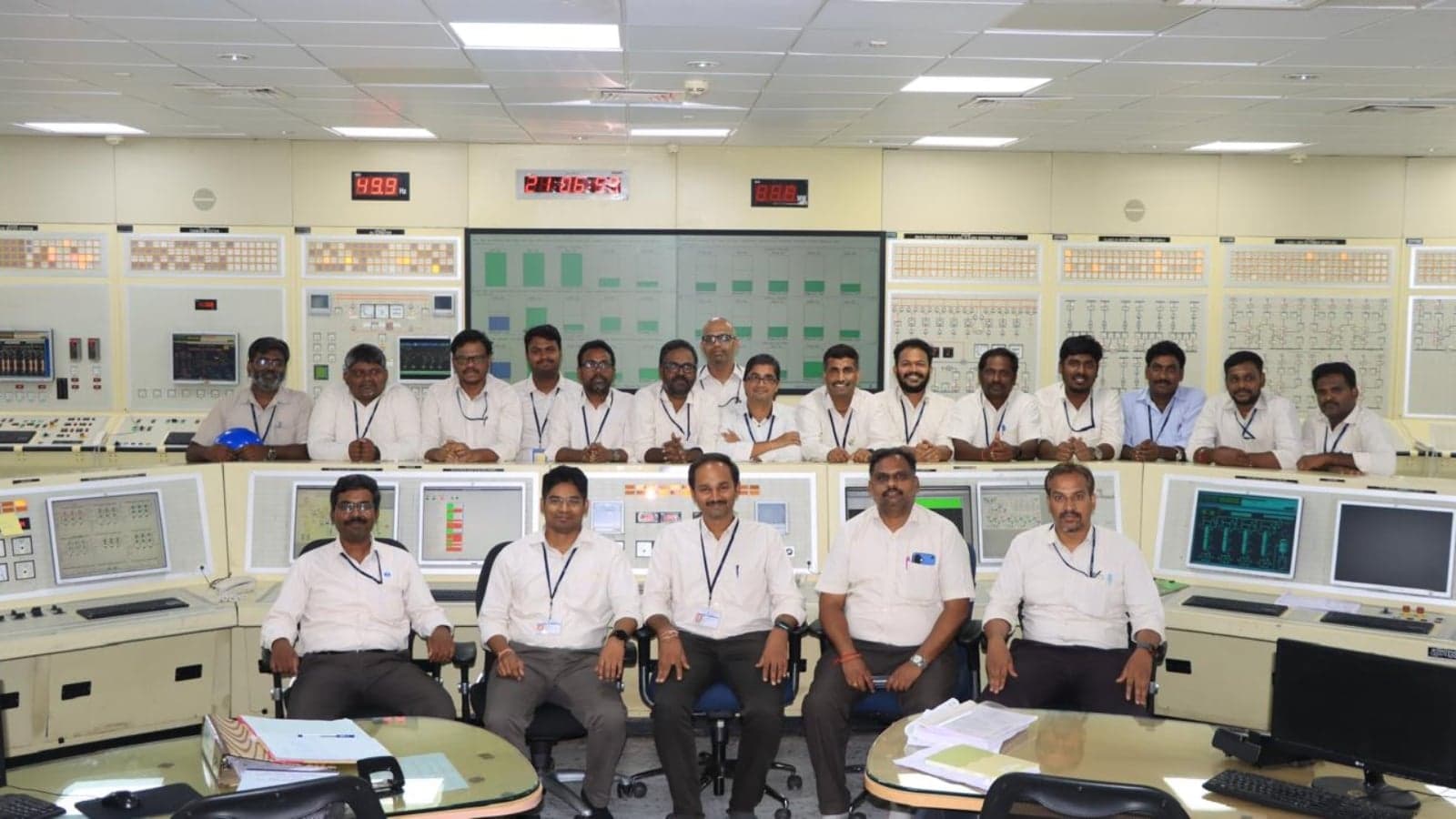
India’s Department of Atomic Energy has announced that a 500MWe Prototype Fast Breeder Reactor (PFBR) has successfully achieved the start of a controlled fission chain reaction, also known as criticality.
It marks a milestone in the country's long-term nuclear energy plan, a three-step programme to move from the current fleet of pressurised heavy water reactors to the future deployment of thorium-based reactors.
India has abundant thorium reserves, however, uranium reserves are limited.
Fast breeder technology will help the country leverage its thorium resources for long-term clean energy generation, while also preparing for large-scale use of thorium in the future.
The Department of Atomic Energy explains that unlike conventional thermal reactors, the PFBR uses Uranium-Plutonium Mixed Oxide (MOX) fuel.
The core of the reactor is surrounded by a blanket of Uranium-238. Fast neutrons convert fertile Uranium-238 into fissile Plutonium-239, and this allows the reactor to produce more fuel than it consumes.
The reactor is designed to eventually use Thorium-232 in the blanket.
Have you read?
European Commission sets course for SMR deployment in early 2030s
UK’s Advanced Nuclear Framework to speed up nuclear energy deployment pipeline
Through a process called transmutation, Thorium-232 will be converted into Uranium-233, which will ultimately fuel the third stage of India’s nuclear power programme.
Besides maximising fuel efficiency, the reactor also incorporates advanced safety systems, high-temperature liquid sodium coolant technology and a closed fuel cycle approach that enables recycling of nuclear materials, thereby improving sustainability and reducing waste.
The reactor was developed and designed by the Indira Gandhi Centre for Atomic Research and built and commissioned by Bharatiya Nabhikiya Vidyut Nigam Ltd, a unit functioning under the Department of Atomic Energy.
While Russia has traditionally been one of the front runners in the development and use of this technology, the fast breeder programme will allow India to become more competitive in this space. It will support the development of next-generation nuclear technologies and will foster the growth of local supply chains, skills and knowledge.
Indian Prime Minister Narendra Modi on X commented on how the the achievement marks “a defining step in its civil nuclear journey”.
As part of its infrastructure development efforts, India is planning to build out its nuclear capacity to at least 100GWe by 2047.
As the country is outside the Nuclear Non-Proliferation Treaty, it was largely excluded from trade in nuclear plant and materials for 34 years. This hampered development of civil nuclear energy until 2009.
The World Nuclear Association highlights that trade bans and a lack of indigenous uranium has forced India into uniquely developing a nuclear fuel cycle to exploit its reserves of thorium.