European Commission sets course for SMR deployment in early 2030s
Jonathan Spencer Jones
Posted on: 13 March 2026
The new European Commission's small modular reactor (SMR) strategy is aimed to deliver the region’s first deployments by the early 2030s.
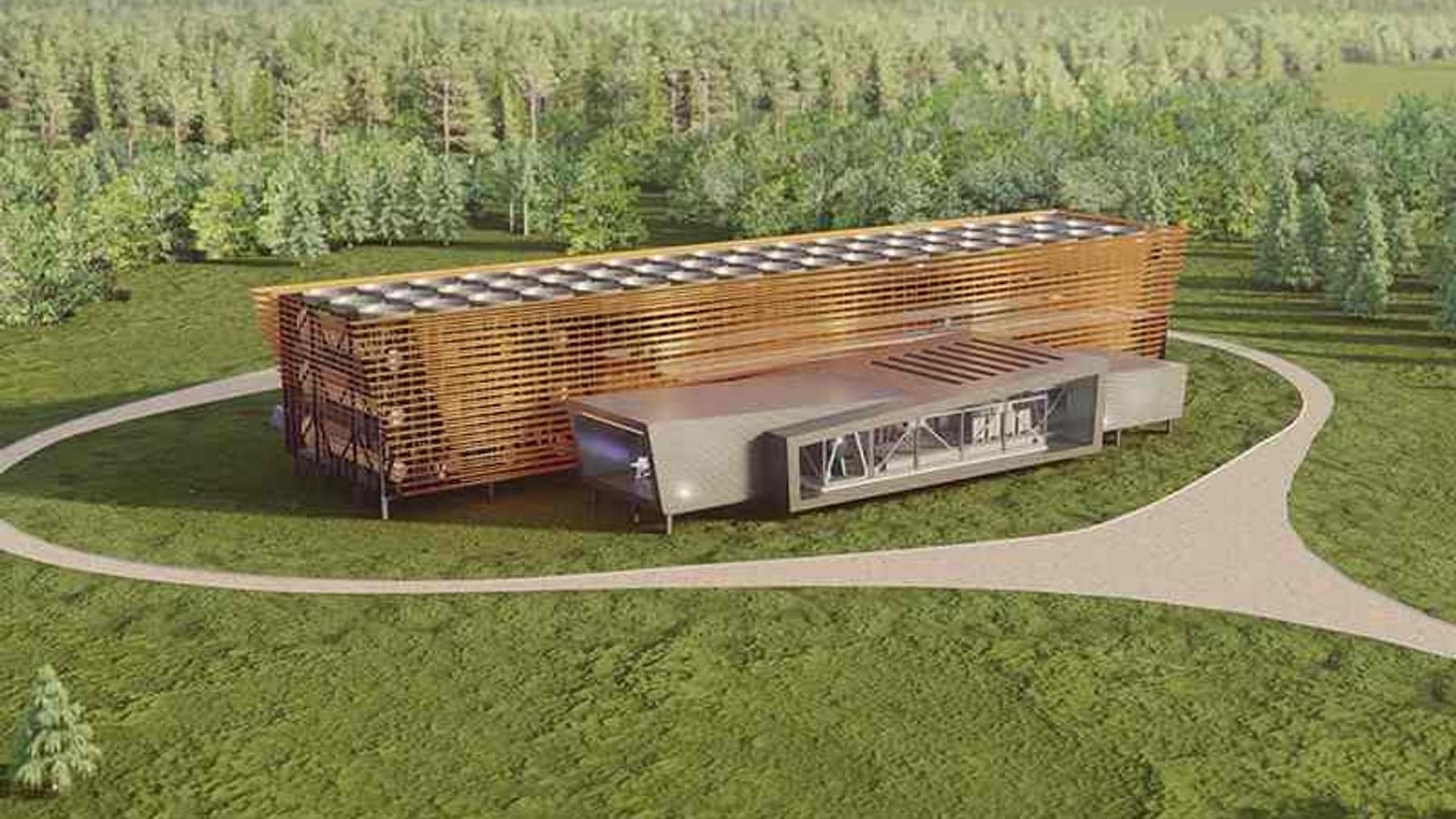
The strategy sets out a series of actions to accelerate SMR development in the EU, with preliminary estimates of its potential capacity in Europe reaching between 17GW and 53GW by 2050.
Clean electricity generation is obviously the primary target but a range of other use cases are envisaged, including heat and steam for industries such as chemicals and district heating. The further benefit is that with their relatively small size, SMRs could be deployed in situ at locations such as industrial sites, ports or high-demand data centres, while portability is also in prospect with microreactors.
“We are setting a clear pathway for Europe to move from research to concrete projects as soon as possible,” said Dan Jørgensen, Commissioner for Energy and Housing, of the strategy.
“Europe must remain at the forefront of next-generation nuclear technologies, including advanced modular reactors, because there's no competitiveness without industrial leadership.”
Currently, Europe, despite its considerable nuclear expertise, is lagging behind countries including the US, UK and China in the development of SMRs. But the Commission envisages that SMRs could mobilise entire value chains across countries and sectors to become one of the region’s next major industrial development projects.
Efforts in this direction have already taken place by the European Industrial Alliance on SMRs in its action plan to 2029, released in September 2025. The new Commission strategy should support its delivery with the Alliance due to play a key role in driving implementation alongside interested countries.
The first strategy action is to identify a limited number of the most promising SMR designs on which Europe could secure global leadership, with further research, innovation and skills development backed by start-ups, scale-ups, research institutions and industry organisations key.
Other urgent actions are to develop a competitive European supply chain in alignment with local content requirements by promoting collaboration between suppliers and developers and to develop and implement industrial standards supporting a fleet approach to SMR deployment and modular manufacturing.
Also of interest
Data centres and SMRs are a ‘marriage made in heaven’, says Sandro Baldi of EDF
Norway greenlights assessment for nuclear SMR project
The strategy also promotes close regulatory cooperation, including joint early reviews and regulatory ‘sandboxes’ under the net zero industry act, as well as the establishment of 'SMR valleys' to further promote business collaboration and manufacturing.
An SMR coalition is proposed for interested EU countries to advance policy, regulatory and economic coordination for selected SMR designs. In addition, simpler administrative procedures are encouraged for export controls between EU countries for SMR projects, as well as the protection of European intellectual property developed in the context of SMRs.
Broadly, there are two types of SMRs – light water reactors that have evolved from existing water-cooled nuclear reactors and advanced modular reactors based on generation IV designs with different coolants such as liquid metal or molten salt, while microreactors typically produce less than 10MW of electric power.
As part of its work, the SMR Alliance has identified eight projects, which are being closely monitored and receiving technical development support and in essence form the basis for advancing Europe’s SMR delivery.
These are Nuward (EDF), European BWRX-300 SMR (OSGE), Rolls Royce SMR (Rolls-Royce SMR Ltd), CityHeat (Calogena, Steady Energy), NuScale VOYGR™ SMR (RoPower Nuclear S.A), EAGLES (Ansaldo Nucleare, SCK-CEN, ENEA, RATEN), European LFR AS project (newcleo) and Thorizon One project (Thorizon).
EU nuclear investment needs
Alongside the SMR strategy, the Commission published its programme on nuclear investment needs.
At the end of 2024, there were 101 nuclear power reactors operating in the EU – about one quarter of the global total – with an installed net capacity of about 98GW.
By 2050, the capacity from large-scale nuclear reactors is expected to increase to about 109GW, based on the national climate plans and notified investment projects, requiring investments of around €241 billion in present value terms, split between new-builds accounting for €205 billion and lifetime extensions for the remainder of €36 billion.
This excludes the additional investments required to deliver the potential of SMRs and nuclear fusion, which are not specified in the programme document.
In line with the just-launched clean energy investment strategy, private investment will be necessary for the delivery of all these advances.