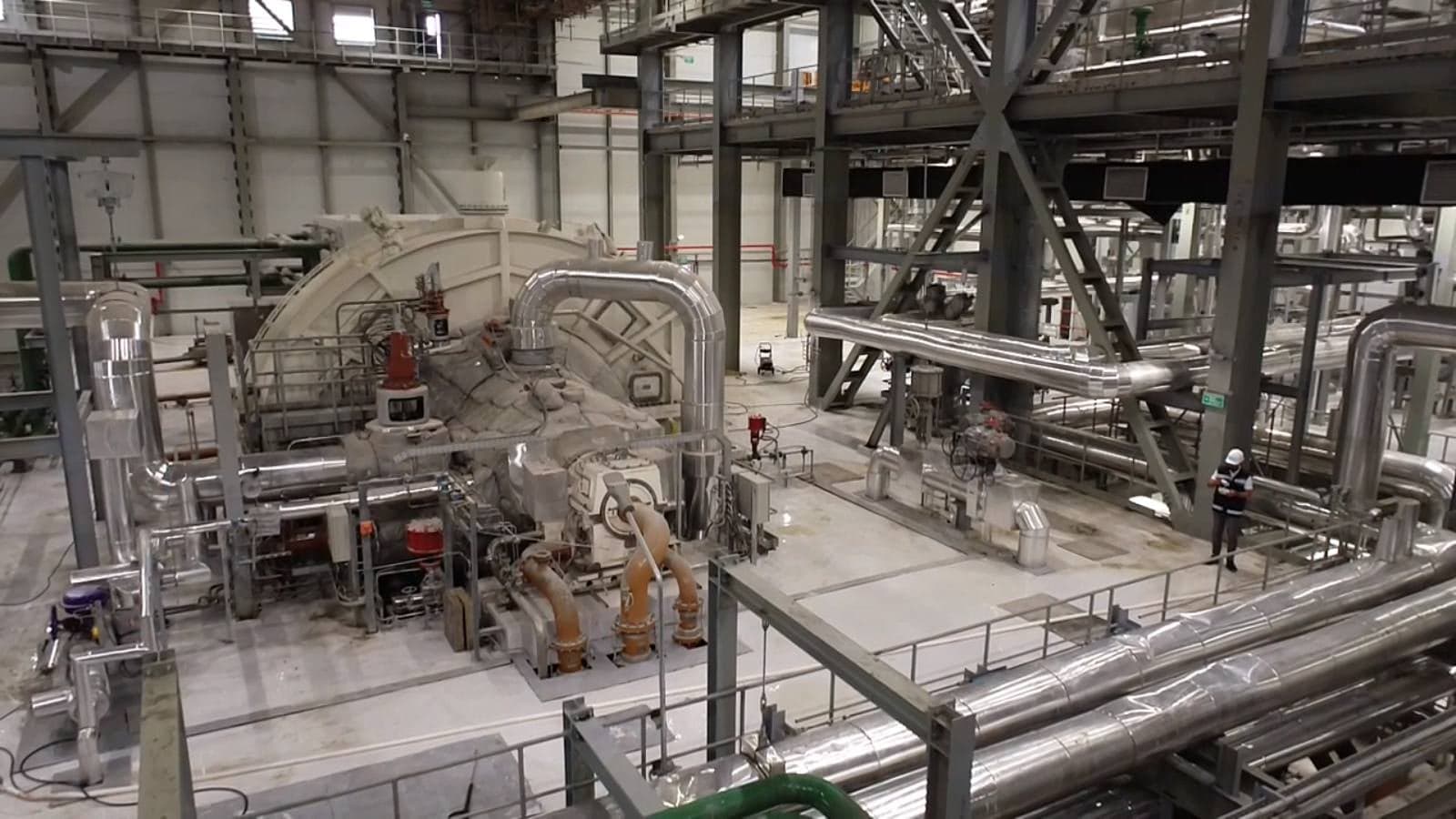
Italy’s first CCS project gains first injection
Jonathan Spencer Jones
Posted on: 4 September 2024
Italian energy companies Eni and Snam have announced the start of injection activities in the reservoir for phase 1 of the Ravenna CCS project.

Italian energy companies Eni and Snam have announced the start of injection activities in the reservoir for phase 1 of the Ravenna CCS project.
The Ravenna CCS project, Italy’s first carbon capture and storage project and a European project of common interest, is aimed to support the decarbonisation of hard to abate industrial activities in the Emilia-Romagna region in the north of the country in which it is located.
Phase 1 aims to capture, transport and store the CO2 emitted by Eni's Casalborsetti natural gas treatment plant, in the municipality of Ravenna, estimated at about 25,000t/year.
Once captured, the CO2 is transported, through reconverted gas pipelines to the offshore Porto Corsini Mare Ovest platform for injection and final storage at a depth of 3,000m in the depleted Porto Corsini Mare Ovest gas field in the northern Adriatic continental shelf.
Have you read?
Emerging carbon capture innovations will contribute to net zero objectives
Energy Transitions Podcast: Weighing the true cost of carbon capture
The project is said to be already delivering a reduction of over 90% in CO2 emissions from the Casalborsetti plant's chimney, rising to peaks of 96%.
With this the Ravenna CCS is claimed the world’s first industrial-scale project with such high levels of carbon capture efficiency.
Also noteworthy is that the facility is fully powered by electricity from renewable sources, avoiding further CO2 emissions.
“A project of great importance for decarbonisation has become an industrial reality,” says Claudio Descalzi, CEO of Eni.
“CO2 capture and storage is an effective, safe and available practice now to reduce emissions from energy-intensive industries whose activities are not electrifyable. We are facing the complexity of the energy transition with concreteness and determination, increasing and enhancing the solutions available to us to decarbonise our activities and the various areas of economic and industrial systems.”
Stefano Venier, CEO of Snam, describes the company’s commitment to the Ravenna CCS project as an integral part of its strategic plan.
Venier adds that the project is consistent with Snam's intention to position itself as a multimolecule operator offering even the most energy-intensive entities the opportunity to undertake decarbonisation paths that preserve their competitiveness.
“To do this, we leverage our historical skills in the transport and storage of molecules, with particular reference to the Po Valley, in which we are already rooted with strategic assets that have been supporting the economic and social development of the country for decades.”
The Ravenna CCS project is an equal joint venture between Eni and Snam.
Over the coming years with phase 2 industrial-scale development of the project, the storage potential should increase up to 4Mt/year of CO2 by 2030, in line with the goals defined by Italy’s Integrated National Energy and Climate Plan.
To this end, the jv intends to initiate the necessary procedures to obtain the permits in accordance with the regulatory framework and in collaboration with the authorities, stakeholders and the territory.
With the total storage capacity of the depleted gas fields of the Adriatic Sea, and based on market demand, the volumes of CO2 captured and stored underground are estimated could reach 16Mt/year.
Alongside these activities Eni and Snam are also carrying out research and development initiatives for possible future reuse of the captured CO2.