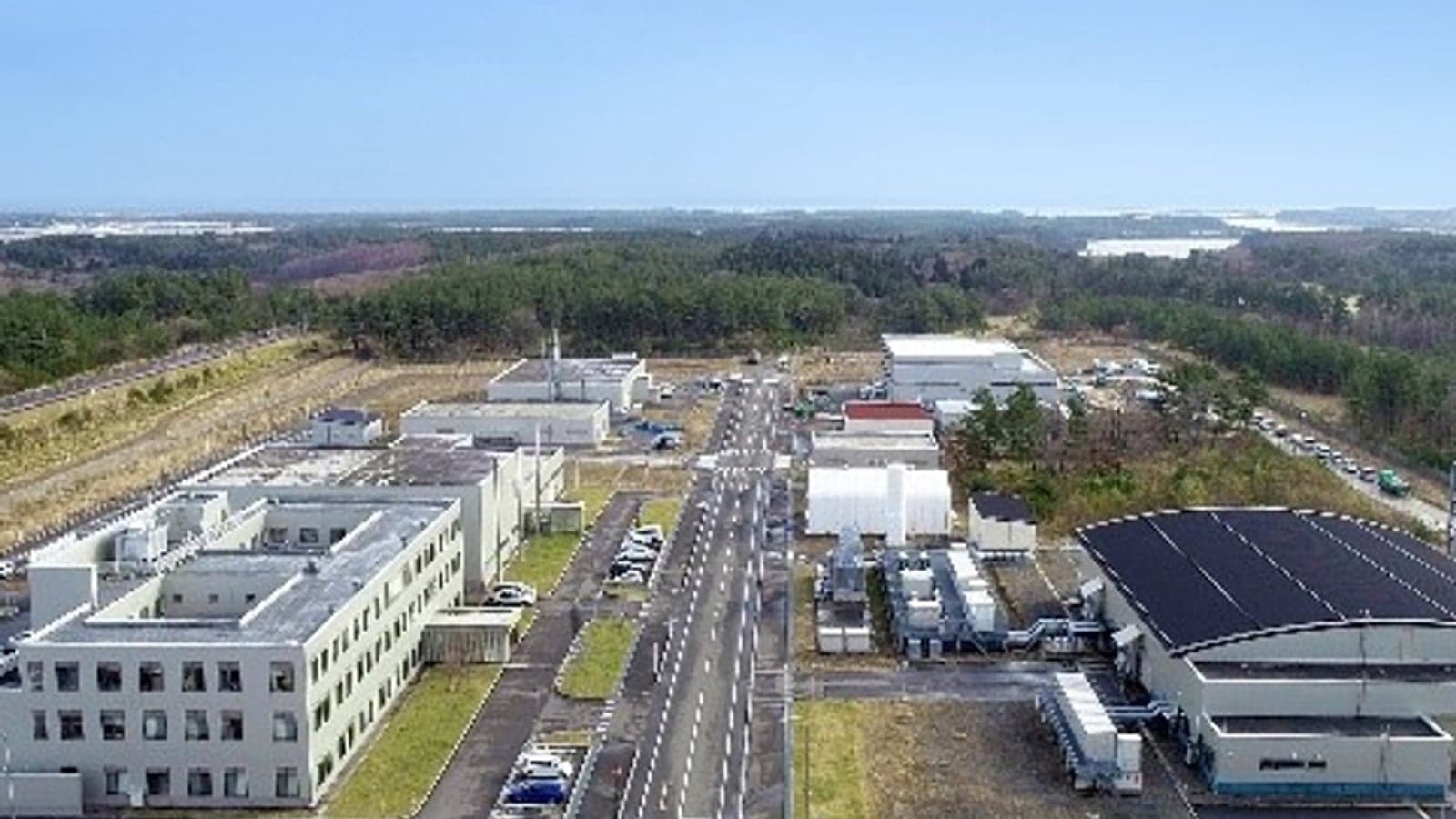
Largest fusion device comes online in Japan
Jonathan Spencer Jones
Posted on: 7 December 2023
The JT-60SA tokamak| slated as the largest and most advanced of its type| has started operations at Japan’s National Institute for Quantum Science and Technology.
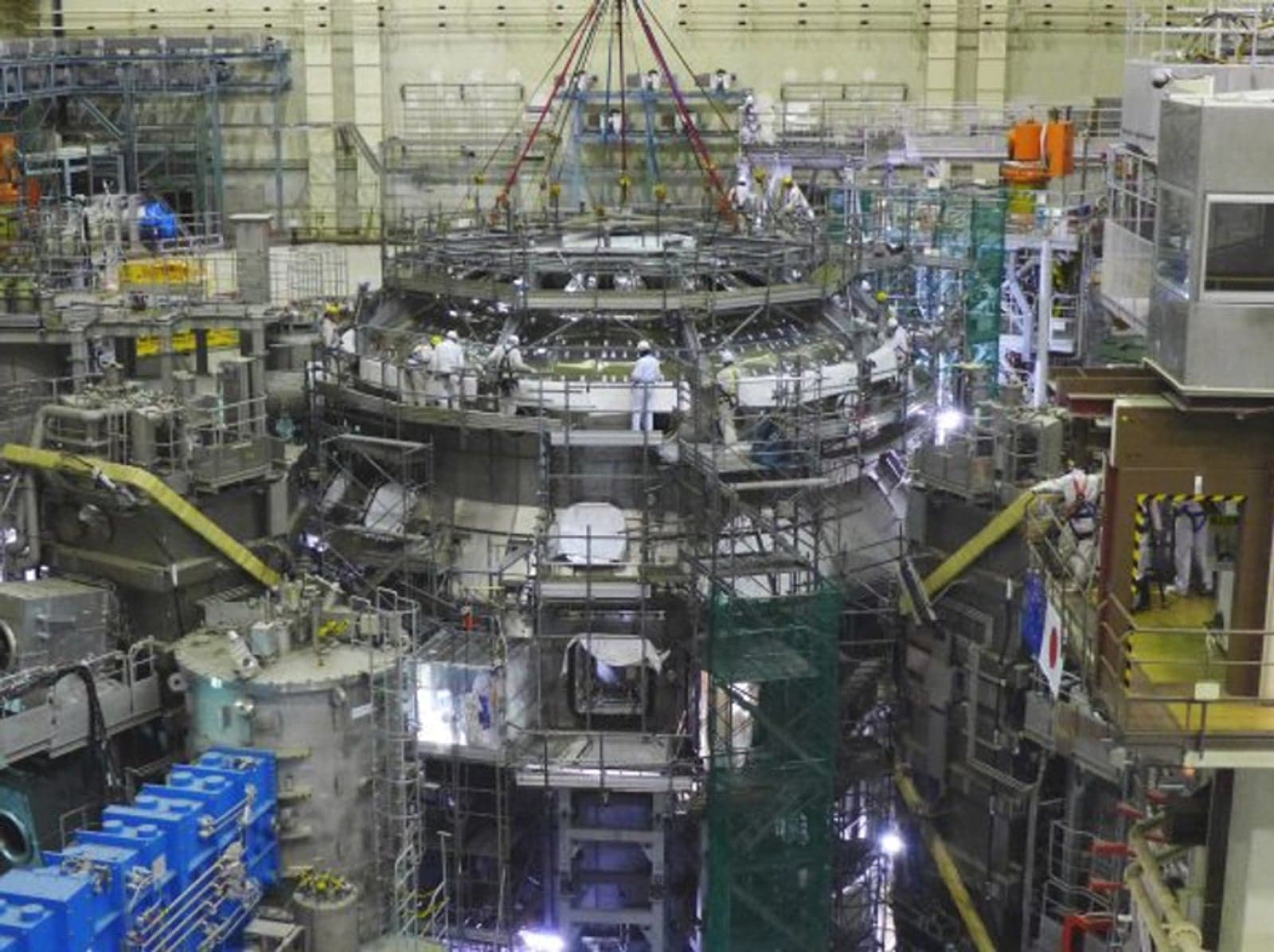
The JT-60SA tokamak, slated as the largest and most advanced of its type, has started operations at Japan’s National Institute for Quantum Science and Technology.
The device, which was developed jointly by the EU and Japan as a satellite project of the ITER programme, is considered a milestone in nuclear fusion technology development and will support research into its ongoing advancement and that of ITER in particular.
A ‘Super, Advanced’ upgrade of the JT-60 device, the JT-60SA is comprised of a torus-shaped vessel in which a hot plasma – with a temperature around 100 million oC – can be confined using a magnetic field.
A key goal of the JT-60SA is to explore the plasma behaviour in a tokamak, which will be done using hydrogen initially and later deuterium as the fuel.
Have you read?
Countries recognise the power of nuclear at COP28
Energy Transitions Podcast: Why fusion energy is the ‘vaccine of climate change’
Unlike the deuterium-tritium plasma in ITER, deuterium mimics its behaviour but without generating large amounts of heat or neutrons. Thus the device will become only minimally radioactive over its lifetime, allowing more flexibility in reconfigurations to advance the research.
Nevertheless, the JT-60SA has the performance capability that if deuterium and tritium were to be used, it could reach or surpass ‘break even’, where the power released by the fusion reactions would equal the injected power.
Learnings on how to reach ‘break even’ optimally on the JT-60SA should be critical for the ITER operation.
At the inauguration on December 1 at the site in Naka in Ibaraki Prefecture, Japan’s Minister of Education, Culture, Sports, Science and Technology, Masahito Moriyama, and the EU’s Commissioner for Energy, Kadri Simson, reaffirmed the long-standing cooperation in the field of fusion energy and underlined their support for the operation and technical upgrades of JT-60SA.
They also committed to strengthen the JT-60SA International Fusion School (JIFS), which was inaugurated in September 2023, to train young scientists and engineers and develop the human resources necessary to achieve fusion energy in the future.
First plasma
The first plasma was achieved in the JT-60SA on October 23 with a plasma current of about 130kA.
Subsequently, tests have been made to optimise the plasma breakdown and to increase the plasma current, with a demonstration of a divertor plasma with 1MA current during the inauguration.
When fully operational, the JT-60SA should be able to sustain breakeven equivalent high temperature deuterium plasmas for typically 100s, with a maximum plasma current of 5.5MA.
ITER, currently under construction in France, is expected to be the largest fusion device with a tokamak 30m tall and wide – over twice the dimensions of the JT-60SA – and a further step towards demonstrating the scientific and technological feasibility of fusion as a potential energy source.
Fusion at COP28
The news about JT-60SA comes as US Special Presidential Envoy for Climate John Kerry announced a new strategy for international cooperation on the development of nuclear fusion at the Atlantic Council’s Global Energy Forum at COP28.
Kerry said, “there is potential in fusion to revolutionize our world and to change all of the options that are in front of us” for providing clean power to the world.
At the event, panelists highlighted that new technologies are driving commercialisation of fusion at a faster pace than expected, with greater international collaboration expected to accelerate progress even more.