Lightning protection for composite wind turbine blades demonstrated
Jonathan Spencer Jones
Posted on: 19 December 2024
A carbon fibre tip offering lightning strike protection for wind turbine blades has been developed by researchers at the US DOE’s Oak Ridge National Laboratory (ORNL).
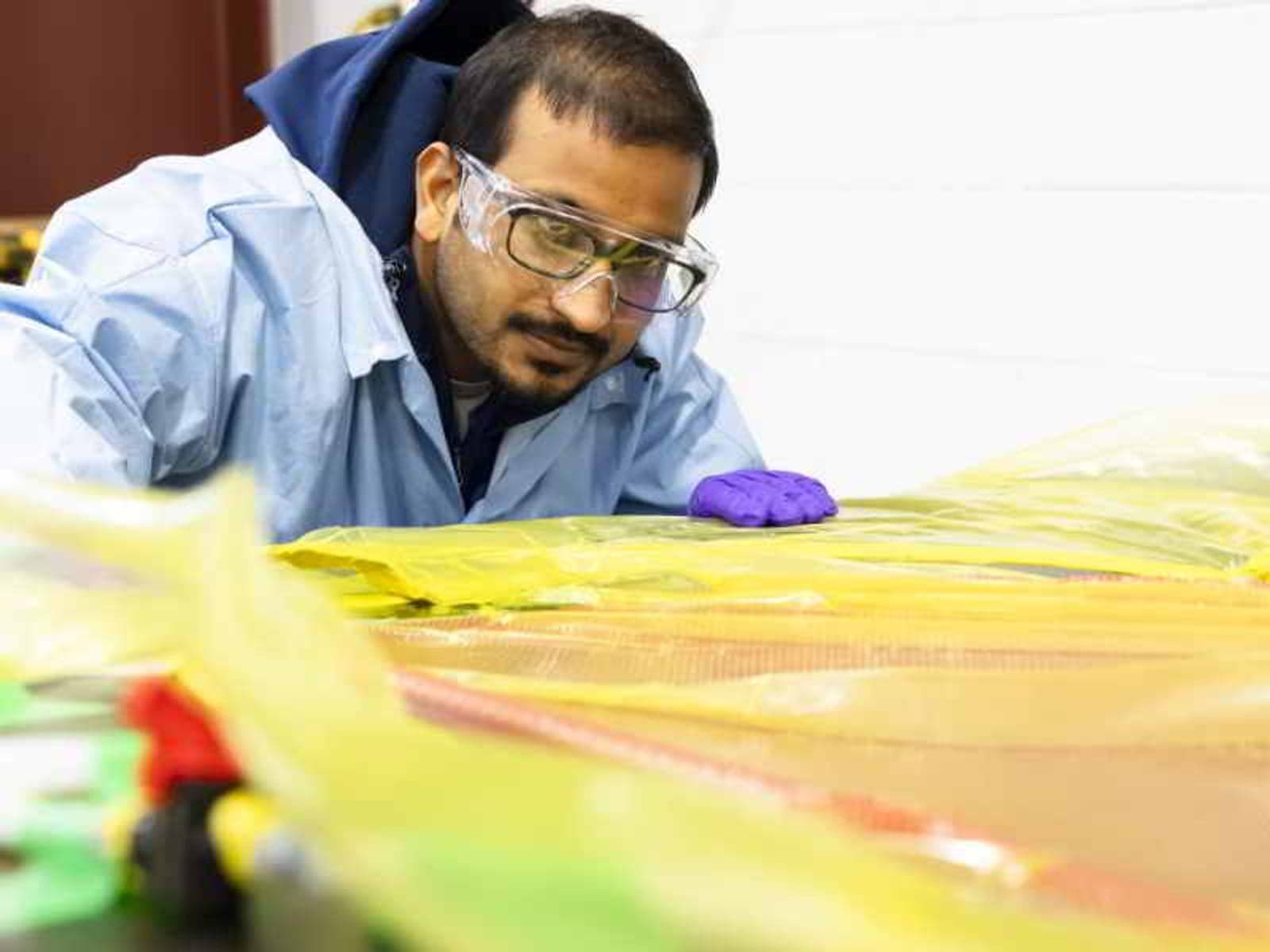
A carbon fibre tip offering lightning strike protection for wind turbine blades has been developed by researchers at the US DOE’s Oak Ridge National Laboratory (ORNL).
The blade tip, which is being developed in ORNL’s carbon fibre technology centre, incorporates two layers each of standard glass fibre and a low-cost lab developed carbon fibre, with such customised conductive carbon fibre key to dispersing electrical energy across the blade surface.
The researchers also declare using industry-standard equipment and methods to show that the technology can be easily integrated with established manufacturing processes.
“We don’t have enough data to know the true scope of the challenge [of lightning strike damage], but we know it’s a concern to industry and utilities,” said ORNL researcher Vipin Kumar.
“We know wind energy is a reliable source of electricity that supports energy security, but I believe anything we can do to make it more resilient and reliable is important.”
Have you read?
Forecaster brings blue sky thinking to wind farm tech
IRENA Officer: Innovate not only on tech but on frameworks too
Lightning strikes to wind turbine blades are known to be frequent but are rarely catastrophic.
Nevertheless they are believed to be able weaken blades with internal damage that can translate to increased repair costs over time, and they are the second leading cause of blade-related downtime.
In the project an entire 2m turbine blade tip was built using the novel materials. This was then tested against the forces of simulated lightning in a specialised lab at Mississippi State University, where the blade tip emerged pristine after tests that isolated the effects of high voltage.
Separate tests in the same lab found that isolated high current remained destructive.
The cost of carbon fibre has generally limited its use to the wind blade’s load bearing structure, but ORNL’s efforts to lower the cost of carbon fibre may make it economical to replace glass fibres in the blade tip, where the lightning strikes most often.
With the demonstration highlighting the possibilities of a new approach to protecting blades using conductive materials or coatings, further innovations are being investigated.
With resin making up the largest portion of the blade tip, these include the use of a more conductive resin.
Another notable benefit of the hybrid carbon fibre composite blade tip is its weight, about 41% lighter than a pure glass fibre blade tip, opening the way for larger blades of the same weight, with the potential to generate more electricity.
The approach also is considered of potential for preventing lightning damage to the composites used in aeroplanes.