New index lifts the veil on UK renewable energy suppliers
Pamela Largue
Posted on: 28 October 2025
Green energy can be a grey area but Clean Power Index ranks UK’s suppliers by how much genuine renewable power they actually deliver.
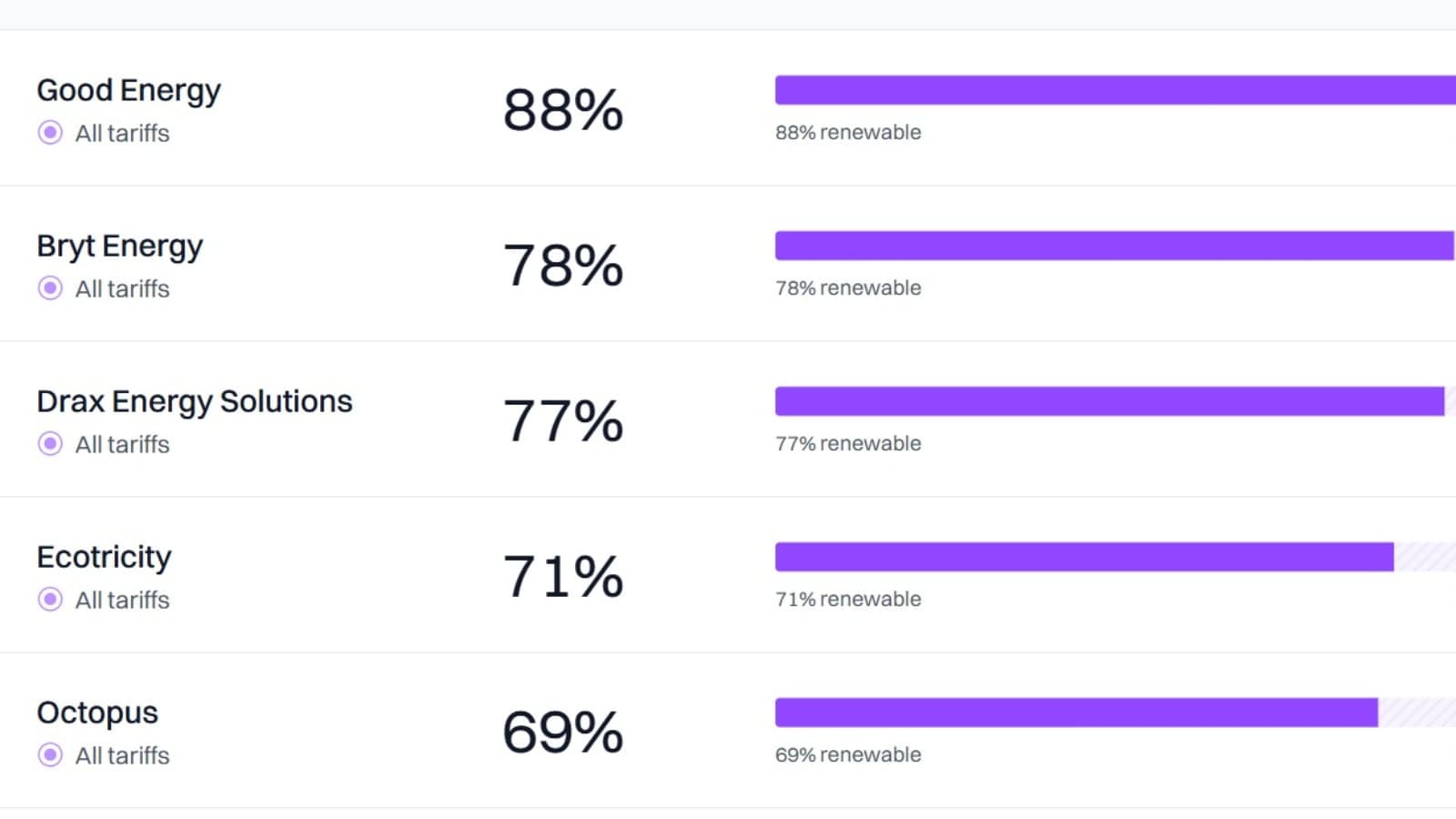
The results of the Matched Clean Power Index might be surprising, as current market rules allow suppliers to claim to provide 100% renewable electricity without actually delivering it.
However, the good news says Matched, is that the Index’s top performers for 2024-25 match at least two-thirds of their consumption to actual renewable generation.
According to the Index, the top five suppliers are:
• Good Energy 88% renewable across 0.4 TWh of consumption;
• Bryt Energy 78% renewable across 3.4 TWh;
• Drax Energy 77% renewable across 14.7 TWh;
• Ecotricity 71% renewable across 1.7 TWh;
• Octopus 69% renewable across 29.3 TWh.
Matched, an independent, not-for profit initiative, is on a mission to increase transparency around renewable tariffs. This will allow consumers to make more informed decisions and will ultimately spur regulatory, and system change that promotes decarbonisation.
Today’s rules let suppliers claim solar at night — that’s absurd
Joe Kwiatkowski, founder of Matched and former senior leader at Tesla Energy, suggests the current system is not fit for purpose.
“The existing rules for renewable claims are broken. If you turned on your heating at 6pm on a Tuesday in January, your ‘100% renewable’ supply would probably be powered by gas. Your supplier will have legally bought renewable certificates in the summer when solar power floods the grid, then used them to offset winter power generated from expensive and polluting gas.”
According to Kwiatkowski, the market in certificates is worth a billion pounds each year, and that money is badly spent. It’s the result of suppliers merely following the current rules.
“Simply requiring renewable claims to be aligned with demand would give millions of climate-conscious consumers the confidence that they’re doing the right thing and recognise leading suppliers who've already gone beyond the rules to provide electricity that is genuinely renewable.
“Importantly, these reforms would also help the UK to reach Clean Power 2030 affordably by incentivising the development of clean power where and when it’s needed and reducing use of expensive gas peaking plants,” added Kwiatkowski.
Old rules for a new age
Matched explains that decades old rules are distorting current claims, as non-renewables can be used during time of peak demand and then offset by buying Renewable Electricity Guarantee of Origin (REGO) certificates for power generated at completely different times of the year.
When these rules came into play in the early 2000’s, and less than 3% of the UK’s generation mix was renewable, this posed no problem.
Have you read?
How can business models adapt for renewables-based energy trading?
Tony Blair calls for UK to refocus energy strategy to make power cheaper
However, times have changed and so has the energy mix.
Matched states that in 2024 more than half of the UK’s electricity was renewable.
However, when power prices spike and renewable generation drops, gas plants fill the gap pushing up wholesale costs and consumer bills. The current rules for renewable energy claims disguise this problem, suggests Matched.
Under the current rules renewable certificates are treated equally, whether they represent power generated on a sunny day or during a high-demand evenings.
Minor adjustments to the current rules would allow the billion pounds per year to be invested in reducing reliance on gas.
Joe Kwiatkowski concludes: “The best performing suppliers in the Index invest in buying renewable energy that is well aligned with demand hour-by-hour. These suppliers are directing investment toward the flexibility Britain needs. We want energy users to use the platform to help guide which companies they use for their electricity supply and help to drive much needed regulatory change. That would give consumers a better deal; recognise the suppliers who are investing in diverse portfolios of renewables, batteries, and demand response; and drive a cleaner, more cost-effective energy system.”
Killian Daly, Executive Director at independent policy reform activists EnergyTag, says: “Today’s rules let suppliers claim solar at night — that’s absurd. Matched ends that fiction by showing where power really comes from in real-time. It rewards suppliers who keep the lights on with clean power when prices spike, cutting costs and driving gas off the grid.”