How can business models adapt for renewables-based energy trading?
Yusuf Latief
Posted on: 18 August 2025
As the grid in Europe turns more and more to renewables and digitalisation, trading is becoming ever more complex - how do companies adapt?

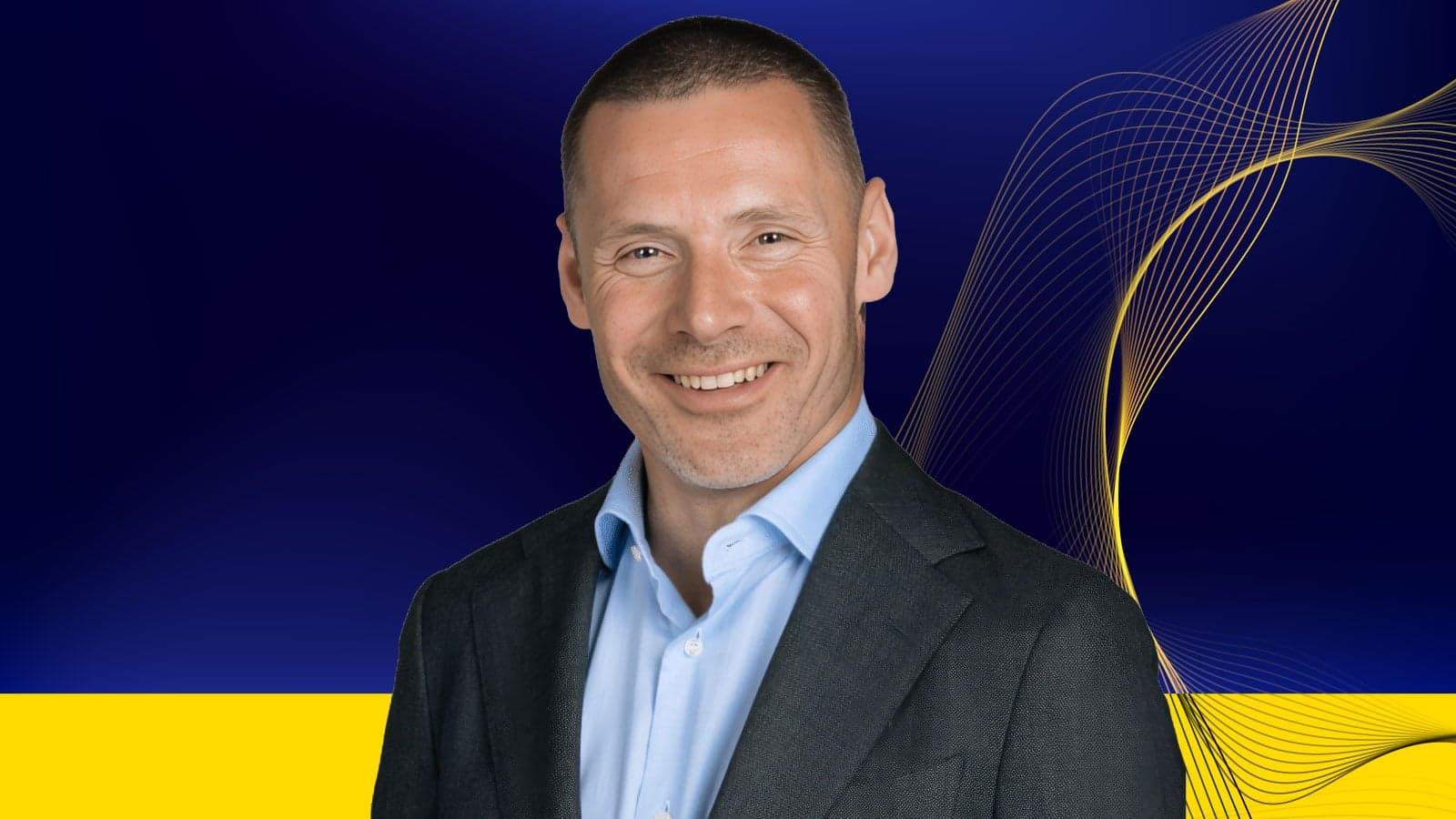
As the European power grid accommodates more renewables and digitalisation, making energy trading ever more complex, how have companies had to adapt? To find out, I spoke to Luuk Veeken, CEO and Founder of Dexter Energy.
The increasing complexity of energy trading, driven by the integration of renewables and digitalisation into Europe's power grid, is forcing companies to embrace more digitalised solutions.
This shift is changing business models, with companies turning more AI-powered forecasting and trade optimisation to stay competitive.
To delve deeper into these transformations, I spoke with Veeken of Dexter Energy, an Amsterdam-based software company which claims renewable energy and data science to be in their DNA.
How has flexibility driven a new business model of trading for energy companies?
Five years ago, the strategy for wind and solar was just ‘produce and forget’. It was just purely based on maximising the megawatt hours that you sold.
Things have changed, especially in markets with a very high installation of solar. Take for example the Netherlands, where it’s not very sunny. When it is, you suddenly see that all the assets are generating at the same time. Prices go negative, so there's a high need to make these assets flexible. That started on the day ahead market but also in the Netherlands you're allowed to optimise your assets on the imbalance market.
So that was a very big use case in the Netherlands that all these assets also became steerable for the imbalance market. We see that also happening in other countries, at least where it's allowed for imbalance, but also for day ahead and intraday.
You need that in a system with a lot of renewables. You need them to only produce when it makes sense because otherwise it’s just creating a lot of problems for the grid. In this way, flexibility is getting hugely more important.
There are also use cases in different countries in Europe, where renewables are being qualified to provide ancillary services as well, which is really the next step, alongside the role they might play in congestion services.
Have you read:
How a balanced approach between tradition and technology strengthens storm response
How has trading and AI forecasting become more linked for trading?
Trading is done in a more automated way, with fully automated algorithms that, for example, do position closing for renewables, but there are also bots that try to make money by arbitraging.
Then there is discretionary trading, the manual trading - that is also very much based on all kinds of AI developments. For example, you see many traders buying different AI-based country load forecasts for wind, solar residual loads and then use that as input for their discretionary trading.
On the data side, which is getting very important and there are all kinds of developments on the meteorological side, there are all these different weather models that are getting better all the time.
This data becomes very important because you need to know the likelihood of certain weather phenomena that may happen, like icing or high wind shut down or snow cover on solar panels, or ever certain specific storms.
You not only want a point forecast, which corresponds to the trajectory based off a model, you will also need the probabilities that some of these events are actually going to occur.
For traders it’s becoming so important to know how big is the chance that you will produce more or less wind, and if is that probability distribution symmetrical or not?
A lot of traders also have access to all this real time production data, which is always different than the latest forecast. So that information is also more often being used in trading.
Of course, it’s all very dependent on the market that moves more towards renewables and renewables are very dependent on these large amounts of meteorological data, forecast data and so on. That has definitely changed the whole way traders work.
Considering grid resilience, how can we use the tech to encourage grid-minded trading?
What we can definitely say is that having more incentives in a market would get traders to trade the best they can with renewables.
That is very important and for that you need to raise price signals and be penalised heavily for having a wrong position.
That is also starting to happen in Europe, such as with the Picasso platform, but there is also a lot of work from ENTSO-E on harmonising regulations regarding ancillary service but also balancing itself.
Europe is really trying to incentivise traders to be right in their nomination, and one of the things that’s very logical is to have a balancing scheme based on 15-minutes periods instead of 60-minutes. You're then more incentivised, even within the 15-minute period, to follow your forecast as good as possible and calculate the imbalance price based on marginal cost, instead of average cost.
Then, when the problems get really high, the imbalance costs for parties that were on the wrong side are also really high. So, they really have an incentive to prevent this from happening.
In that sense, I would say having all these market changes rolled out will really help in incentivising energy companies across all of Europe to really get most out of the tools that exist today to reduce imbalances.
Then, with better data and a better business case, energy companies will also invest more.