New nuclear fusion startup raises $900m in Series A funding
Power Engineering International
Posted on: 29 October 2024
Pacific Fusion's backers include tech mogul and philanthropist Bill Gates.
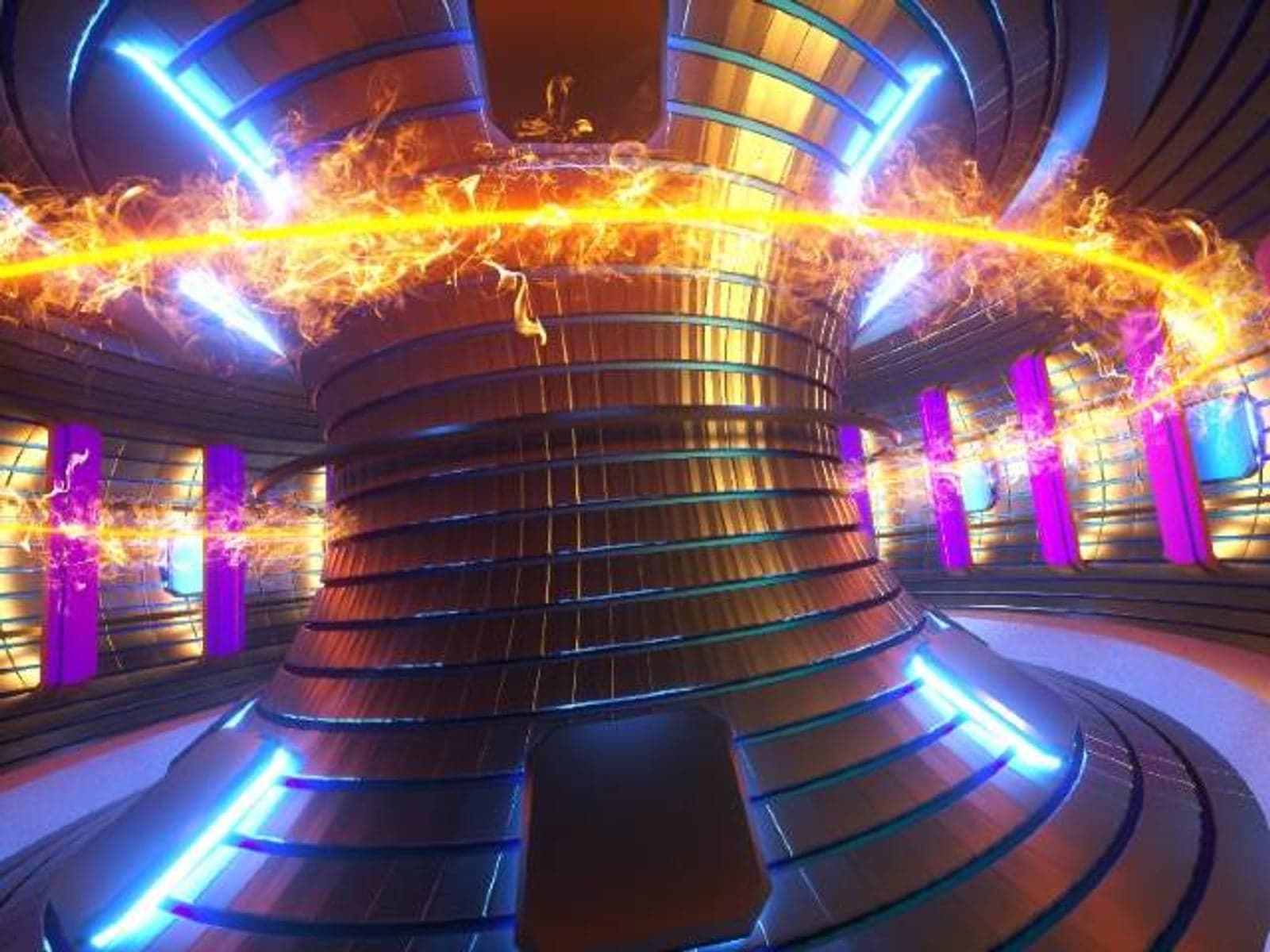
Nuclear fusion startup Pacific Fusion has introduced itself to the public, alongside the announcement that it has raised over $900 million in Series A funding.
Led by Eric Lander, a principal leader of the international Human Genome Project, Pacific Fusion started in 2023 and is headquartered in Fremont, California.
Among the company's backers is tech mogul and philanthropist Bill Gates.
General Catalyst led the funding round and said it was impressed by the founding team, which also includes Will Regan, known for his experience at ARPA-E developing the Accelerating Low-Cost Plasma Heating and Assembly (ALPHA) Program, and Keith LeChien, whose career includes leading pulsed magnetic fusion at Lawrence Livermore National Laboratory (LLNL) and serving as the Director of Inertial Confinement Fusion at the National Nuclear Security Administration (NNSA).
Have you read?
UKAEA’s JET fusion site set to be opened up for AI data centres
Total investment in fusion industry tops $7.1bn shows FIA
"Beyond this exceptional team, we were immediately drawn to Pacific Fusion’s highly pragmatic pulsed magnetic approach, which uses fast-rising, high-current pulses to magnetically squeeze and heat small containers of deuterium-tritium fuel, driving the fuel to fusion conditions," General Catalyst said in a statement.
In its introduction, Pacific Fusion notes that energy demand is expected to continue to soar in the coming years, and argues that fusion energy has "enormous" potential as a fuel source. The challenge, Pacific Fusion poses, is making affordable systems to use that fuel. Additionally, the startup pointed toward recent advances in inertial fusion and pulsed power, and said it aims to build on those advances.
Pacific Fusion is pursuing a pulsed magnetic path to inertial fusion — a process that uses fast-rising, high-current pulses to magnetically squeeze and heat small containers of deuterium-tritium fuel, which could drive the fuel to fusion conditions.
The startup is building a fast pulser, similar to Sandia National Laboratories Z Machine, and its system is composed of small mass-manufacturable units called bricks (two capacitors and a switch), which are assembled into modules that fit into shipping containers. The fusion chamber is compact and cylindrical, which Pacific Fusion says facilitates low-cost maintenance.
The startup's immediate goal is net facility gain, or achieving more fusion energy output than all stored energy input.
Earlier this year, the US Department of Energy (DOE) marked the two-year anniversary of the launch of the US Bold Decadal Vision for Commercial Fusion Energy with the release of its DOE Fusion Energy Strategy 2024, a department-wide initiative to develop a strategy for accelerating the viability of commercial fusion energy in partnership with the private sector.
DOE Fusion Energy Strategy 2024 is organised around three pillars: closing the science and technology (S&T) gaps to a commercially relevant fusion pilot plant; preparing the path to sustainable, equitable commercial fusion deployment; and building and leveraging external partnerships.
Originally published by Sean Wolfe on power-eng.com
Related tags
Latest content
+1
DOE to fund $42M inertial fusion hub programme
The hubs will be led by researchers at Colorado State University| the University of Rochester| and Lawrence Livermore National Laboratory| where last year a team successfully achieved fusion ignition for the first time| proving that creating energy from fusion is possible.
- Power Engineering International
- 18/12/2023