Offshore hydrogen storage hub concept unveiled
Jonathan Spencer Jones
Posted on: 27 December 2021
Tractebel Overdick has developed a concept for the offshore processing and storage of hydrogen in seabed salt caverns.
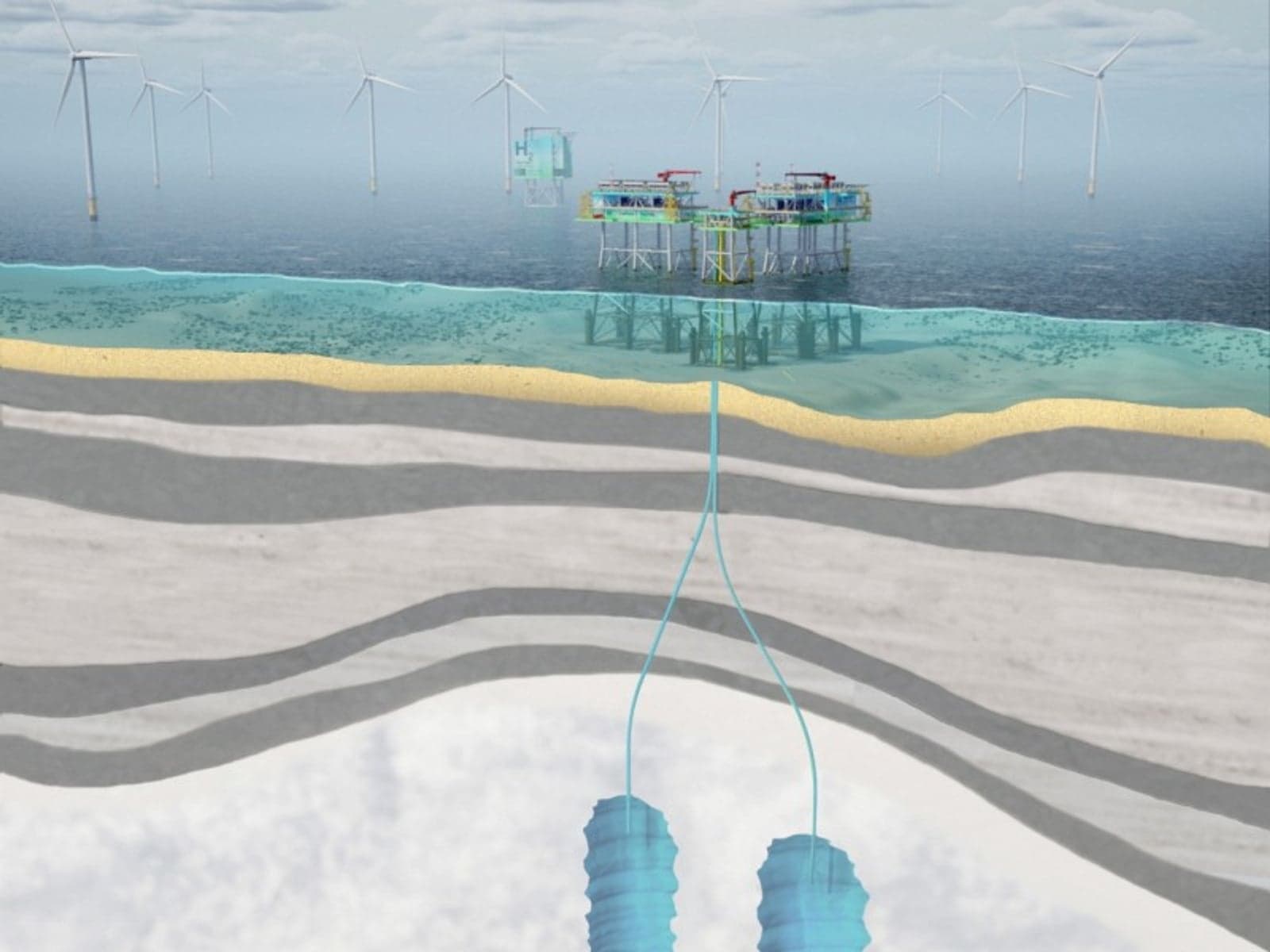
Tractebel Overdick has developed a concept for the offshore processing and storage of hydrogen in seabed salt caverns.
Optimising the locations for the production and storage of green hydrogen, either close to the source of the renewable energy on which it is dependent or closer to the demand centres, is an issue that is going to come increasingly to the fore as the technology advances and demand grows.
The question is particularly pertinent in the case of offshore wind, given its potential for production and its obvious remoteness from demand.
Siemens Gamesa and Siemens Energy have announced joining forces to develop an offshore hydrogen production solution with an electrolyser integrated to wind turbines, with full-scale demonstration targeted for 2025/2026.
Now Tractebel has weighed in with a concept for offshore storage from such production plants, which can serve to buffer production peaks and enable optimisation of the onshore flow rates allowing more economic design of the export pipeline.
The solution is designed as a scalable offshore platform for the compression and storage of up to 1.2 million m3 of hydrogen.
The platform complex consists of a wellhead platform for the operation of the caverns and a series of compression platforms that enable a staged increase in capacity. Additional modules can be added as required.
The study assumes a capacity equivalent to converting 2GW of green offshore wind power into hydrogen, processing 400,000Nm3/hour (approximately 36t/hour) of hydrogen, which is stored in the underground salt caverns at a pressure of up to 180 bar.
Such offshore compression and storage hubs – much like the proposed North Sea energy transmission hubs – could serve multiple production operations and bring flexibility and economies of scale to offshore hydrogen production.
“Centralised offshore hydrogen hubs facilitate the integration of smaller-scale hydrogen production, which is to be expected within the scope of capacity expansions while re-powering offshore wind farms in the future,” says Klaas Oltmann, Director Business Development at Tractebel Overdick.
“At the same time, they offer an economically viable option, as the export and compression of hydrogen produced offshore can be bundled. This significantly reduces the overall costs for future projects.”
The North Sea is considered well suited for the solution due to its geological conditions and underground rock salt formations. Caverns are leached in these formations to create the large storage volumes required.
A further pointer to the potential of such large underground hydrogen storage facilities is their sustainability in that the infrastructures can directly use green hydrogen instead of other energy sources for their operations.