Optimism wanes for floating offshore wind shows survey
Pamela Largue
Posted on: 29 May 2025
Developers are showing signs of retreating from floating offshore wind due to confidence dips across parts of the value chain and falling near-term growth expectations.
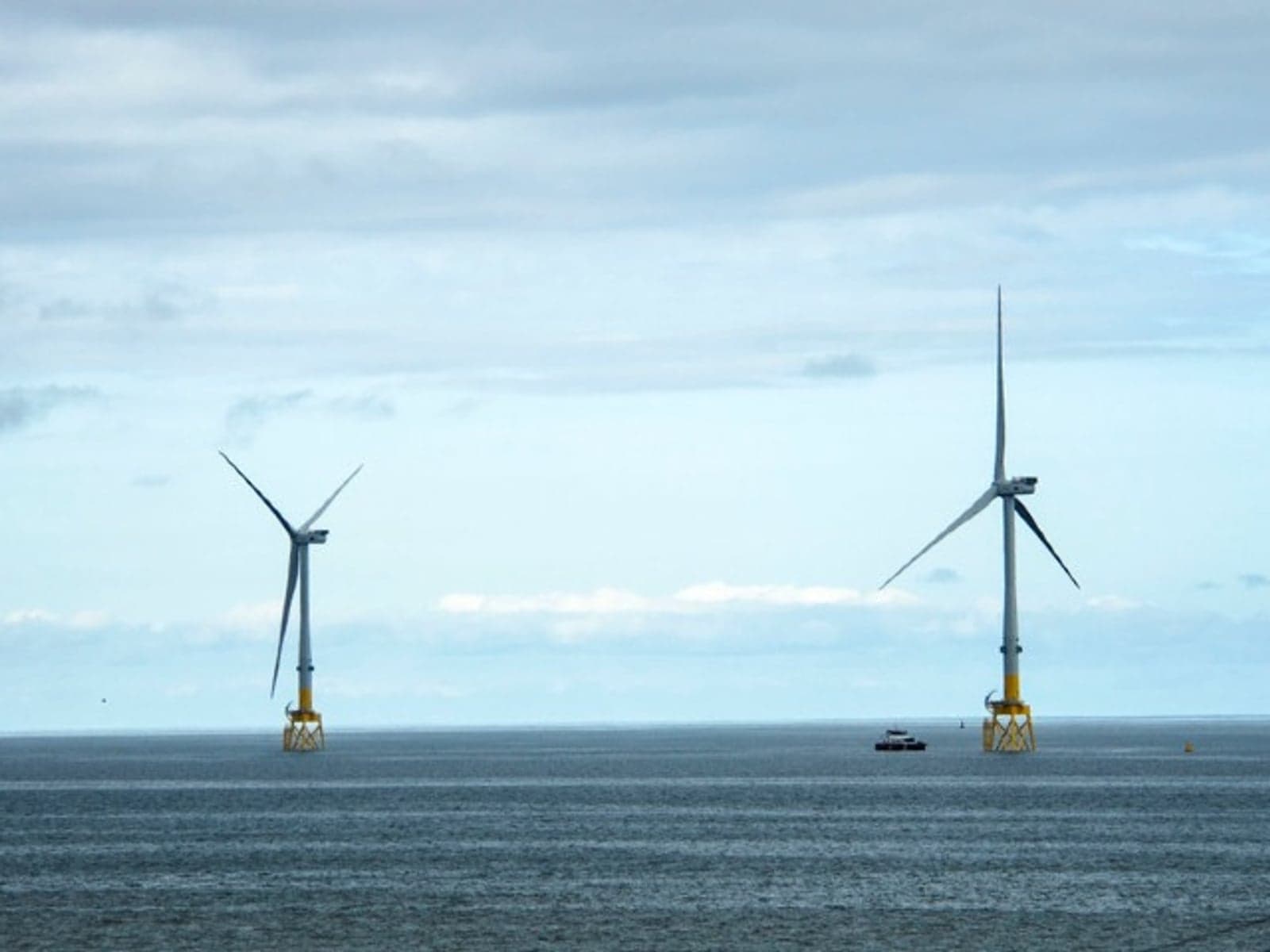
Developers are showing signs of retreating from floating offshore wind due to confidence dips across parts of the value chain and falling near-term growth expectations.
This was one of the key findings of the annual Floating Offshore Wind Survey conducted by consultancy firm Westwood Global Energy Group.
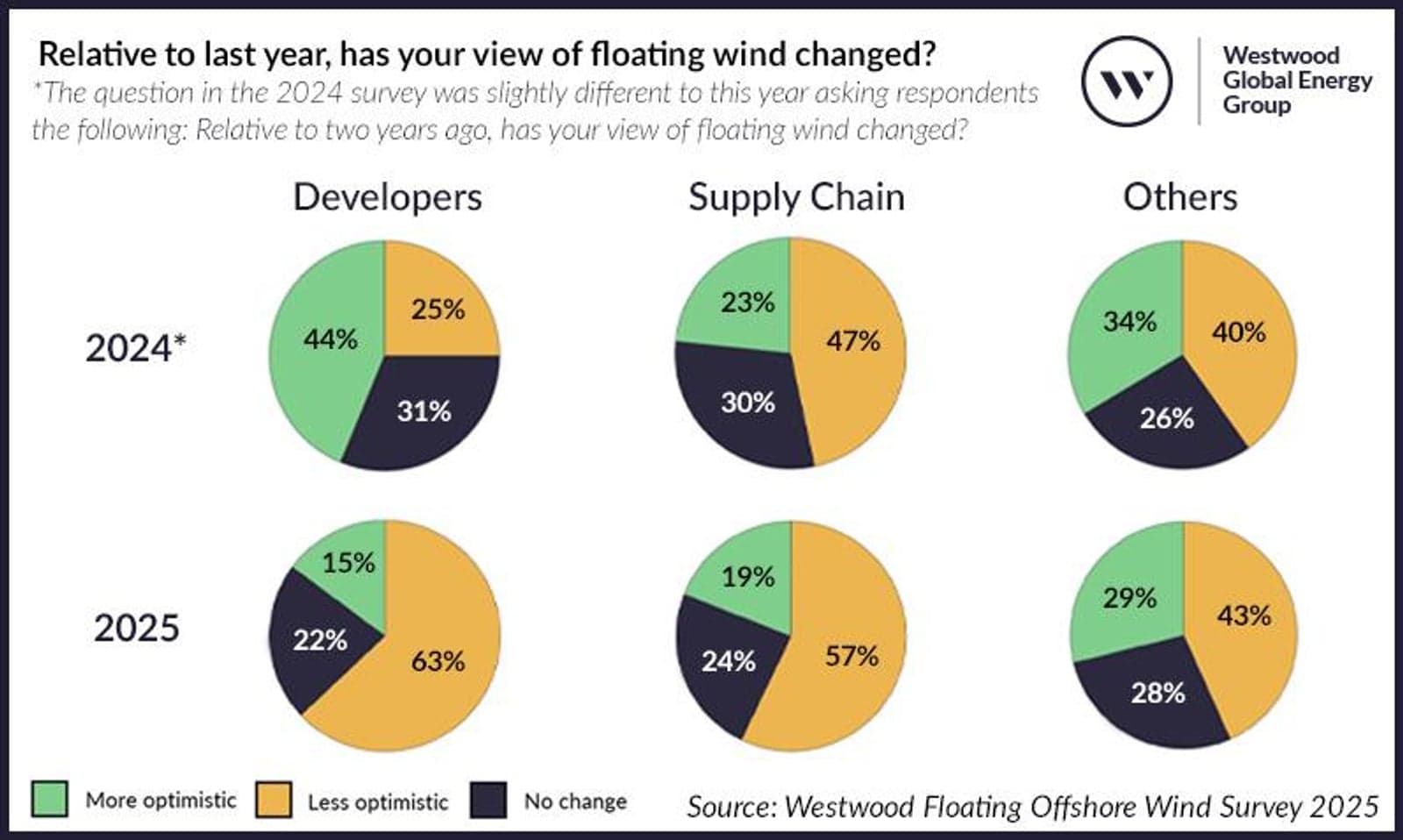
The survey results show that the positive momentum achieved in 2024 has been replaced by a more cautious stance as industry faces delivery delays, investment risk and sluggish policy implementation.
According to Westwood, it's the developers that have shown the biggest downward swing in terms of optimism, with 63% feeling less optimistic than in 2024. A similar trend with other businesses is also visible, with 72% of respondents now anticipating less than 3GW of global floating offshore wind capacity to be operational by 2030.
Have you read?
Gazelle Wind Power gets green light to launch floating wind demo
Oxan Energy wins first Estonian floating offshore wind tender
As for the reasons behind the shift, respondents pointed to financial barriers such as high upfront capital costs and limited investor confidence in new technology. Grid connection and infrastructure costs were also highlighted as key financial challenges.
Notably, although inflation has been recently been cited as a major issue for the offshore wind sector, less than 25% of respondents viewed it as a top barrier for floating wind.
Among non-financial hurdles, port infrastructure, lack of standardisation of technologies and low government support levels continue to dominate.
Bahzad Ayoub, manager - Offshore Wind at Westwood, commented on the survey findings: “Progress is happening, but too slowly. The frustration across the sector stems from knowing that momentum exists – but the pace is out of sync with expectations. Optimism hasn’t disappeared, but it’s now paired with a grounded mindset.
"Floating wind must be treated as a distinct sector, not simply an extension of fixed-bottom wind and a majority of respondents think this way. The technology, timelines and investment requirements are different – and government and industry action needs to reflect that.”
Read more: Industry calls for urgent action to realise Ireland’s offshore wind ambitions
To address the situation, survey respondents urged industry to share best practices and lessons learned, as well as collaborate to standardise floating wind platform technology. Furthermore, the industry is calling on governments to offer dedicated support to grow the sector. Clear, long-term government commitment is seen as critical to unlocking the floating wind sector’s full potential.
The survey highlighted the link between government support and perceived market leadership. The top three markets ranked by respondents – the UK, France, and South Korea – are also the markets where floating wind subsidies were awarded in 2024.
On a regional basis, Europe and Asia Pacific (APAC) are expected to lead development to 2040, while there is very little capacity expected to be operational in the Americas by 2030, a reflection of the impact of recent US policy support withdrawals.
Westwood ran the survey in association with World Forum Offshore Wind, Norwegian Offshore Wind, Oceantic Network and WindEurope.