Orkney: small islands with global ambitions for marine energy
Pamela Largue
Posted on: 23 July 2025
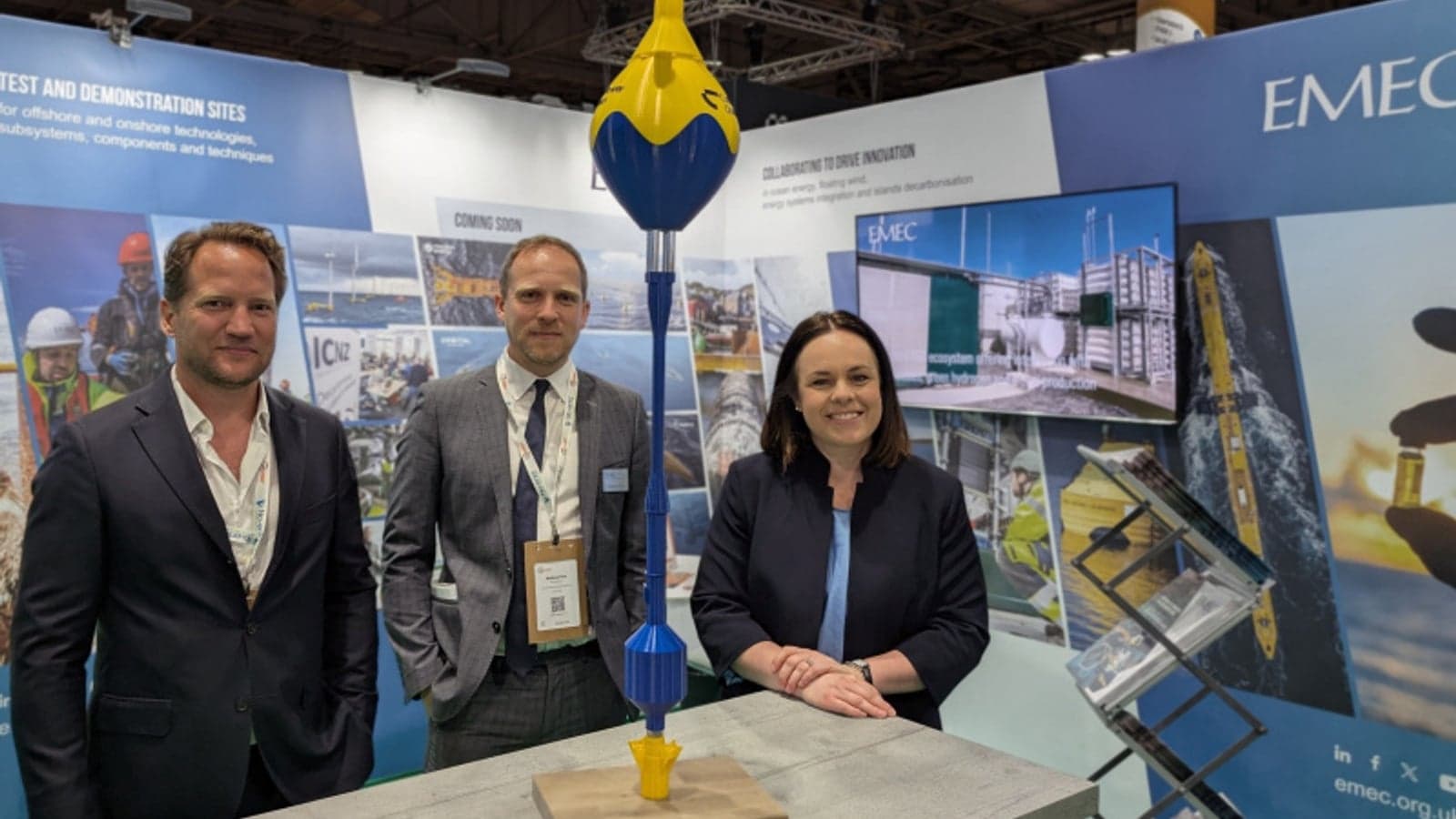
Matthew Finn tells Pamela Largue his vision for the European Marine Energy Centre and why he believes the risky yet innovative work on Orkney is increasingly relevant to the energy transition in Europe and beyond.
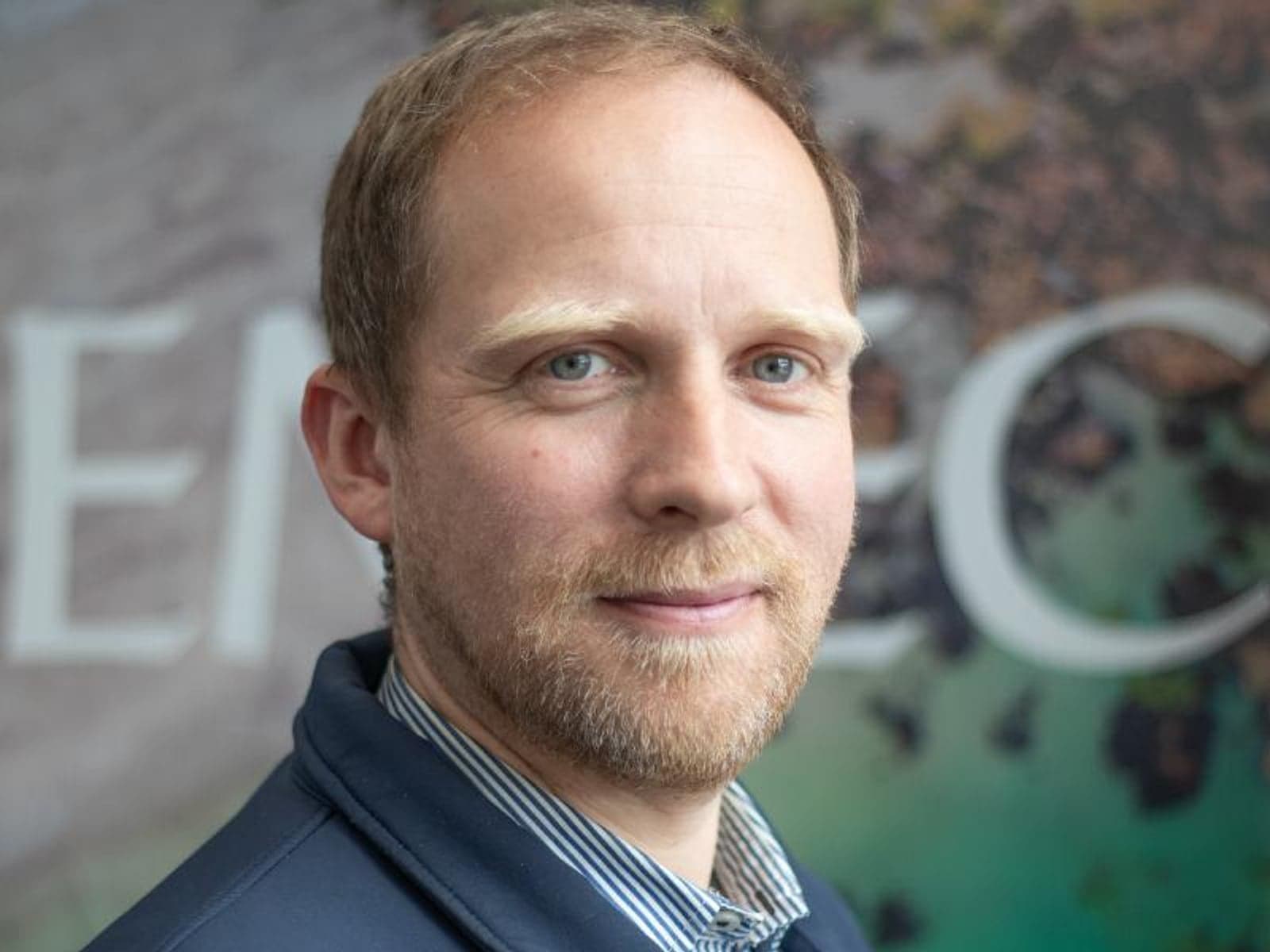
Matthew Finn tells Pamela Largue his vision for the European Marine Energy Centre and why he believes the risky yet innovative work on Orkney is increasingly relevant to the energy transition in Europe and beyond.
Finn likens life on Orkney to living in a bubble — a unique microcosm of constant natural energy and innovation.
“There is so much going on here. As I look out my window, it's blowing a hoolie, as we'd say in Scotland. Forty to fifty mile an hour winds prove where the energy is. I can see the waves out my window, and I know the wind turbines are all spinning.”
About ten miles off the north coast of Scotland, Orkney comprises 70 islands, although only 20 are inhabited, by a total of just of 21,000 people. Some 15% of the world's seal population can also be spotted on the islands, which are closer to the Arctic Circle than they are to London.
This is where Finn grew up and where, 20 years ago, then-managing director Neil Kermode hired him to come work for the European Marine Energy Centre (EMEC), a not-for-profit organisation focused on making tidal and wave energy succeed and integrating other forms of generation and decarbonisation strategies to get the island to net zero.
Have you read?
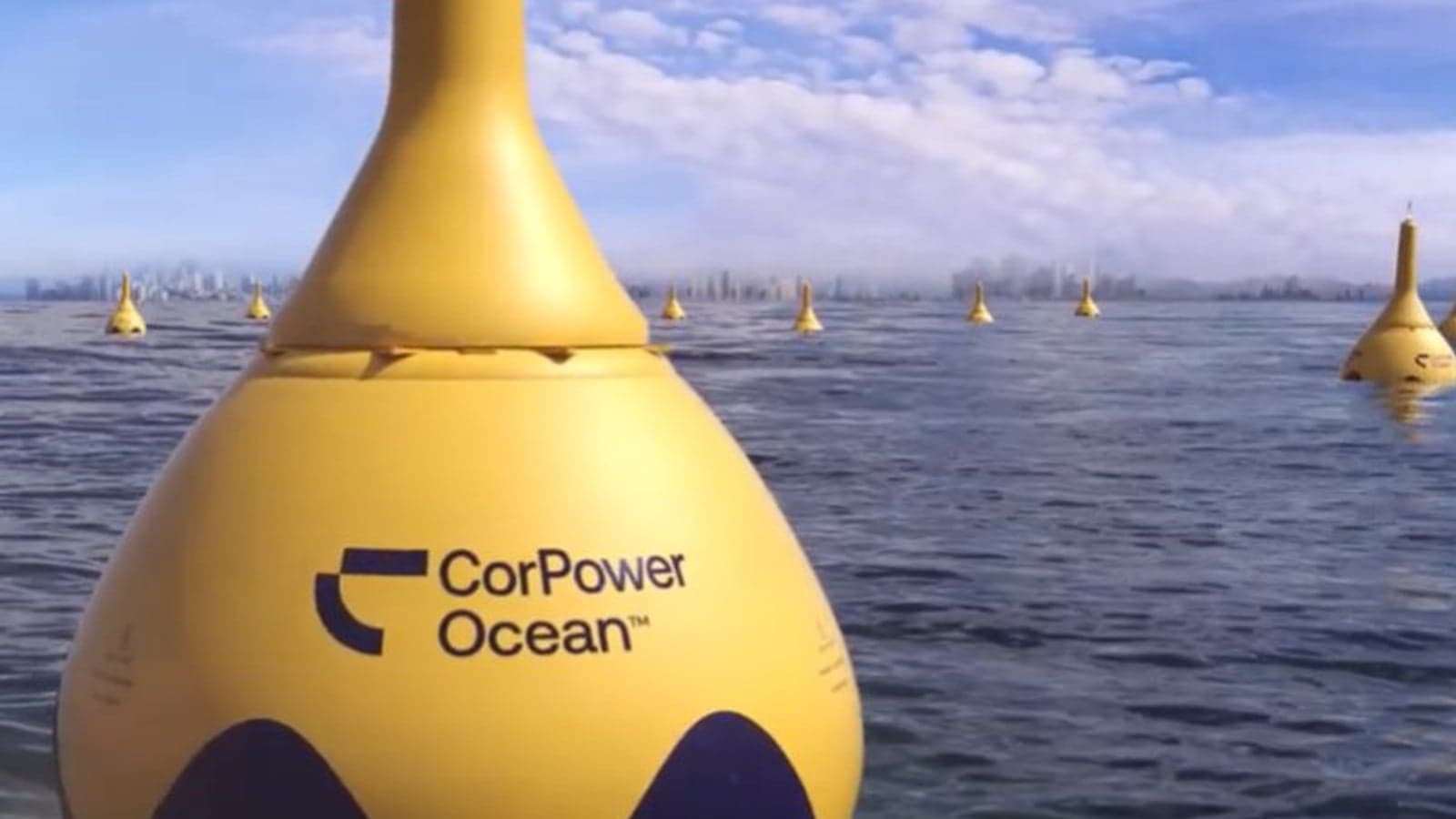
CorPower Ocean announces Acario and GTT Group as strategic investors
In March this year, Finn took over the baton from Kermode.
For Finn, Orkney, and more specifically EMEC, is about being ahead of the game, which means they are the first to hit industry obstacles.
And tackling those obstacles head-on is what Finn and his team plan to do throughout his tenure as managing director, to continue driving the energy transition and ensure marine energy technology continues to scale.
Finn believes EMEC is in a unique position to do so, because it’s not a university and therefore exists outside that blue-sky space. However, it is also not a commercial project, which places its activities and mission firmly in what Finn refers to as “the valley of death”.
It’s pre-commercialisation, says Finn, the meeting point of R&D and industrial funding where costs and risks are at their highest.
“And you do this in the sea, where all the elements are battling against you: it's a whole mix of risk and opportunity.
“But we’ve been doing this for 20 years, so we can take confidence from that as we push on.”
Wave and tidal innovation and what comes next
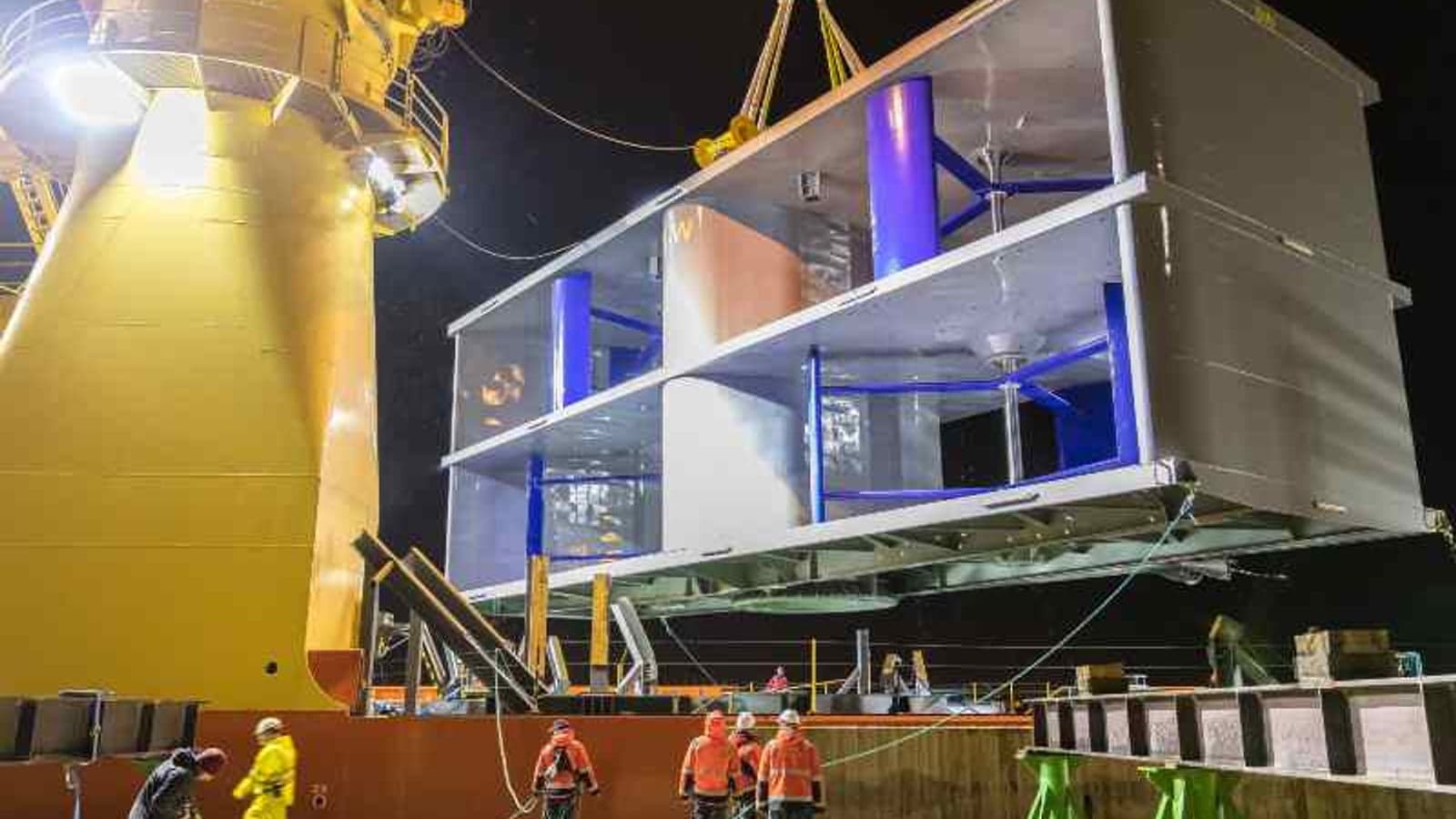
EMEC has seen more marine energy devices deployed at its site than anywhere else in the world, pioneering knowledge and developing the fundamentals that are driving the industry forward today.
As an accredited test centre, it houses a mix of technologies, from seabed- to surface-mounted tidal turbines and a range of wave converters.
On the tidal side, it has ticked the box on electricity production and has now moved into driving reliability and survivability of machines. EMEC’s clients are also moving from testing single devices to testing small groups of devices, running machines for longer to improve the lifetime of the technology.
Also of interest: Why Portugal offers the perfect playground for wave energy developers
“We're investing quite a bit in expanding our tidal facilities. We always want to be ahead of industry need if we can be, to help make it easier for technologies to demonstrate and develop.”
Finn talks excitedly about the big plans EMEC has for tidal energy, highlighting its ideal location. “We're at the top of Scotland, you've got the North Sea on one side, the Atlantic on the other. And we're the funnel in the middle where the water jets through.”
In terms of wave energy, Finn states that EMEC is taking a long-term view in terms of building routes to market and developing the supply chain.
Wave energy is a little bit behind, he says, still needing to get devices in the water to prove themselves.
However, stresses Finn: “The thing with wave energy is that the size of the prize is huge. It's one of the world’s largest untapped energy sources.
“So, whilst it's maybe taking a little bit longer to get there, there's something really big to be chasing after.”
When asked about technologies other than wave and tidal, Finn explained that EMEC is also looking at supporting hydrogen and renewable energy solutions.
“To get to net zero, we should electrify as much as we can. It's the most efficient and sensible way of doing things, but there are some areas that are just a bit hard to electrify, such as big industry and transport," Finn explains.
“This is why we're pushing e-fuels as well to try and come up with a complete net-zero package.”
According to Finn, EMEC is also looking to support Scotland’s offshore wind sector, which he refers to as “probably the biggest industrial opportunity of a generation for us to go after”.
“We have hosted demonstrations of offshore wind components, subsystems and tools and are exploring options for developing a national floating wind test site to the west of Orkney. EMEC also runs a research and innovation programme to help develop novel solutions for offshore wind.”
The value of scaling marine energy
Finn explains that different companies are at different phases in their development journeys, going through various innovation loops to make the machines simpler and smarter.
And while there will always be a little bit more innovation in the pipeline, the big challenge comes down to cost reduction and achieving scale.
Lowering the levelised cost of energy is hopefully on the horizon, says Finn, which will make a big difference in terms of market uptake.
However, while reducing the cost to consumer is essential, says Finn, he encourages a broader perspective in weighing the economic and system benefits of wave and tidal power.
“On the islands, we pay more for our electricity because we're remote, even though Orkney generates over 100% of its electricity demand from renewables.
"So, even though we feel that quite acutely here, I think we're now starting to see a wider understanding that it's not just cost to consumer, it's also looking at the jobs and wider economic benefits that come from different forms of technologies.
“Marine energy won’t produce electricity quite as cheaply as wind and solar in the short term, but it's creating lots of jobs, which is a really valuable part of the economy.”
Energy Transitions Podcast: Marine energy – From bathtub to the big blue
Finn also estimates that if the UK hits its 2050 wave and tidal energy deployment targets, up to £1 billion ($1.3 billion) could be saved in dispatch costs on our energy system through a more balanced generation portfolio.
Ultimately, the UK's electricity demand is predicted to double between 2030 and 2050 as electrification intensifies. So, there is no time to waste, says Finn, who highlights that Orkney's expensive electricity is linked to a volatile gas price and its dependence on other countries.
"We will need more renewables with a stable profile in the clean energy mix. Marine energy offers that to Orkney and beyond, providing a valuable source of home-grown, clean energy."
Policy and investment for progress
Finn highlighted that in terms of the price discovery point, marine energy has not yet traversed the same waters as wind and solar, to reach the same scale and technology maturity.
Between 2017 and 2021, there was little revenue support for wave and tidal from the UK government, which slowed industry development, he said.
However, that is now changing with the UK’s Contracts for Difference mechanism (CfD), which has massively ramped up support for tidal energy.
This kind of government support and ambition is critical, according to Finn, because it unlocks private investment and shows investors a clear route to market.
Although he adds that CfD is a better mechanism for mature large-scale technologies. “We'd like to see a bit of reform in that space.”
Driving this reform and securing support for industry to scale and reduce cost is core to EMEC’s mission.
Finn explains that making things work in challenging environments is what drives the team.
“But also, when things don't work, we need to make sure we learn from that and share the learnings back into the industry.
“It's a bit of a rodeo, but that's what we signed up for.”
And one of the key messages Finn learned from his predecessor Neil Kermode, is that while the technology takes centre stage, it’s the people you work with who will make marine energy work.
“It’s not just about steel in the ocean — it’s about the steel and drive of the people behind the innovations. That’s what will make this industry succeed.”