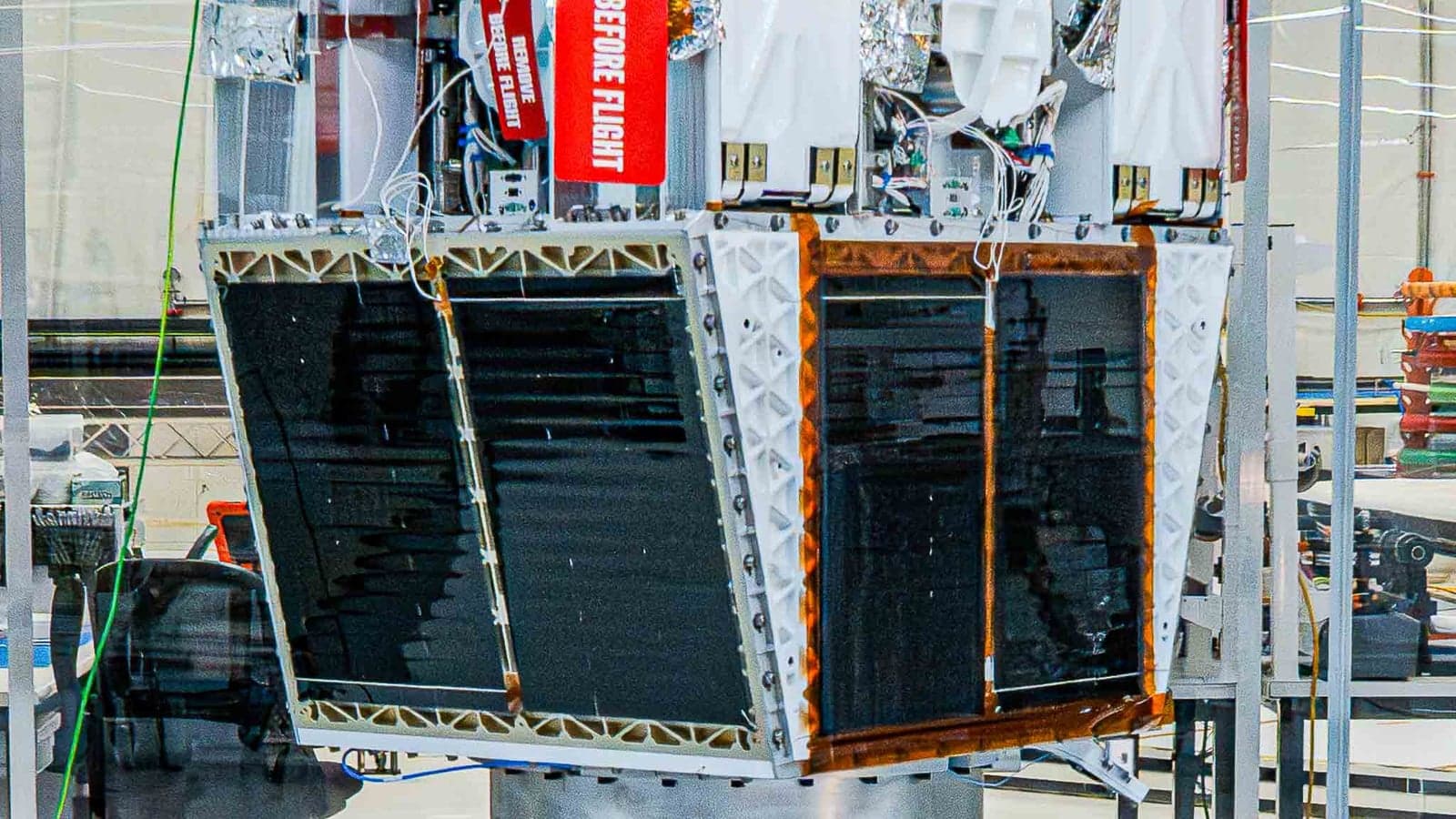
Oscilla Power launches demonstration scale Triton wave energy converter off Maine
Elizabeth Ingram
Posted on: 11 December 2023
Oscilla Power| University of Maine’s ASCC and Maine Maritime Academy have deployed a 1/6 scale prototype of Oscilla’s 1MW Triton wave energy converter.
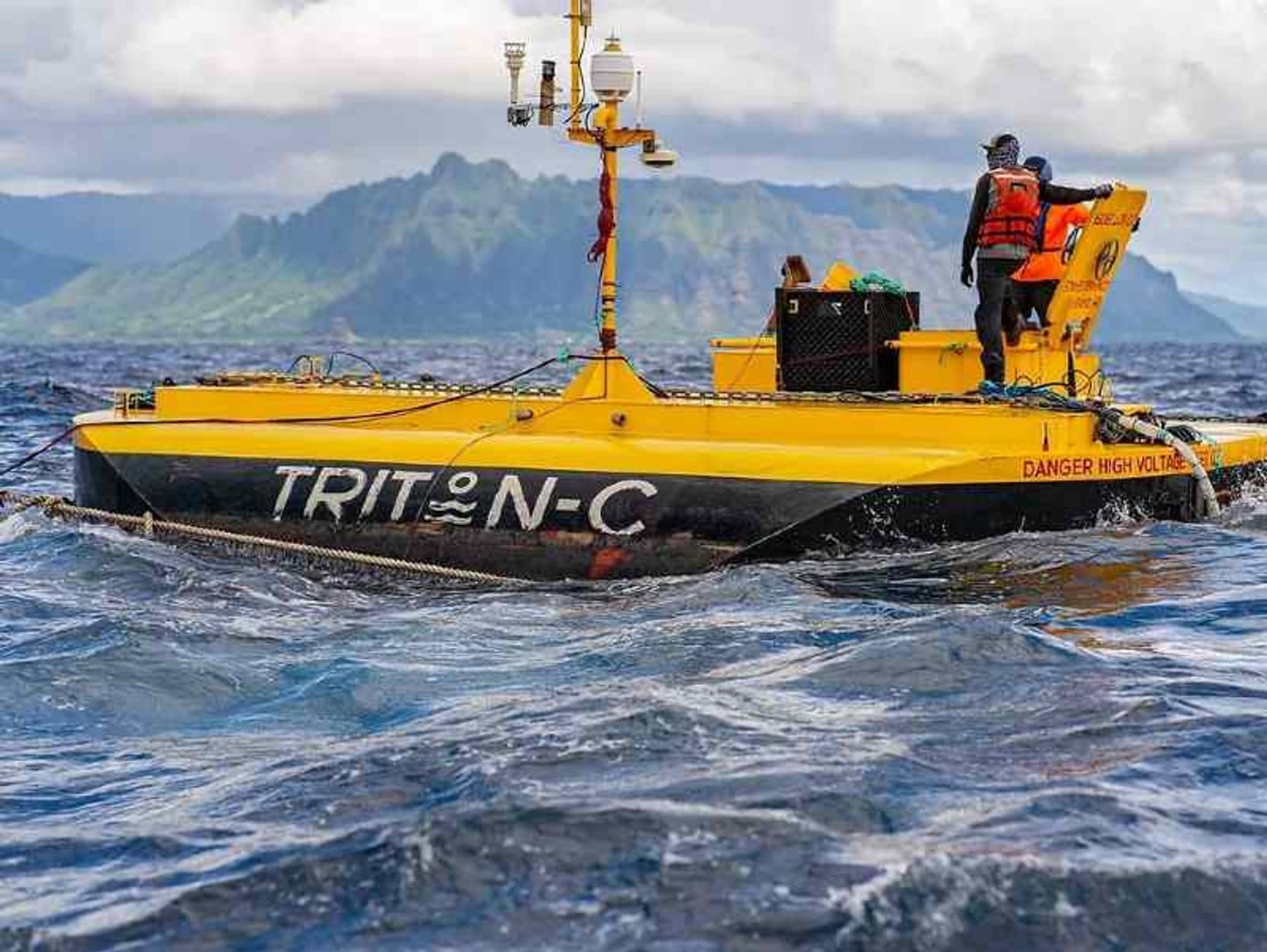
Oscilla Power, the University of Maine’s Advanced Structures & Composites Center (ASCC) and the Maine Maritime Academy have deployed a prototype of Oscilla’s 1MW Triton wave energy converter (WEC) in Castine Harbor, Maine, US.
Due to the wave conditions in Castine, the 1/6 scaled unit will operate in the same manner as a full-scale unit during this 12-week test, Oscilla said.
Winter wave conditions in Castine are about 1/6 the size of waves experienced on the US West Coast, therefore providing an ideal representative ocean environment to test and evaluate the scaled Triton system.
A key goal of this testing is to demonstrate the ability of the WEC to survive extreme weather events through the use of a submerging ability that will enable the Triton to withstand even the harshest wave events.
The testing will also be used to enable Oscilla to accurately predict the power the full-scale system will generate in different wave conditions. Results of this project will help inform the ongoing engineering design of a full-scale, 1MW Triton WEC.
“While we have excellent design and computer-driven simulations, there is no substitute for running the unit through its paces in a real operating environment,” said Tim Mundon, Ph.D., chief technology officer for Oscilla Power. “Thanks to the partnership with Maine Maritime Academy and the University of Maine, we’re able to complete this testing to validate our assumptions and numerical models to ensure our commercial production unit will perform as designed. This is a critical milestone in the design.”
Have you read?
Partnership to advance ocean thermal energy conversion systems
HydroWing unveils plans for tidal energy project in Wales
Building on nearly three decades of research and development, the University of Maine’s ASCC was charged with the structural design and construction of a submerged concrete ring that serves as a heave plate for the WEC, as well as providing support for project permitting, deployment, monitoring and decommissioning. This is the fourth technology that has been demonstrated and studied by ASCC in the Castine location.
Maine Maritime Academy’s waterfront and generations of leadership on the water have ensured that the prototype was launched and secured in its testing site, Oscilla said. Without their expertise, offshore energy testing and implementation would not be possible. Through this deployment and testing, they are training a new era of waterfront workforce in Maine that will continue to bolster the state’s economy.
The US Department of Energy (DOE) through its Water Power Technologies Office has been a strong supporter of Oscilla Power, as well as the overall wave power industry. DOE officials were onsite for the launch.
Oscilla Power was founded in 2009 and develops wave energy systems that produce power at a lower levelized cost than traditional wave energy systems, which are cost-competitive with incumbent systems. Oscilla Power is producing two wave energy systems: the 1MW Triton for installation in large arrays to provide utility scale power and the 100 kW Triton-C for isolated power-at-sea applications or remote communities.
Originally published on hydroreview.com