‘State of the Science’ report updates on marine energy environmental effects
Elizabeth Ingram
Posted on: 24 September 2024
-
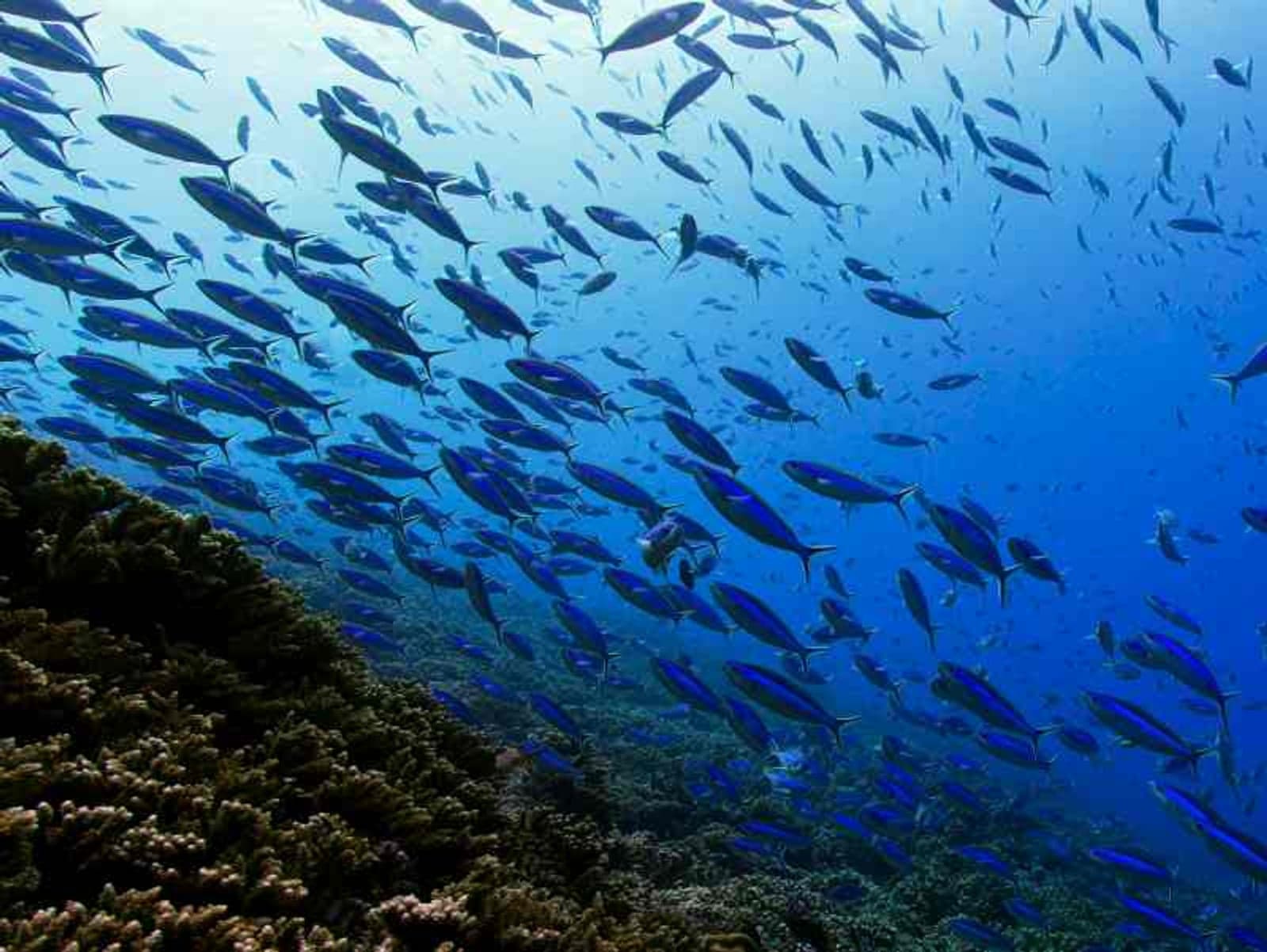
The ocean offers potential for power generation from waves, tides and ocean currents, as well as temperature and salinity gradients. Yet there are lingering questions and data gaps around the potential environmental effects of marine renewable energy (MRE).
The 2024 State of the Science report provides up to date, global information on the potential ways MRE may affect the marine environment and to support consenting, or permitting, processes for the responsible development of MRE technology, according to Pacific Northwest National Laboratory (PNNL).
The report is released by the OES-Environmental working group, under the International Energy Agency’s Ocean Energy Systems (OES). OES-Environmental is led by the US Department of Energy (DOE) and implemented by PNNL, with participation from 16 of the 22 OES countries.
OES-Environmental’s work is also supported by Tethys, a knowledge management system developed and managed by PNNL that provides access to information and research about the potential environmental effects of offshore wind and MRE development.
“This work represents the best available science on the environmental effects of marine renewable energy,” said Tim Ramsey, program manager for marine energy at the DOE Water Power Technologies Office. “Information like this can help accelerate deployment, paving the way toward decarbonization, as well as helping to meet energy needs, such as for remote coastal communities.”
Have you read?
EU wave energy converter project approved for testing
Eco Wave Power kicks off first MW-scale wave energy project in Portugal
2024 report development
The report is an update to the 2020 State of the Science report, highlighting new research and levels of understanding gained. The report also examines potential social and economic effects of MRE and provides tools that adapt scientific information into accessible forms for general understanding, workforce development and regulatory processes.
In developing this report, OES-Environmental identified 86 MRE projects globally for which significant environmental assessments and monitoring have taken place: 40 tidal, 39 wave, two ocean current and five riverine.
The 2024 State of the Science report summarises findings around potential stressor-receptor interactions, such as effects of underwater noise, electromagnetic field emissions on sensitive marine animals, displacement of marine animals, and potential changes in marine habitats.
Most of the information is derived from research and monitoring around single MRE devices or small arrays and indicates that, for most interactions, harm is limited or unlikely. Further research and monitoring are needed to determine the risk from other environmental interactions, such as the risk of collision to marine animals from tidal or riverine turbines, and to understand potential effects of larger arrays.
Researchers have built evidence bases for each of the key stressor-receptor interactions, so that past research can help streamline regulatory processes for current and future MRE projects. Experts have vetted several stressor-receptor interactions and their associated evidence bases to determine that they can be “retired” for small numbers of devices (one to six). These interactions are underwater noise, electromagnetic fields, changes in habitats, and changes in oceanographic systems.
Site visit: Preparing wave energy farms of the future
The risk retirement process allows for determining which interactions can be considered retired or low risk and may not require data collection for every new MRE project. Instead, regulators, advisers, device developers, consultants and others can use data from other deployments or jurisdictions to help support the assessment of new projects.
The report includes case studies that demonstrate the application of such information to justify retiring certain stressor-receptor interactions, reducing the amount of data that needs to be collected at each new site and allowing resources to be focused on those interactions that are less certain.
As MRE development expands into tropical and subtropical regions, potential environmental effects on unique habitats and species need to be assessed. While there is no stressor-receptor interaction specific to tropical and subtropical ecosystems, MRE technologies may differ — such as extracting power from temperature gradients, which is unique to these regions.
Additionally, these ecosystems are characterised by high biodiversity and contain unique and sensitive habitats. All the species and the interactions between species and MRE devices need to be considered. In tropical and subtropical regions, the development of MRE may also have significant socioeconomic effects if the communities’ needs are not considered from the inception of a project.
What’s coming with the next wave of research
The release of this report marks the completion of the fourth phase of OES-Environmental, which has been conducting research over the past 14 years. The fifth phase can expand research in the following areas:
- Environmental acceptability,
- Environmental effects of off-grid MRE applications,
- System-wide effects (testing larger arrays of devices) and
- Social and economic effects of MRE.
Originally published on hydroreview.com