Oscilla Power to launch wave energy converter at Hawaii test site
Pamela Largue
Posted on: 4 September 2023
Oscilla Power has relocated its Triton-C wave energy converter to the test site in Hawaii and completed setup activities at the launch site.
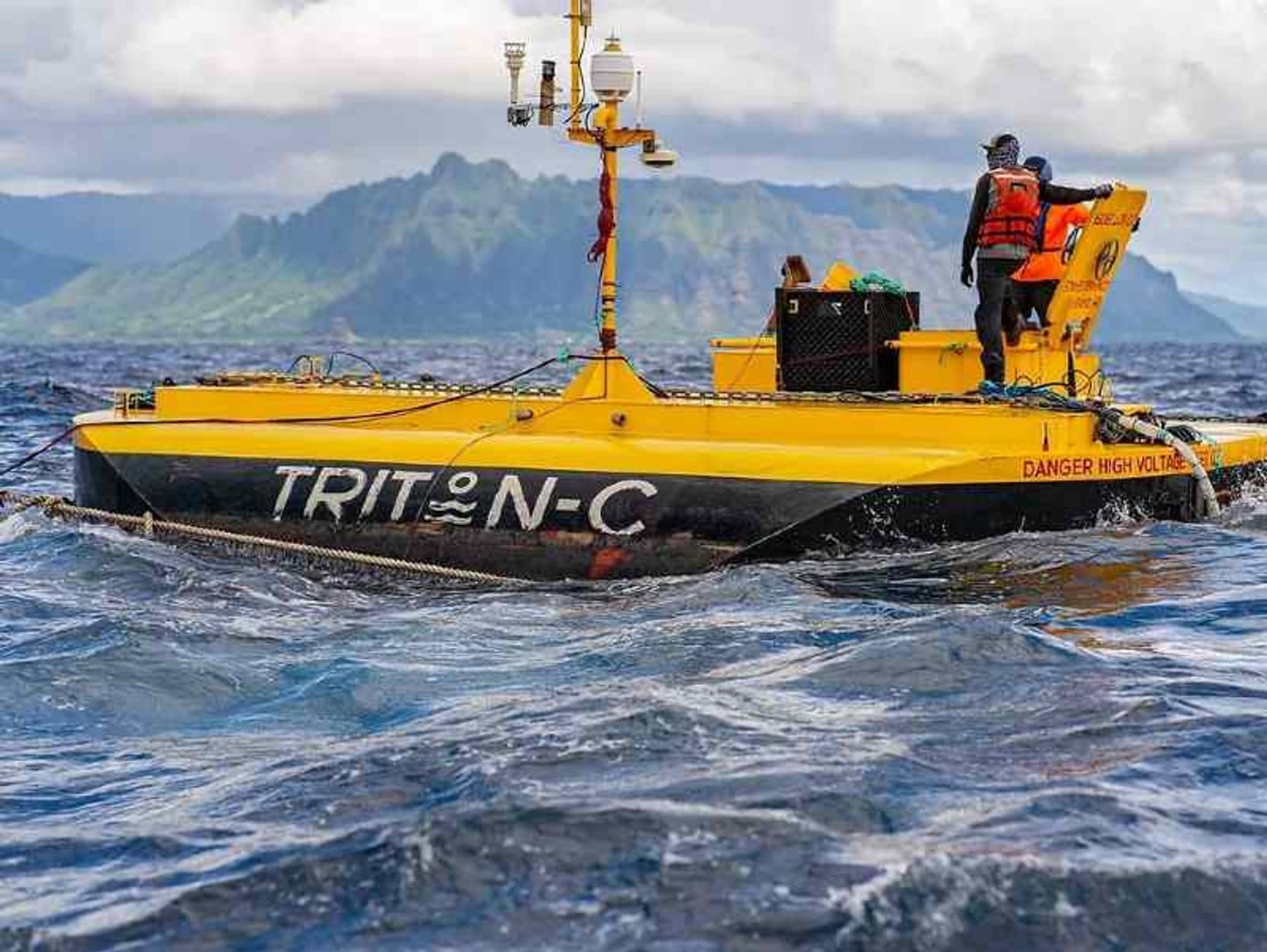
US-based Oscilla Power has relocated its Triton-C wave energy converter to the Wave Energy Test Site (WETS) in Hawaii and completed setup activities at the launch site.
In what took 12 hours, the Triton-C was towed from Honolulu Harbor to the grid connection point at the WETS site in Kaneohe Bay where it will be connected for a full-scale demonstration.
The team rehearsed various activities and tested the ability to manually activate systems under some of the significant motions experienced by the system.
The results of these rehearsals will allow the team to make adjustments over the coming weeks to ensure full performance.
Have you read?
Partnership explores wave energy to extend life of oil and gas hubs
Eco Wave Power is officially connected to Israeli electrical grid
“It was an incredibly rewarding experience to get the Triton-C out to its final deployment location and see just how it operates, if only for a few hours,” said Tim Mundon, chief technology officer of Oscilla Power.
“We now know what to expect from both setup and operations as we plan for the next phase of the launch - a more expansive testing of the energy capture and power generation components of the Triton.”
The Triton-C is a 100kW system designed for isolated power-at-sea applications or remote communities and according to Oscilla Power, it offers "increased levels of energy capture, conversion efficiency, and survivability in the ocean environment."
Oscilla Power was founded in 2009 in Seattle, Washington, and is also working on production of the Triton, a 1MW system that is designed to provide utility-scale power.
WETS site
The WETS site is a pre-permitted location that provides subsea grid connection and moorings. It's the United States’ first grid-connected wave energy test site.
The site is managed through a cooperative effort between the US Navy and the US Department of Energy (DOE), with the support of the Hawaii Natural Energy Institute and the Hawaii National Marine Renewable Energy Center.
According to the Energy Information Administration, the theoretical annual energy potential of waves off the coasts of the United States is estimated to be as much as 2.64 trillion KWh, or about 64% of total US utility-scale electricity generation in 2021.