Progress for large-scale offshore solar pilot in the North Sea
Pamela Largue
Posted on: 21 July 2023
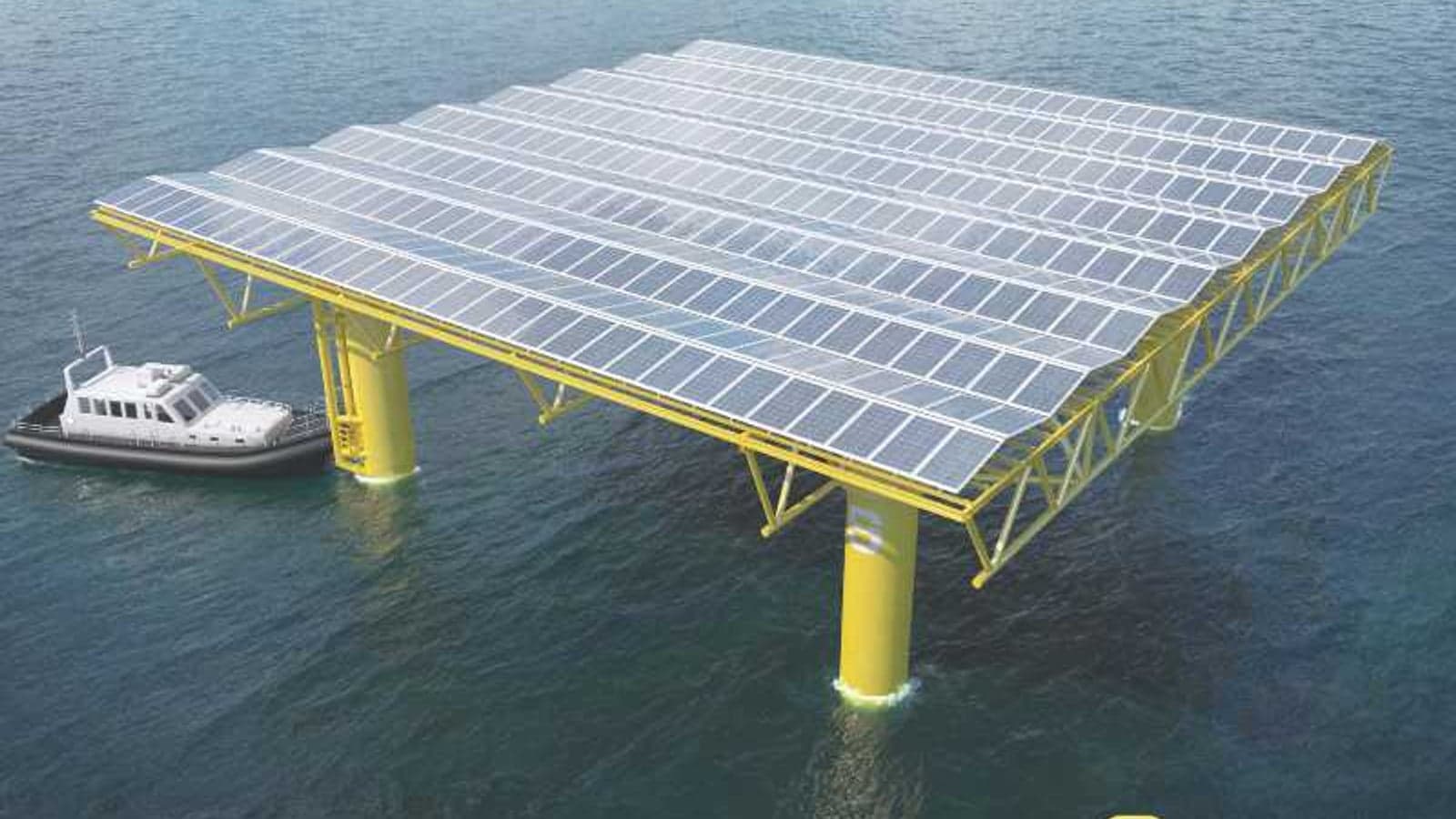
Offshore solar developer SeaVolt is getting ready for its first floating solar energy test platform to be installed offshore.
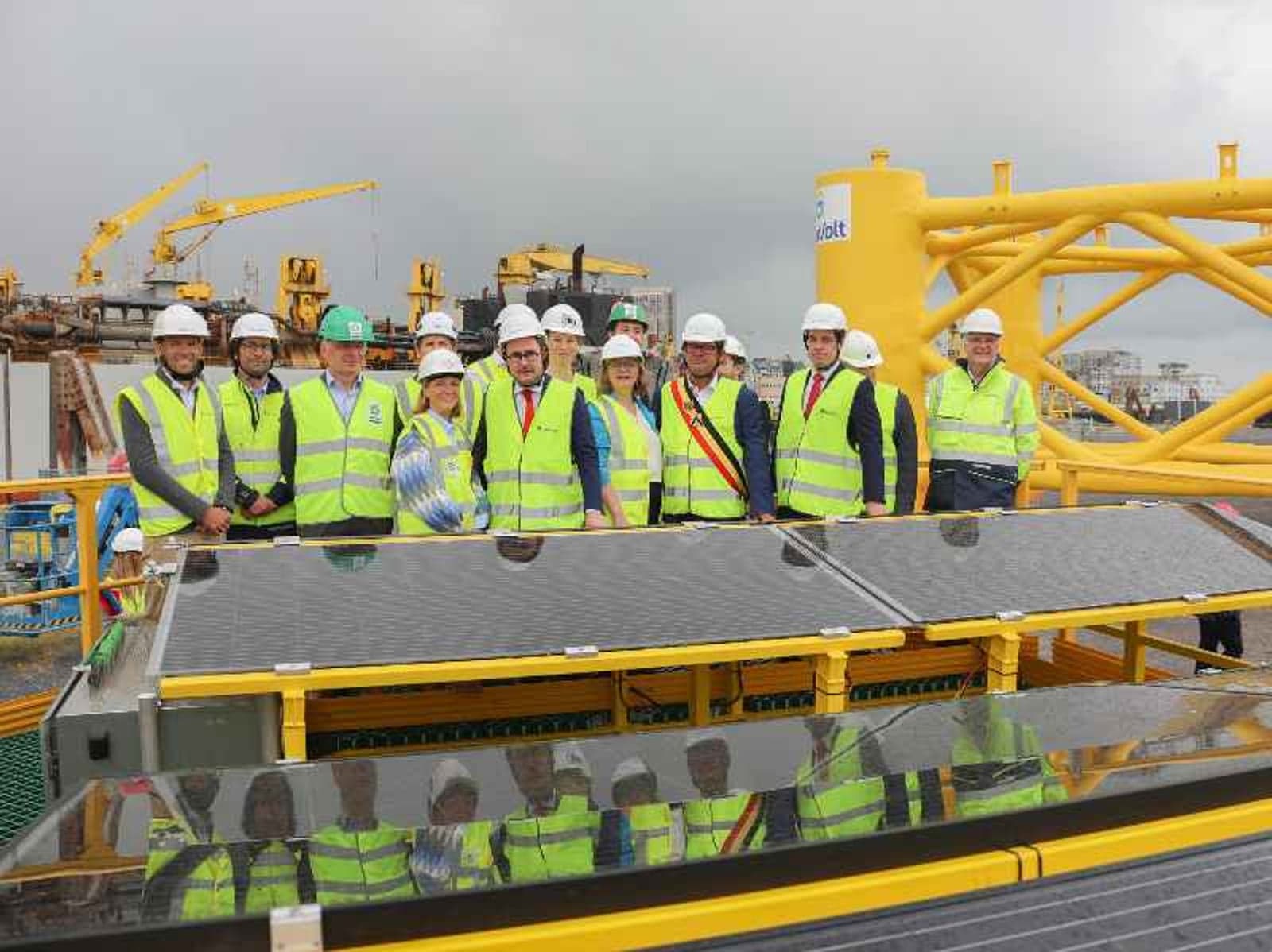
Offshore solar developer SeaVolt is getting ready for its first floating solar energy test platform to be installed offshore.
The platform floatation system is currently located in the port of Ostend, on the Belgian North Sea coast, where the main contractor Equans is finalizing assembly.
The test platform will be the first installation in the Belgian North Sea aimed at the large-scale development of offshore solar energy and is scheduled to be towed offshore, anchored, and put into operation to gather data for at least a year starting in August.
SeaVolt, a collaboration between Tractebel, DEME, and Jan De Nul, has developed a concept specifically tailored to the conditions of rough seas and as a complement to offshore wind farms.
The test will be conducted in the POM-West Vlaanderen-owned ‘Blue Accelerator offshore test zone’.
This proof-of-concept installation will gather data on the impact of waves, rain and salt sprays on various solar panels with different PV panel configurations.
Have you read?
Six startups win support from New York offshore wind accelerator
Five green tech innovations for power generation of the future
In addition, the impact of varying inclinations, caused by waves and wind, on the energy output will be closely monitored. The test aims to determine the level of protection required to shield the solar panels from seawater and bird droppings.
Philippe Van Troeye, CEO Tractebel, said: “While we are convinced that offshore solar has an important role to play in the accelerated energy transition, technological development is often seen as a bottleneck for unlocking the full potential of this exciting market. With SeaVolt, and more specifically with this cutting-edge test nearing completion, we’ll be able to observe how such an installation behaves under real-life conditions, providing us with the necessary knowledge to mature and mitigate risks for future developments.”
SeaVolt is using novel lightweight carbon fiber material in this test installation.
Optical embedded fibers and sensors attached to the structure will assess if the structural integrity of the material is in line with the numerical models from the ocean wave tank and wind tunnel tests.
Since the floating structure and solar panels are driving the cost, these measurements are indispensable for further financial assessment, according to SeaVolt.
This test will also look at ecological impacts of the technology, with various materials being evaluated based on the prevention of adverse effects on the marine environment.
SeaVolt sees this test as a type of laboratory to gain knowledge and drive technological development further. The team is preparing for a large-scale demonstration project within an offshore wind farm to assess the viability of integration.
Research concerning future LCOE evolutions analysis will be ongoing.
Vincent Van Quickenborne, Minister of the North Sea: “These floating solar panels have the potential to generate 1 GW of additional green power in wind farms, which is the equivalent of a nuclear power plant. With this test project, which is like a solar lab at sea, we are taking a unique lead in a new sector.”