QUASAR building a circular economy for solar PV in Europe
Guest/partner contributor
Posted on: 21 October 2025
QUASAR is developing a suite of solutions for the collection, management and recycling of end-of-life solar PV modules in Europe.
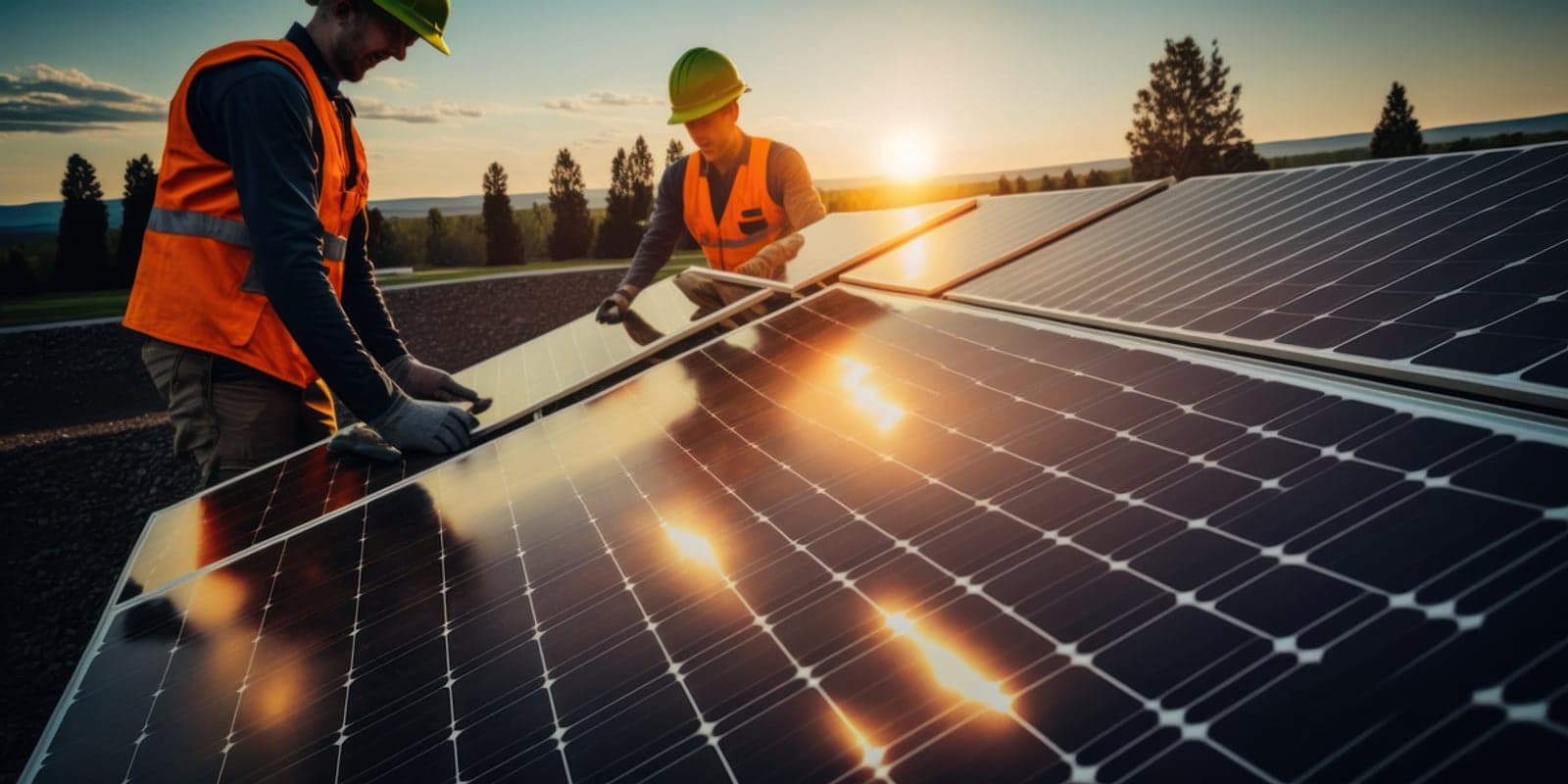
As Europe accelerates its transition to renewable energy, solar power has become a cornerstone of the continent’s climate strategy. With solar PV capacity surpassing 2TW globally in 2024 and reaching 338GW in the EU alone by the end of 2024, the growth of solar energy has been nothing short of remarkable. However, this rapid expansion brings with it a pressing challenge: how to sustainably manage the growing volume of end-of-life solar panels.
Solar panels typically have a lifespan of 25 to 30 years, meaning that a significant wave of decommissioned modules is expected in the coming decade. By 2050, the volume of retired panels is projected to increase tenfold, creating a substantial waste management issue. In the EU, this challenge is particularly urgent as PV panels are classified as electronic waste (e-waste) under the Waste Electrical and Electronic Equipment (WEEE) Directive. This regulation places the responsibility for collection and recycling squarely on the shoulders of manufacturers.
The QUASAR project is aimed to address this growing challenge of solar panel waste. At the core of this effort is a highly integrated approach that combines digital technologies, reverse logistics and collaborative supply chain engagement.
QUASAR’s strategy begins with the active involvement of all stakeholders across the PV lifecycle, from manufacturers and installers to recyclers and end-users. This ensures that the solutions developed are not only technically sound but also practically scalable and aligned with real-world operational needs.
One of the project’s key innovations is the use of digital twins – virtual replicas of physical solar panels that store and update data throughout the panel’s life. These twins are linked to product passports and smart sensor tags, enabling real-time tracking of each module’s condition, location and material composition. This digital infrastructure supports product lifecycle information management (PLIM), allowing for more informed decisions about reuse, repair or recycling.
To optimise the movement of end-of-life modules, QUASAR incorporates reverse logistics technologies, which are designed to efficiently sort and transport used modules from decommissioning sites to testing, sorting and recycling facilities. These systems are enhanced by AI and machine learning algorithms that help predict panel degradation, assess repair potential and automate the sorting processes based on material recovery value.
In the operational phase, QUASAR is implementing best practices for warehouse management of end-of-life modules, including automated sorting lines, condition-based testing protocols, and modular repair stations. Modules that pass testing can be refurbished and reintroduced into the market, while those beyond repair are directed to advanced recycling processes.
QUASAR innovations
QUASAR is also researching two innovative recycling processes:
- Thermal/chemical delamination, which uses controlled heat and chemical agents to separate layers of the panel and extract high-purity materials like silicon and silver.
- Waterjet treatment, a mechanical method that uses high pressure water to disassemble panels without damaging valuable components, enabling cleaner and more efficient recovery of glass and metals.
Together, all these systems form a closed loop model that not only reduces waste and emissions but also recovers critical raw materials for reuse in new panels or other industrial applications. By integrating digital intelligence with physical infrastructure, QUASAR is setting a new benchmark for circularity in the solar PV sector.
QUASAR is driving a circular economy for solar PV by combining smart decision tools, repair technologies and advanced recycling processes. Its goal is to recover 70–90% of high-purity materials – including silicon, silver, polymers and glass – for reuse in new solar modules and other industries, generating over €13 per module in recovered value.
Key innovations include:
- Decision support tools to assess whether panels should be reused, repaired or recycled.
- Repair solutions that divert up to 50% of PV waste from recycling by enabling cost-effective refurbishment.
- Advanced recycling using thermal/chemical delamination and waterjet treatment to recover materials with high purity.
- Closed loop systems that ensure recovered materials re-enter the supply chain, reducing waste and raw material demand.
Expected outcomes:
- ≥90% silicon recovery,
- ≥70% silver recovery,
- ≥90% polymer recovery,
- ≥80% glass reuse as float glass (vs <20% downcycled),
- 20% reduction in decommissioning costs,
- <€5 inspection cost per module,
- <€7.50 repair cost per module,
- 10,000 tonnes/year recycling capacity.
QUASAR is proving that solar sustainability doesn’t end at installation – it continues through smart, circular end-of-life solutions.
Smarter end-of-life decisions
One of QUASAR’s early achievements is the development of a public best practice guide for module field inspection (Deliverable D2.1). This guide empowers operators to make informed decisions about whether a module should be reused, repaired or recycled. It introduces a robust classification system based on visual, thermal, and electrical diagnostics – including infrared thermography, electroluminescence imaging and IV-curve tracing.
The guide also outlines repairable defect types and offers practical solutions for on-site fixes, such as junction box replacements and backsheet coatings. By standardising inspection and handling protocols, QUASAR is enabling more efficient sorting and reducing unnecessary waste.
Scaling up recycling
In Deliverable 4.4, QUASAR presents a comprehensive environmental and security assessment of its industrial-scale recycling pilot, capable of processing 10,000 tonnes of PV waste annually. The facility uses a combination of pyrolysis, mechanical separation and mild chemical etching to recover high-purity silicon, silver, copper, and glass – materials critical to the energy transition.
The report confirms that the recycling process meets stringent environmental standards, with emissions well below regulatory thresholds. Advanced scrubbers and dust collectors ensure clean air discharge, while water and energy use are optimised for efficiency. Health risk assessments show negligible impact on surrounding communities, and the site’s design minimises biodiversity disruption and soil contamination.
This pilot not only proves the technical feasibility of high value PV recycling – it also demonstrates its scalability and alignment with circular economy principles.
Stakeholder insights and co-creation
Deliverable 10.4 captures the human side of the QUASAR mission. Through a European stakeholder survey and a co-creation workshop, the project gathered insights from industry experts, researchers and PV operators across the continent.
The findings reveal strong support for repair, reuse and recycling, but also highlight key barriers:
- Repair: High costs, lack of standards, limited business models.
- Reuse: Low market demand, insurance reluctance, absence of certification.
- Recycling: Low volumes of end-of-life modules, high logistics costs, inadequate regulation.
Participants proposed actionable solutions, including:
- Financial incentives, e.g. VAT reductions, CO₂-based subsidies.
- Standardised testing and certification for second-life modules.
- Regional recycling hubs and material-specific quotas for critical PV components.
These insights are feeding into QUASAR’s design thinking process, guiding the development of practical, stakeholder-informed solutions that will shape future policy and industry practices.
Blueprint for circular solar
Together, these deliverables showcase QUASAR’s holistic approach to PV sustainability – from technical innovation to stakeholder engagement. By enabling smarter inspections, scaling up recycling and fostering collaboration, QUASAR is laying the foundation for a solar industry where nothing goes to waste.
As Europe prepares for a surge in decommissioned solar panels, QUASAR offers a blueprint for turning a looming waste challenge into a resource opportunity – making solar energy not just renewable, but truly regenerative.
About the authors
Martin Bellmann is a Senior Business Developer at SINTEF Industry in Trondheim. With a PhD in metallurgy of nonferrous metals and high purity materials, he has extensive expertise in crystalline silicon technology, PV and circular economy strategies. He has coordinated and contributed to several European projects, including ICARUS, QUASAR, and ECO-SOLAR.

Alberto Pico is a Senior Technical Leader at EPRI Europe. He leads the Horizon QUASAR project and contributes to wind and solar programmes. With over a decade at Enel Green Power, he brings expertise in engineering, operations and grid integration. He holds advanced degrees in electrical engineering and renewable project management.

Most popular
Join the community for freeAnd get access to all content
Related projects
Quasar
+1
1 September 2023 - 30 November 2027
View project