Rethinking UK grid resilience in response to energy shocks
Yusuf Latief
Posted on: 10 April 2026
UK exposure to energy price shocks is often blamed on geopolitical volatility. Perhaps the question is more if the grid can evolve fast enough to absorb, rather than transmit them.

The UK’s exposure to global energy shocks is often framed as a consequence of geopolitics. But for Chris Bernkopf, the Co-Founder & Chief Executive Officer of energy management platform Podero, that risks missing the point.
For Bernkopf, the system is not failing because shocks are becoming more frequent; rather, it is failing because it was never designed to absorb them.
Speaking to Enlit media, Bernkopf says, “the UK’s vulnerable energy system cannot be accredited to bad luck, but is rooted in a long-neglected structural design problem.”
The implication is straightforward. Rather than something bolted on in response to crisis, resilience has to be designed into how the system operates.
What that means in practice is shifting focus away from purely adding supply, and towards how the system behaves under stress.
Three specific elements
Three elements are at the centre of that rethink: storage, flexible demand, and demand-side capacity.
Says Bernkopf: “To overcome this, a shift in attention must be moved towards three core aspects: storage assets that create a physical buffer, flexible loads that allow demand to respond intelligently, and demand-side capacity that makes the grid an active, managed system rather than a passive transmission line.”
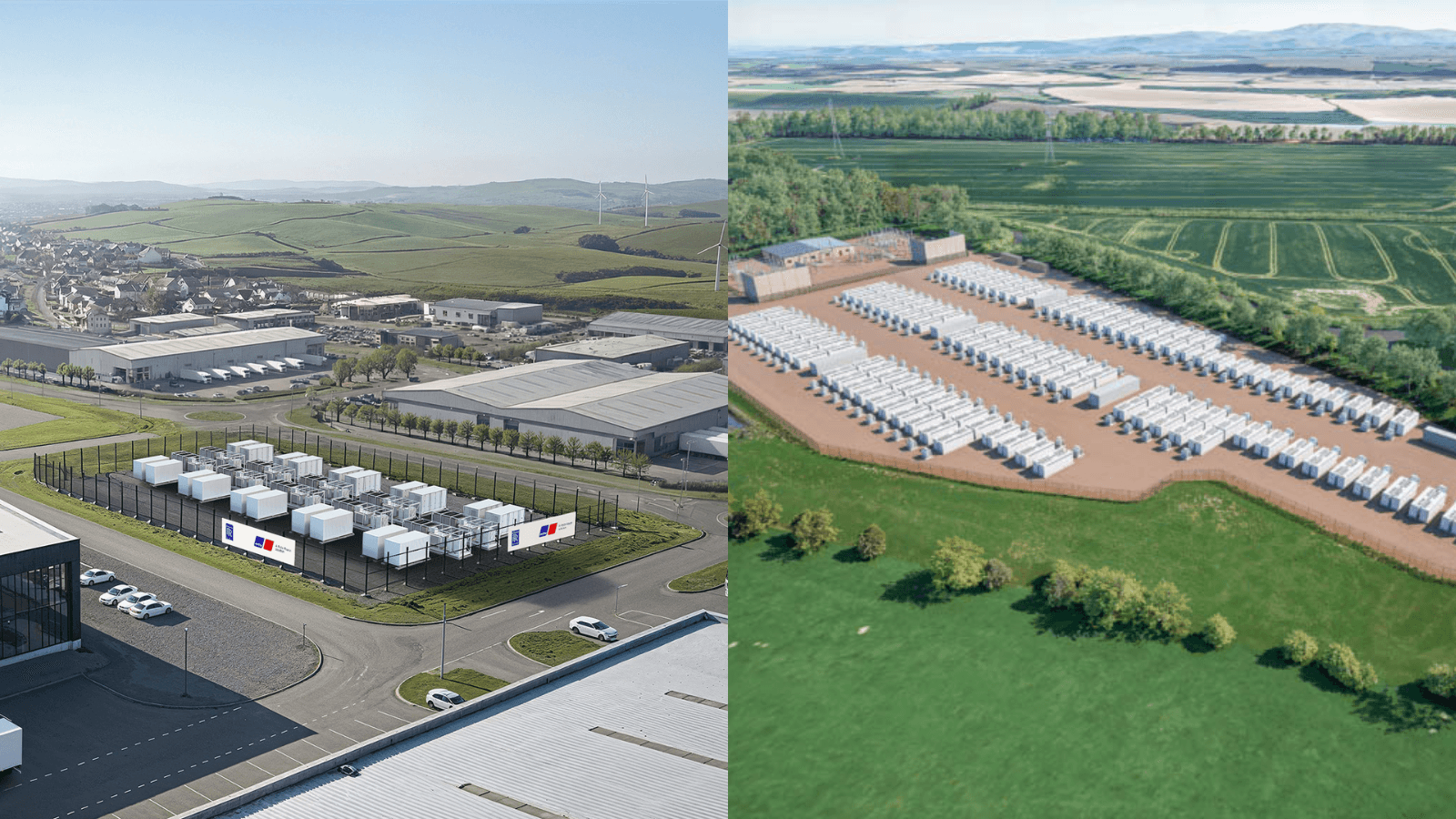
Storage is the most immediate gap. Without it, the system has no buffer. Every disruption—whether it is a supply outage or a geopolitical shock—feeds directly into prices in real time.
Says Bernkopf: “Without meaningful buffer capacity, every supply disruption caused by a geopolitical event feeds through to the system in real time, with no capacity to wait it out.”
Grid-scale batteries and long-duration storage change that dynamic. They do not remove the shock, but they can slow it down, giving the system time to respond rather than react.
Of course, storage alone is not enough. The UK’s bigger untapped resource sits on the demand side.
Flexible loads already exist across industrial users, where demand has long been optimised against price signals. The same principle applies to households, says Bernkopf, but remains largely unrealised.
“Residential consumers also have this same potential; they just need utilities to unlock it for them.”
Indeed, across the UK, heat pumps, EV chargers and home batteries are already installed at scale. What is missing is an orchestration layer that can then turn these devices into a coordinated system resource.
This is where the UK’s structural weakness becomes most visible.
Residential and industrial flex isn't just a cost-reduction tool, but a way of incorporating distributed assets into the grid's active management in real time.
Flexibility only becomes meaningful when it is aggregated, traded, and dispatched in real time. Without that integration, distributed assets remain passive, even if they are technically capable of supporting the grid.
Bernkopf is clear on the consequence of this: “Residential and industrial flex isn't just a cost-reduction tool, but a way of incorporating distributed assets into the grid's active management in real time.”
Geopolitical shocks
The events of March, adds Bernkopf, underline the point.
“When Iran struck Qatar's Ras Laffan facility, TTF gas prices jumped 35% in a single day, and Brent briefly hit $119 a barrel.”
Yet, at the same time, German power prices moved in the opposite direction, supported by renewable generation.
Over in Spain, as explained in a LinkedIn post by Ember’s Europe Programme Director Paweł Czyżak, thanks to wind and solar power, and a battery boom, the country was able to maintain much lower power prices than most EU countries.
The UK saw no such effect, says Bernkopf.
With higher gas dependency and less system flexibility, the shock fed directly into electricity prices.
Flexible demand can, however, play a critical role here; during periods of stress, reducing peak demand—even slightly—can materially lower wholesale prices.
“Since power prices are set at the margin, even modest reductions in peak demand can then have a meaningful impact on wholesale prices,” according to Bernkopf.
Demand-side capacity takes this further. Instead of relying on expensive gas-fired generation during tight conditions, system operators can call on pre-committed demand response.
Demand-side resources can be activated repeatedly over consecutive days or weeks, providing a sustained buffer while global markets adjust.
“The result is a direct reduction in the marginal cost of supply, which suppresses price spikes and limits volatility,” says Bernkopf.
Just as importantly, these tools can extend the system’s ability to cope over time. Storage can discharge. But flexibility can be called on repeatedly.
“Demand-side resources can be activated repeatedly over consecutive days or weeks, providing a sustained buffer while global markets adjust,” according to Bernkopf.
A limited model
This is where the UK’s current model shows its limits.
As Bernkopf explains, “gas-fired generation determines the clearing price that all generators receive, including renewables.” In practice, that means volatility in global LNG markets feeds directly into electricity prices, even as renewable capacity grows.
That exposure is amplified on the demand side. “Around 85% of UK homes still heat with gas boilers,” according to Bernkopf, so the same price shock lands across both electricity and heating at once.
The system also lacks the buffers seen elsewhere. Limited gas storage and declining North Sea output have increased reliance on imported LNG, leaving the UK more exposed to short-term price movements in global markets.
At the same time, there are clear routes to reduce that exposure. Energy storage, flexible demand and aggregated residential assets are already starting to shift how the system can respond under stress.
Virtual power plants and demand response programmes are beginning to translate distributed capacity into something that can be used in real time.
“The infrastructure for aggregating those assets into meaningful grid capacity already exists,” said Bernkopf. “The challenge isn't the technology; it's aligning the incentives between utilities, device manufacturers, and homeowners simultaneously.”
More on energy system resilience:
Fragmented infrastructure monitoring is holding back Europe’s grid upgrade
How should Europe think about energy sovereignty post-Hormuz?
Why heat pumps are central to industrial decarbonisation and energy resilience
What follows from that is a system that can respond with more control when conditions tighten. As Bernkopf puts it, “flexible loads begin to change that dynamic by giving utilities the ability to respond to price signals in real time by steering consumption.
Crucially, he adds, such grid mechanisms can also affect the duration of the shock.
This is because demand-side resources can be activated repeatedly over consecutive days or weeks, providing a sustained buffer while the global market adjust.
Says Bernkopf: “This avoids the pattern seen today, where high prices persist as long as the system remains tightly balanced against expensive gas inputs.”
Taken together, says Bernkopf, flexible loads and demand-side capacity introduce responsiveness into what is currently a rigid system.
“They do not eliminate the impact of global LNG disruptions, but they materially weaken the link between gas and power prices, reducing both the intensity of price spikes and the length of time the system remains exposed.”
Related tags
Latest content
+4
What Spain’s blackout means for the US grid and its energy storage future
EU grids tend to be centrally managed whereas the US runs a patchwork of regional systems. Barrett Bilotta of Agilitas Energy examines what can one learn from the other to counter the threat of cascading blackouts.
- Guest/partner contributor
- 31/10/2025