Fragmented infrastructure monitoring is holding back Europe’s grid upgrade
Guest/partner contributor
Posted on: 10 April 2026
Keen AI's Amjad Karim believes that a shared picture of what assets exist and the state they are in is crucial to achieve network resilience.

Europe’s utility networks are visibly ageing. Over 30% of Europe's low-voltage distribution lines are already more than 40 years old, with industry bodies warning that the share could reach 90% by 2050 if nothing changes materially.
Meanwhile, across Northern Europe, water tariffs rose by around 10% in 2024 alone - up to 16.6% in some countries - largely to fund upgrades to ageing underground infrastructure.
Ageing infrastructure is manageable if you know what condition it is in. Currently, Europe's utilities are spending billions on infrastructure they cannot fully see. Asset records are incomplete and maintenance decisions are largely driven by how old an asset is, rather than evidence of actual deterioration. And where condition assessments do exist, they vary between engineers, sites and networks in ways that make it hard to build any reliable view of risk at scale.
More investment alone will not fix this. The priority has to be building an accurate, shared picture of what assets exist and what state they are in so that money goes where it actually reduces risk.
Maintenance decisions are still based on age, not evidence
The logic of time-based maintenance is intuitive: assets get old, assets get replaced. For decades, it was the default approach for many utilities as it was straightforward to apply and easy to justify to regulators. However, it rests on the assumption that age is a reliable proxy for condition, which doesn’t hold up well in practice.
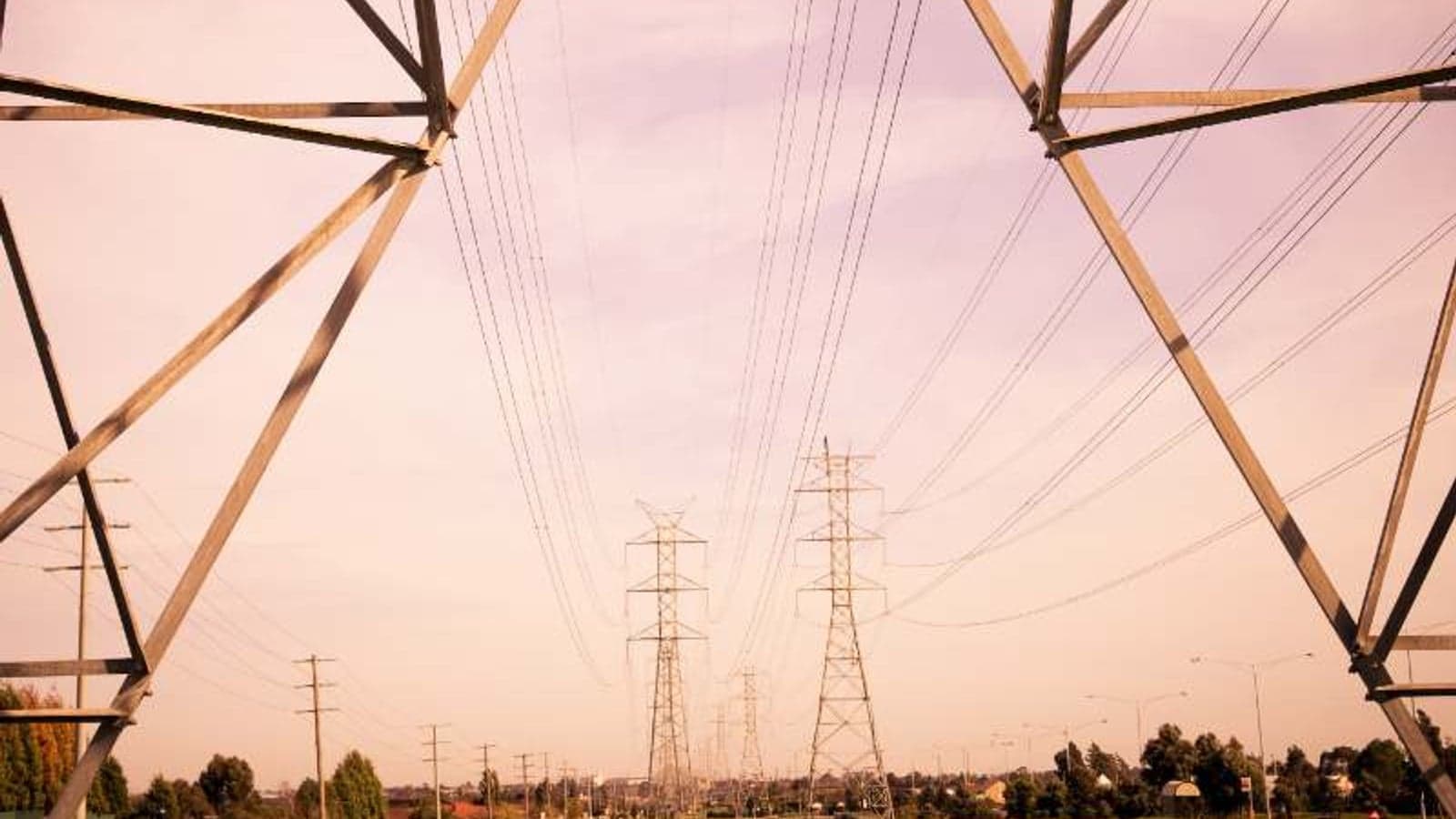
For example, a transmission tower in a coastal environment will corrode faster than one inland, or a cable running through waterlogged ground degrades differently from one in dry conditions. Age tells you when something was built, but condition data tells you what it needs now - and for most European networks, that data is either incomplete or too inconsistent to act on reliably.
Regulatory updates such as Ofgem's RIIO programme have pushed UK operators towards risk-based asset management which links investment decisions to the likelihood of failure instead of the number of years an asset has been in the ground. Germany’s ARegV regime and France’s TURPE tariffs use revenue caps and performance-based incentives to similar ends - though focused on cost and operational efficiencies.
The intent across these frameworks is right. In practice, however, decisions still tend to be anchored to age profiles, partly because the condition data required to do anything more sophisticated is patchy, making it difficult to support the kind of evidence-based decisions these frameworks were designed to enable.
As grids grow more complex under the energy transition with the introduction of more assets, more interconnections, and more potential points of failures, the problem intensifies.
Consumers are bearing the costs of European utilities building the same tools
One response to this problem has been investment in AI and computer vision tools with systems that can process imagery from drone and helicopter surveys to produce consistent, objective condition assessments at scale. This is the right direction, but it also introduces further complications.
The problem is that operators are doing so independently with different datasets, models and development teams, despite the fact that most European transmission networks are broadly similar in function and design. Without a shared framework, each operator is effectively starting from scratch.
At a time of a cost-of-living crisis when energy and water costs are under heavy scrutiny, asking consumers to fund the same wheel being reinvented in multiple places is hard to defend.
Some defects and failures are rare events, meaning that a single operator's dataset is unlikely to contain enough examples to build a robust framework for dealing with that specific defect. Pooling data across networks would produce more comprehensive models, cover a wider range of conditions, and do so at a fraction of the cost.
In regulated industries, the cost of this duplication flows through to bills. At a time of a cost-of-living crisis when energy and water costs are under heavy scrutiny, asking consumers to fund the same wheel being reinvented in multiple places is hard to defend.
The UK is starting to address this. Ofgem-funded work is underway to develop a shared foundational AI model for electricity infrastructure, treating AI model development the way they treat grid standards - as shared infrastructure, not competitive IP. It is an approach the rest of Europe would do well to consider.
Have you read?
The overlooked grid factor shaping Europe’s energy security
Why heat pumps are central to industrial decarbonisation and energy resilience
Reliable infrastructure is a precondition for energy security
The case for accelerating the clean energy transition is increasingly an energy security argument. Europe's dependence on fossil fuels has twice in recent years left consumers exposed to geopolitical shocks entirely outside their control. Russia's invasion of Ukraine cost the EU and UK an estimated $1.8 trillion between 2022 and 2025. More recently, conflict in the Middle East has pushed UK wholesale gas prices to nearly double overnight. These are recurring demonstrations of what it costs to depend on energy sources whose price is set by decisions European governments have little to no influence over.
The clean energy transition is, at its core, a route out of that dependency. The faster Europe builds domestic generating capacity and electrifies heating and transport, the less exposed its consumers are to the next geopolitical shock. But the transition only delivers that security if the grid underpinning it is reliable and well-understood.
The costs of poor grid reliability are already measurable. In the Netherlands, grid congestion is costing the economy €35 billion ($40.9 trillion) annually. In Great Britain, analyses indicate that in 2025, the National Energy System Operator (NESO) spent around £1.5 billion ($1.8 billion) curtailing wind farms and paying for alternative generation, largely because of bottlenecked energy transport corridors. Maintenance is not the only driver of congestion, but it is one of the few levers operators can act on in the near term - and it is not being used well.
Renewable generation that cannot reach consumers, or a network maintained on incomplete data, are all symptoms of energy vulnerability. The transition to clean energy cannot deliver energy security on an unreliable grid.
What needs to change
The infrastructure failures Europeans are experiencing, as well as the consequent rising bills, are not simply the result of underinvestment; they are the result of investing in systems that operators do not have full visibility of.
The tools to change this already exist and the regulatory intent is there. The question is whether European utilities and the regulators overseeing them will use them at the scale the problem demands: standardising how asset condition data is collected, pooling it across networks, and applying AI to interpret it consistently. The alternative is to keep making expensive decisions in the dark - and passing the bill, as usual, to consumers. Europe cannot afford to wait till the cost of fragmentation becomes impossible to ignore.
About the author:
Amjad Karim is CEO of Keen AI, a UK-based company specialising in AI solutions for critical infrastructure. A former data scientist for the National Grid, one of the UK's biggest electricity providers, Amjad now provides computer vision analysis for some of the world's biggest asset owners.