Rolls-Royce to launch fast-start gas gensets to power data centres
Pamela Largue
Posted on: 6 October 2025
Rolls-Royce has announced plans to expand its mtu genset portfolio with engines suitable to meet the power demands of date centres, as well as grid stabilisation requirements.
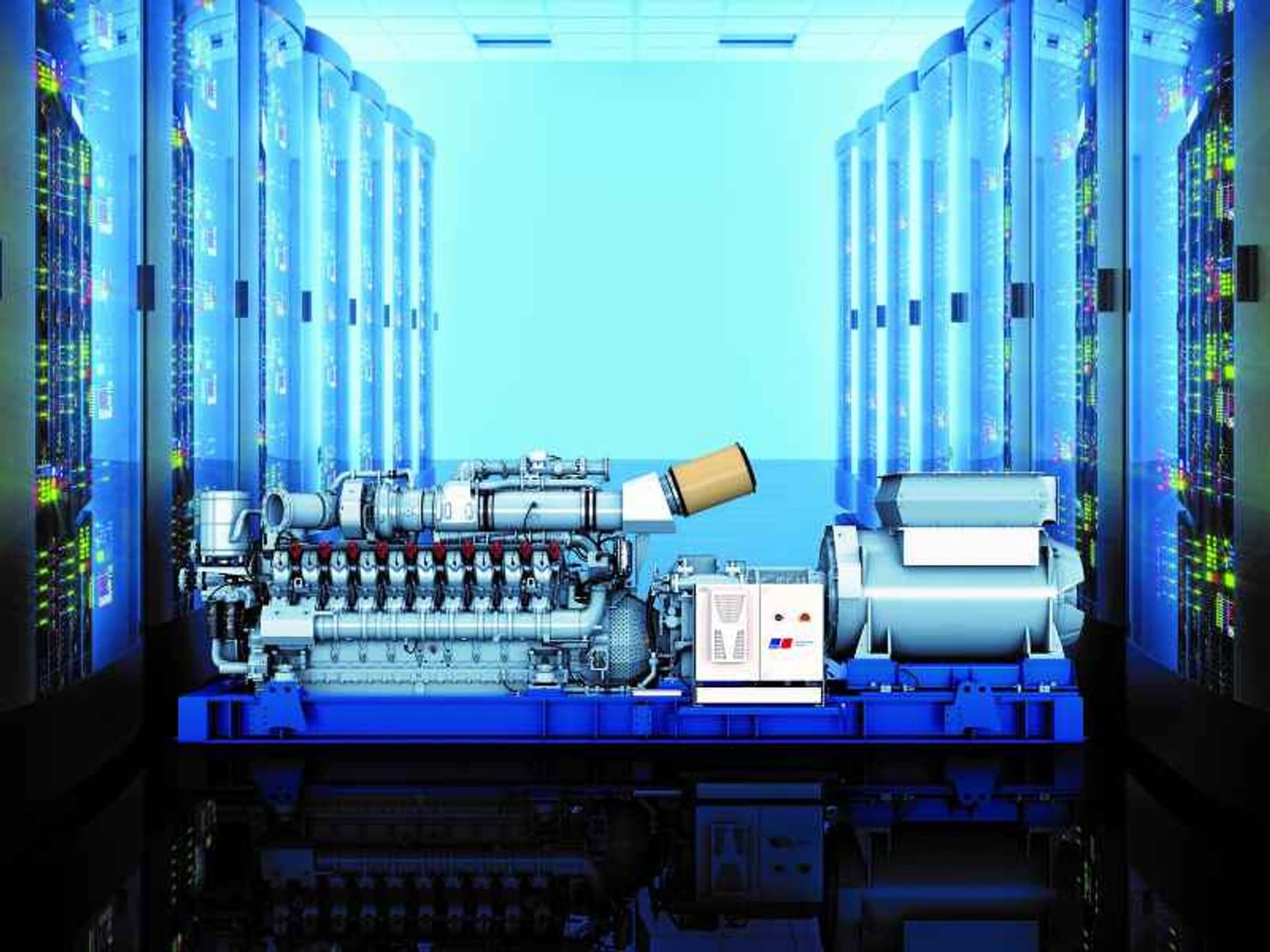
Rolls-Royce has announced plans to expand its mtu genset portfolio with engines suitable to meet the power demands of data centres, as well as grid stabilisation requirements.
From 2026, the new 20-cylinder mtu Series 4000 L64 engine will be available - able to deliver its full output of 2.8MW in 45 seconds - no gearbox required.
According to Rolls-Royce, performance has been improved by 10% from the previous version of the genset and is targeting the 60 Hz market, primarily in North America.
Current versions of the mtu Series 4000 gas gensets are available worldwide with a fast-start capability of 120 seconds, 75 seconds slower than the new version.
Kevin McKinney, vice president of Powergen Sales Americas at Rolls-Royce Power Systems, commented on the announcement: “We expect that natural gas will increasingly be used to meet the growing energy demands of (AI) data centres in the future, particularly in North America, where it is relatively inexpensive and readily available. This 45-second fast-start solution with higher power output will represent a significant advancement for our customers and their ability to secure power for their operations.”
Have you read?
Babcock & Wilcox plans to convert existing coal plants to power data centres
US Data centre boom drives energy investments focused on resilience
Rolls-Royce explains that the fast-start gensets can be used in data centres for emergency or continuous power supply and in combination with mtu diesel gensets. The continuous power application is especially attractive when the existing grid power is not sufficient to take on the new load of a data centre coming online.
When grids are under strain due to the connection of large data centres and the connection of intermittent renewables, modular gas power plants can provide much-needed energy security by coming online faster. The plants can also provide additional revenue by allowing electricity to be fed back to the grid.
Tobias Ostermaier, President Stationary Power Solutions at Rolls-Royce Power Systems, explained that global energy consumption of data centres is expected to double by 2030, making these solutions particularly relevant.
Said Ostermaier: "This is the reason why we are continuing to invest heavily in expanding our portfolio and as well in different technologies to offer our customers the best solutions for today’s but also for future requirements.”
According to data analysts McKinsey, by 2030, companies will invest almost $7 trillion in capital expenditures on data centre infrastructure globally and more than 40% of this spending will be invested in the US.
Also of interest:
Equinix looks to next-gen nuclear to power AI-ready data centres in Europe
Oracle and Bloom Energy strike data centre power deal
With this expansion, data centre power needs in the US are expected to add about 460TWh of demand from 2023 to 2030, three times the current level of consumption.
This load pressure on regional grids will require new supply build-outs and transmission expansion. The timelines for this infrastructure development can be challenging to meet, with the rapid pace of data centre demands, with supply shortfalls expected across many regions.