Why Europe can no longer remain neutral on nuclear
Pamela Largue
Posted on: 25 June 2026
Antoine Bizet of EDF says Europe’s shift to nuclear energy is unmistakable, driven by growing recognition of its role in strengthening energy security.
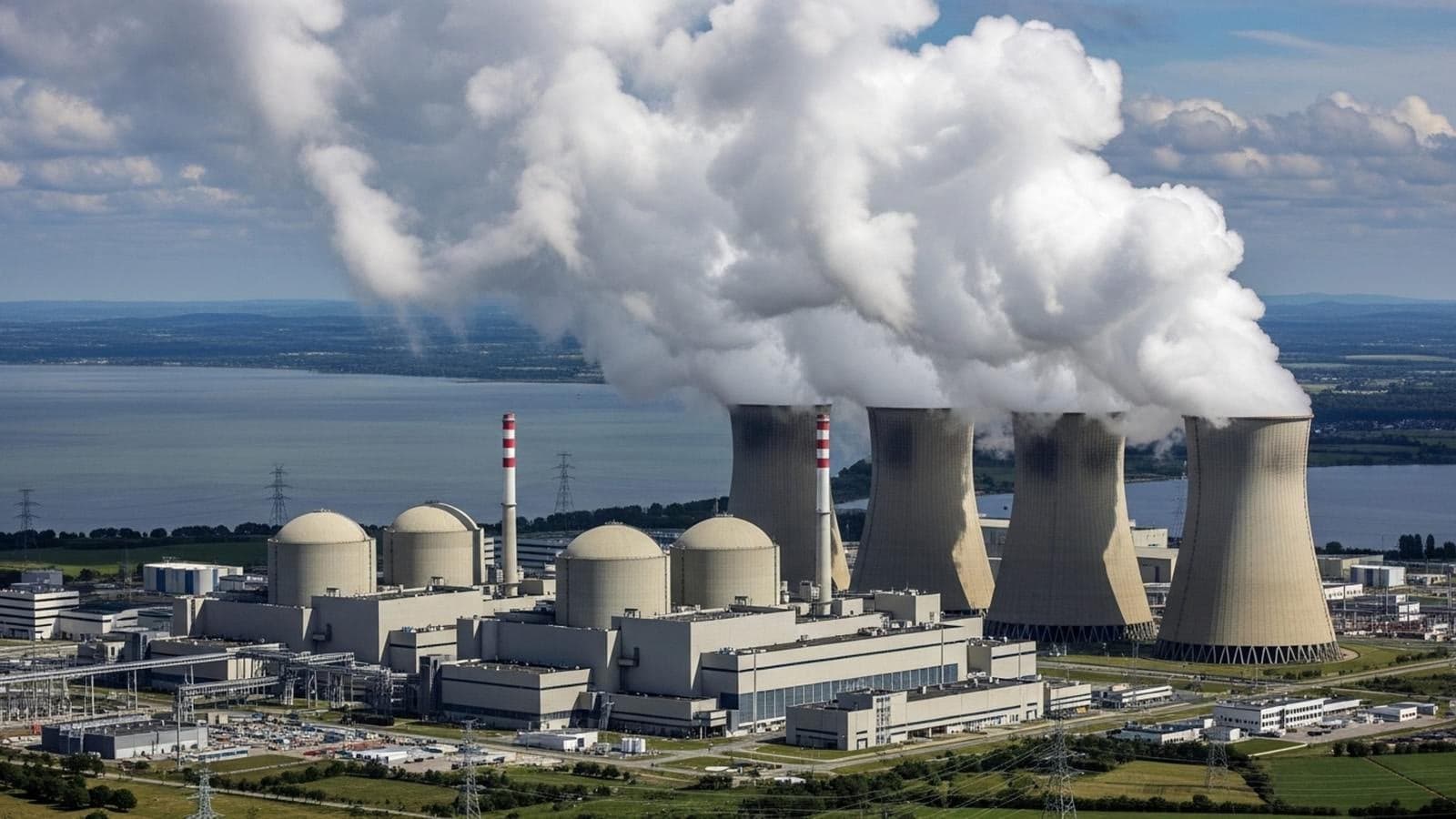
After years of political hesitation, policy fragmentation and in some countries outright phase-out plans, a growing number of European governments are reassessing the role nuclear can play in delivering energy security, industrial competitiveness and decarbonisation.
For Antoine Bizet, Deputy Director for EU Affairs at EDF, the change is no longer subtle. “There is no doubt about the fact that for several years now there is a kind of shift in the EU,” Bizet says.
“It began with the war against Ukraine and it has been reinforced with the price crisis that Europe faced in 2022 and 2023.”
Based in Brussels, Bizet leads EDF’s EU policy team, working on electricity regulation, climate policy, electrification and nuclear affairs, a position that provides a front-row seat to what he describes as a major political and industrial realignment across Europe.
A growing pro-nuclear coalition
Perhaps the clearest evidence of the shift is the growing number of countries reconsidering or embracing nuclear energy, says Bizet.
Countries such as Italy, Belgium and Sweden, all of which previously moved away from nuclear development, are now revisiting the technology as part of their long-term energy strategies.
At the same time, countries with no prior nuclear history are entering the conversation.
“You have newcomers, countries that have never operated nuclear power plants that have decided to enter into this market and to deploy this technology,” Bizet says. “That is mainly the case for Poland. Estonia is also thinking about it.”
According to Bizet, this marks a fundamental shift in the balance of opinion inside the European Union.
“If you look at the member states, there is now a majority of member states in Europe that are either already operating nuclear power plants or willing to deploy and operate nuclear power plants.”
Have you read?
Africa is planning to have its yellowcake and eat it
Nuclear sustainability mindset must move beyond compliance
Importantly, Bizet does not frame the issue as a competition between nuclear and renewables. Instead, he argues that Europe’s energy transition requires both technologies working together.
“We definitely need both,” he says. “We need renewables to reach our decarbonisation targets as soon as possible. But we also need nuclear in France, in East Europe, in North Europe, to accompany the deployment of renewables to offer a baseload, which is very complementary with intermittent renewables.”
That complementarity, he argues, is increasingly recognised within European institutions. “There is this shift, which is very visible within the Council. It is the same within the Parliament,” he says.
“After the recent elections, a big part of the Parliament has shifted in a much more favourable position towards nuclear.”
Even the European Commission, long criticised by the nuclear industry for favouring renewables in policy design, appears to be evolving.
Bizet points to recent remarks from Ursula von der Leyen, who acknowledged that shutting down nuclear plants in some countries had been a “strategic error”.
Technology neutrality, not policy neutrality
Despite growing political support, Bizet believes European policy frameworks still fail to treat nuclear energy equally alongside other low-carbon technologies.
One major issue is access to strategic European funding programmes.
We are asking the Commission to change this technical regulation in order to have renewable and nuclear on the same level.
As the EU debates its future multiannual financial framework, EDF wants nuclear projects to be explicitly eligible for strategic financing support.
“These funds are not explicitly open to nuclear,” Bizet says. “We are expecting from the Commission, the Parliament and the Council that all these strategic financing funds will be open to nuclear projects.”
He suggests that this should include support for feasibility studies and emerging technologies such as small modular reactors, particularly where they could help decarbonise industrial heating systems or district heating networks.
Bizet also highlights more technical regulatory issues that could have major implications for industrial competitiveness.
One example involves new EU regulations around data centre sustainability labelling.
“Quite surprisingly, we have seen that to be labelled under this regulation, the supply of data centres can only be renewables,” he says.
For EDF, such rules undermine the principle of technological neutrality. “This shows that the technological neutrality principle, which is key for us, is not yet implemented in a horizontal way in all regulations,” Bizet explains.
“We are asking the Commission to change this technical regulation in order to have renewable and nuclear on the same level.”
Competitiveness and sovereignty at stake
The debate over technological neutrality is not only about energy policy, it increasingly intersects with Europe’s broader industrial strategy.
Bizet sees a direct connection between nuclear energy, competitiveness and sovereignty, particularly as Europe seeks to build AI infrastructure, data centres and hydrogen production capacity.
He points to Europe’s hydrogen regulations as a case study in how fragmented policy can slow investment.
According to Bizet, the European Commission created unnecessary complexity by separating hydrogen produced from renewables from hydrogen produced using decarbonised electricity sources such as nuclear.
“The Commission decided to split this regulation into two blocks,” he says. “One for hydrogen produced with renewables and one for hydrogen produced with decarbonised sources such as nuclear.”
That split created confusion for industrial investors and delayed the rollout of low-carbon hydrogen projects.
“The consequence is that you don’t help the economy to ramp up and industrial players to make their investments because there is lots of uncertainty in the framework,” Bizet says.
He warns that Europe’s regulatory delays are creating a widening competitive gap.
“The Chinese are going ahead, Americans are going ahead. We are really late.”
“That’s not a good signal for competitiveness, but also sovereignty,” he says.
Building a European nuclear supply chain
Beyond regulation, Bizet believes Europe must rethink how it develops nuclear supply chains.
Historically, nuclear programmes were highly nationalised, with domestic utilities, domestic technologies and national suppliers. But today’s geopolitical environment requires greater European coordination.
“We have to think about the nuclear supply chain collectively,” Bizet says.
If you look at the member states, there is now a majority of member states in Europe that are either already operating nuclear power plants or willing to deploy and operate nuclear power plants.
He argues that simultaneous nuclear programmes across multiple European countries could create the scale and certainty needed for suppliers to invest in new factories, skills and industrial capacity.
“Having a French nuclear programme deployed in the coming years, plus Dutch, Czech and Polish programmes, is a very good signal for industries to ramp up, to hire young people, to build new factories and deploy new capacities.”
EDF’s own six-reactor EPR2 programme in France is intended to contribute to that broader European ecosystem.
Energy Transitions podcasts to note:
Who is leading the global fusion energy race?
Nuclear in transition: Insights from Siemens Energy
“Our supply chain is of course a French one, but it’s also a European one with some suppliers in Spain, Italy and Germany,” Bizet says.
That broader industrial integration, he argues, is becoming strategically essential.
“In the geopolitical world we are living in, it is highly important to have as much as possible a sovereign supply chain, at least on strategic components.”
Europe’s next signal
For EDF, one of the next major milestones will be securing European Commission approval for state aid linked to France’s planned six new reactors.
“We need a state aid to finance this programme,” Bizet says. “That’s a strategic programme for France, but also for Europe when it comes to competitiveness, sovereignty and decarbonisation.”
He hopes the Commission will approve the programme before the end of the year.
“It would be a very positive signal for us to invest more in that project and to bring with us the whole supply chain.”
And a more robust supply chain will be needed if Bizet’s assessment is correct, that Europe’s nuclear revival is only just beginning.