RWE opens agrivoltaic demo at Garzweiler opencast mine
Pamela Largue
Posted on: 15 August 2024
RWE will use the plant to study the interaction between solar photovoltaics and plant growth under different seasonal conditions over a period of five years.
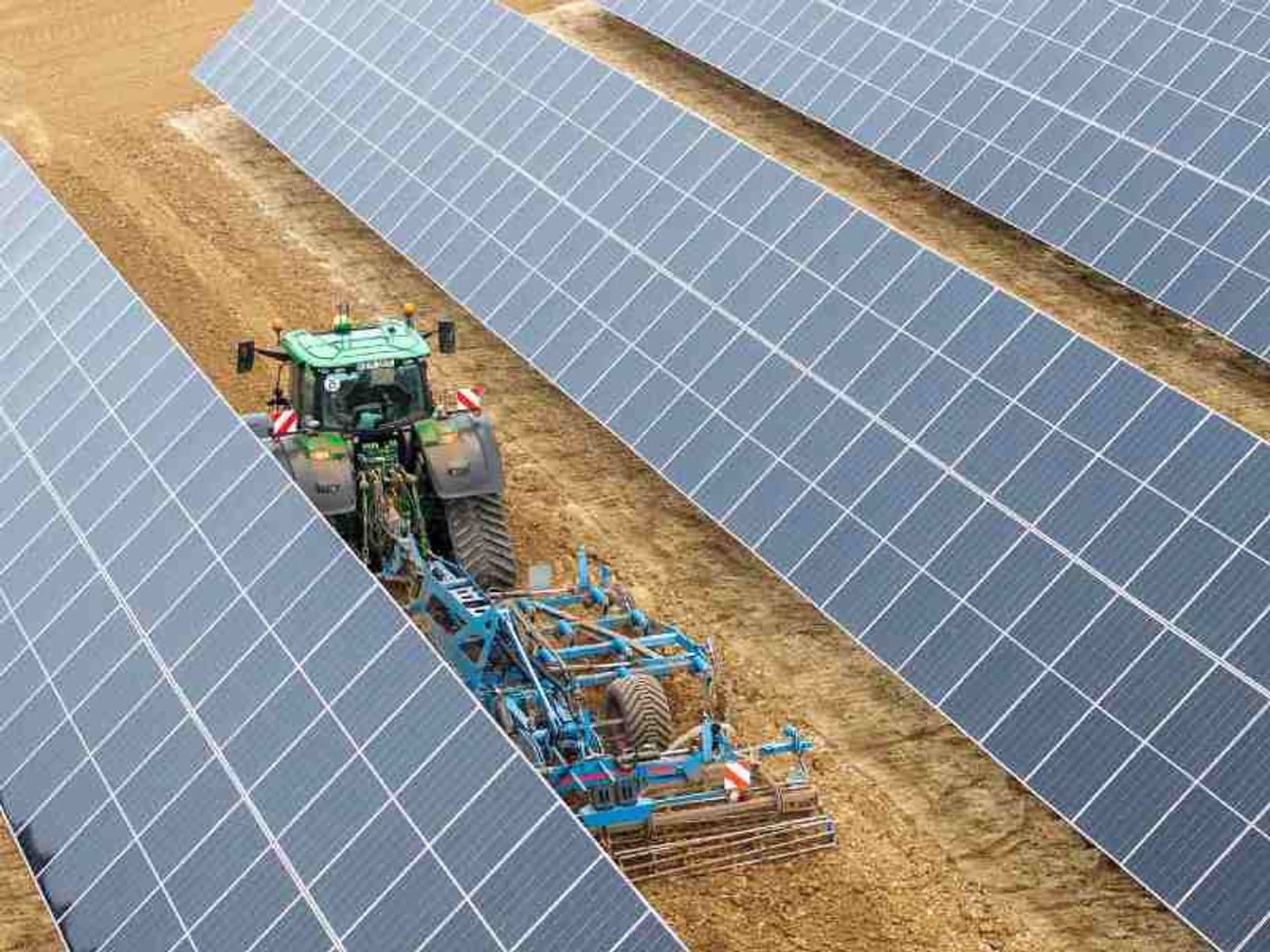
German energy company RWE has officially opened its 3.2MWp agrivoltaic demonstration plant in Bedburg.
The seven-hectare recultivation site, located at the edge of the Garzweiler opencast lignite mine, includes around 6,100 solar modules that have been producing power since the beginning of the year.
RWE will use the plant to study the interaction between solar photovoltaics and plant growth under different seasonal conditions over a period of five years. The findings will be used to develop management methods and economic operating concepts for agrivoltaic systems, explains RWE in a release.
Katja Wünschel, CEO RWE Renewables Europe & Australia commented in a release: “The need for large areas of land for further expanding solar electricity generation makes the symbiosis of agriculture and photovoltaics a particularly valuable proposition. In this way, it becomes possible to reap two types of yield from the land at the same time. With our Agri-PV demonstration plant in Bedburg we are providing important applied research, enabling us to utilise the full potential of this technology in the future.”
Have you read?
Ewe herd it here first: sheep and pigs manage vegetation at agrivoltaics site
Italy passes law limiting solar installations on agricultural land
This project will see RWE test three different technologies.
- A variant by Next2Sun uses a vertical design with the bifacial solar modules installed rigidly on the substructure.
- A second variant by Schletter uses modules mounted on a movable axis, enabling them to follow the course of the sun from east to west. Between the rows of modules, the agriculturists at the RWE-Schirrhof farm have sown a clover-grass mixture and alfalfa. These robust crops will loosen the soil with their deep root system and create the right conditions for growing cereals, root crops such as potatoes, and various types of vegetables in the coming years, according to RWE.
- In the third variant by Zimmermann PV-Stahlbau, the PV modules are elevated on a high pergola-like substructure. Below them, a farmer from the region has placed raspberries in pots. This type of cultivation has several benefits including healthy plant growth with high yields and more predictable harvest times.
Anna Heimsath, head of department ‘Analysis Modules and Power Plants’ at the Fraunhofer Institute for Solar Energy Systems, added: “Agri-PV systems are as diverse as the agriculture with which they form a system. With the three system variants in Bedburg we are collecting and analysing a large amount of data to enable us to understand if and how the agricultural use of the site impacts solar electricity generation using the different system designs. The information we collect will also help us to improve simulation techniques for Agri-PV.”
Scientific input is being provided on the project by the Institute for Plant Sciences at the Forschungszentrum Jülich and the Fraunhofer Institute for Solar Energy Systems (Fraunhofer ISE).
The project has received funding to the tune of €650,000 ($716,000) from the state of North Rhine-Westphalia via the progres.nrw programme for climate protection and the energy transition.
Frank Rock, Rhein-Erft county commissioner also commented on the project: “In order to overcome the challenges associated with the structural change in the region, it is essential to make these areas available and utilise them efficiently. With Agri-PV, farmers no longer need to decide either to use their land for a solar farm or for agricultural crops, they can do both on one field. The truly exemplary collaboration of industry, science, and state government has made this demonstration project possible – an innovative and positive approach for developing our Rhenish mining area going forward.”