Securing Europe’s prosumer cells with secure-by-design energy systems
Guest/partner contributor
Posted on: 23 January 2026
The DOSS project is based on a secure-by-design methodology with operational security mechanisms to protect DERs and ensure grid stability.

Europe’s energy system is undergoing a structural transformation. Solar energy has evolved from a marginal contributor into a central pillar of electricity generation. By mid-2025, solar power became the European Union’s primary electricity source, surpassing nuclear and wind generation, with a cumulative installed photovoltaic capacity of over 330GW and rooftop systems representing nearly two-thirds of this capacity.
This transformation is driven by the rise of prosumer cells: small-scale, digitally connected energy systems that combine solar panels, batteries, inverters, electric vehicle chargers and monitoring devices. While prosumer cells enable decarbonisation, flexibility and consumer participation, they also introduce a vast and largely unprotected cyber attack surface. Millions of distributed endpoints now influence grid stability.
The DOSS (Secure-by-Design IoT Operation with Supply Chain Control) project, funded under the EU Horizon Europe programme, addresses this challenge by embedding cybersecurity across the entire lifecycle of prosumer cell technologies, from component design through system modelling to runtime monitoring.
DOSS methodology
The DOSS approach is built on the principle that cybersecurity cannot be retrofitted. Instead, it must be engineered into energy systems by design and maintained throughout their operational lifetime.
At the core of DOSS lies the supply trust chain, which links component level assurance with system level operational security. Hardware, third-party software, open source components and self-developed code are all subjected to structured testing processes, including static and dynamic analysis, fuzzing and vulnerability assessment.
Results are consolidated into a device security passport (DSP) – a machine readable document based on OSCAL standards that also aggregates software and hardware bills of materials, vulnerability disclosures and security configurations.
To bridge the gap between design and operation, DOSS introduces a digital cybersecurity twin. This virtual representation of the prosumer cell system integrates configuration data, test results and runtime observations. It enables continuous risk assessment, supports incident analysis and allows operators to simulate attack scenarios and mitigation strategies before deployment. The twin is connected with the architecture security validator, which validates that the system design satisfies regulatory requirements, standards and industry best practices.
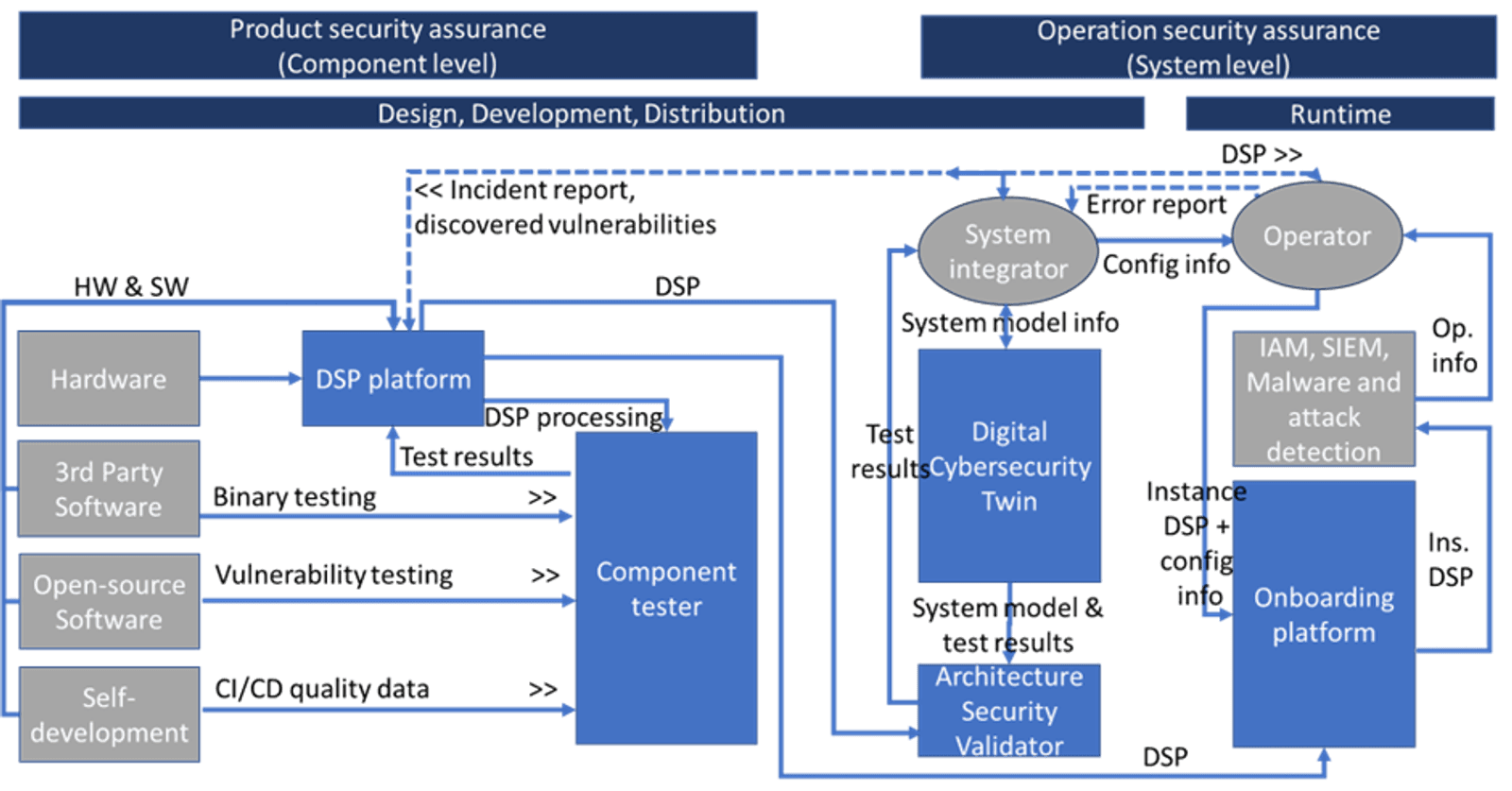
On the operational side, DOSS deploys a layered protection model within the prosumer cell. Key mechanisms include:
- Automated onboarding based on the FIDO’S FDO model to increase efficiency and minimise potential manual errors when including new components into the system;
- Attack detection for identifying abnormal behaviour and intrusion attempts;
- Access control and identity management to prevent unauthorised actions;
- Malware protection to defend against compromised firmware or software updates;
- Honeypots to detect and analyse attacker behaviour without endangering core components.
Communication between the inverter and external systems is strictly isolated through a dedicated, secure communication box. Commands are encrypted, signed, immutable in transit, and subject to two-way security checks, ensuring both inbound and outbound data flows are protected.
Project results
DOSS builds on recent cybersecurity research that identified 46 critical vulnerabilities across major solar inverter manufacturers. Notably, nearly one-third of these vulnerabilities received the highest severity ratings, enabling full system compromise. Alarmingly, studies indicate that control over less than 2% of installed inverters could push grid frequency below safe thresholds, triggering emergency load shedding and cascading failures.
The project highlights additional structural risks, including unsecured remote access interfaces, unverified firmware updates and reliance on cloud services outside EU jurisdiction. Individually minor weaknesses become systemically dangerous when aggregated across millions of prosumer installations.
Impact of the DOSS architecture
Figure 2 below illustrate how the proposed architecture encapsulates the prosumer cell within a protective security layer. By integrating cybersecurity functions directly into the energy flow architecture – rather than treating them as external add-ons – DOSS significantly reduces attack feasibility and limits the potential impact of successful intrusions.
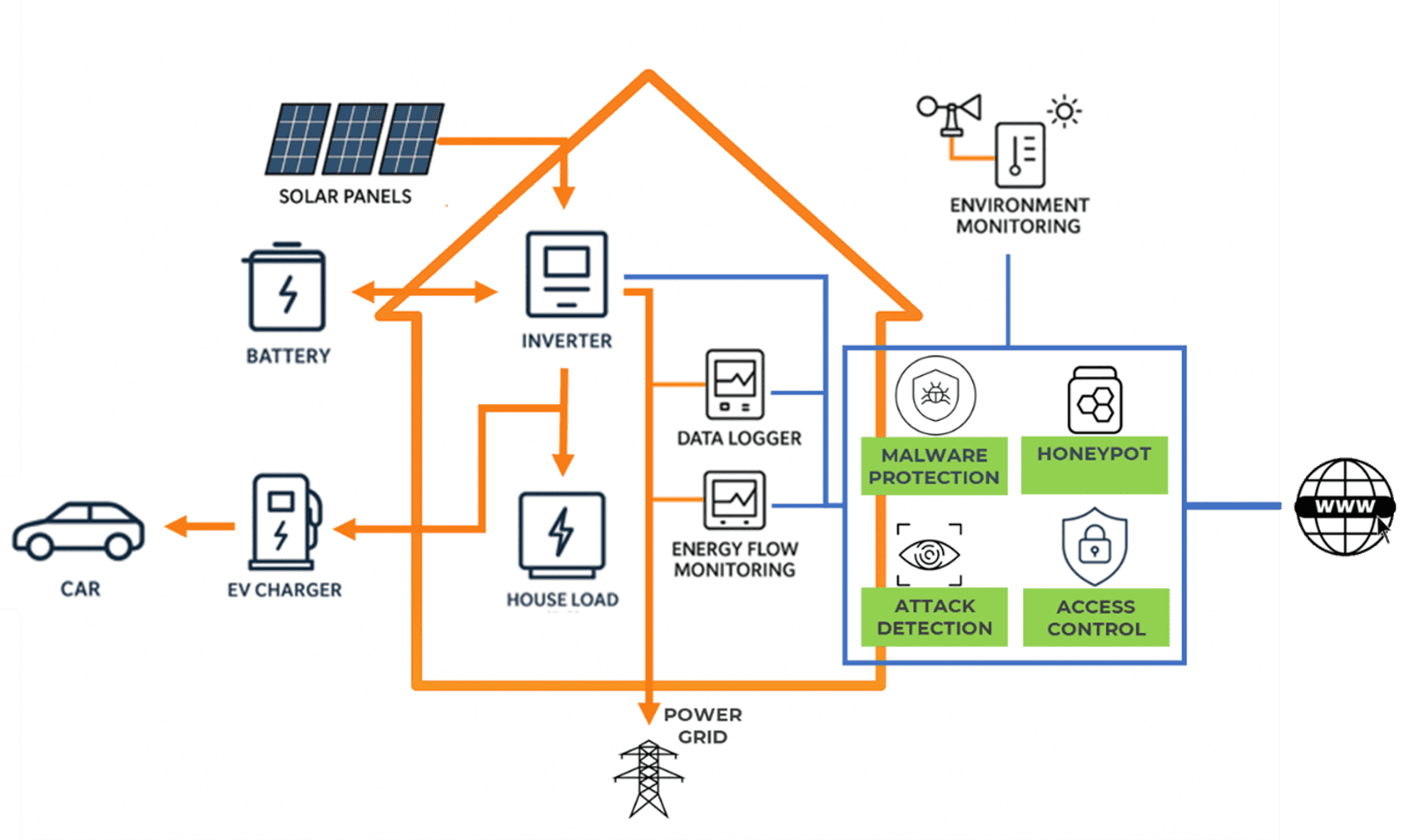
The digital cybersecurity twin enhances resilience by enabling proactive risk management. Instead of reacting to incidents after grid disturbances occur, operators gain predictive capabilities, allowing them to anticipate vulnerabilities introduced through software updates, configuration changes or new supply-chain dependencies.
The findings underscore a critical insight: grid security increasingly depends on the security of small, distributed systems. Traditional regulatory frameworks focused on large, centralised assets are insufficient in a prosumer-dominated energy landscape. DOSS demonstrates how secure-by-design principles and continuous assurance mechanisms can scale to millions of devices without imposing excessive operational overhead.
Conclusion
The DOSS project demonstrates that protecting Europe’s future energy system requires a fundamental shift in how cybersecurity is conceived and implemented. By combining supply chain transparency, secure-by-design engineering and continuous operational assurance, DOSS provides a viable blueprint for safeguarding prosumer cells and, by extension, the European power grid.
As solar capacity continues to expand toward the EU’s 2030 targets, the integration of DOSS like frameworks will be essential to maintain trust, resilience, and stability. Future work will focus on large-scale deployment, regulatory alignment and further automation of cybersecurity assessment.
For more about the project, its architecture and ongoing developments visit the project website.
About the author
Andras Vilmos is Managing Director of SafePay Systems Ltd and advisor to the Budapest University of Technology and Economics and ATOS. He is the project manager of DOSS. Over the years he has been involved in the design and implementation of trusted systems and services as well as in the implementation of IoT security solutions.
Latest content
Partner content
+3
Power the new energy future with AI to secure a more resilient grid
Energy and security have always worked hand in hand – ensuring access to reliable, sustainable power while safeguarding critical infrastructure against a landscape of growing threats.
- Guest/partner contributor
- 17/12/2025
+4
Flexibility, digitalisation and the energy nexus: How EU projects are shaping smarter energy systems
Europe’s energy transition is no longer just about producing more renewable power. Increasingly, it is about how energy is managed, shared and optimised across buildings, cities and sectors.
- Areti Ntaradimou
- 28/01/2026