Security is dominant driver of energy transition says DNV
Pamela Largue
Posted on: 13 October 2025
Security is one of the dominant drivers of energy transition, with emissions forecast to be 1-2% lower per year due to the implementation of energy security policy.
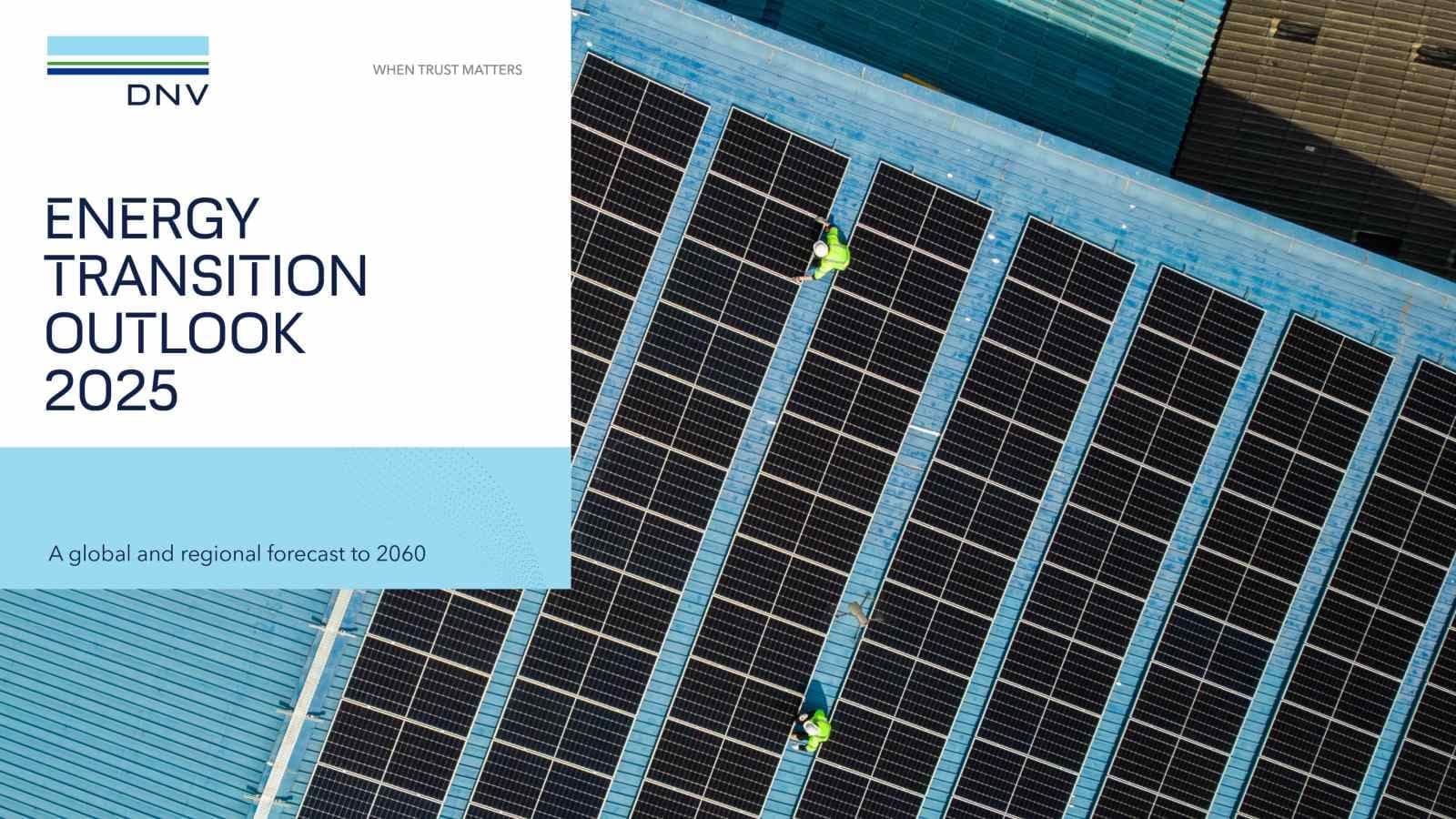
This is according to DNV’s latest iteration of its Energy Transition Outlook, which highlights that despite policy reversals in the US, the global energy transition is continuing to advance as momentum builds elsewhere, most notably in China.
Remi Eriksen, goup president and chief executive of DNV, said: “It is more important than ever to evaluate the energy transition from a global perspective.
“The global energy transition is not stalling: it is evolving, with momentum shifting to regions that are doubling down on clean technologies. Security has become the dominant driver of energy policy, and as our forecast shows, this is in sum accelerating the shift to renewables.”
At a press conference launching the report, panellists weighed in on how global polycrises are impacting the energy transition.
Chair of the International Military Council on Climate and Security (IMCCS), general Tom Middendor, pointed to the fact that energy, economics, climate and security have become inseparable and strategic security topics.
And as the world is fragmenting, countries are scrambling for control over critical resources.
Have you read?
Renewables overtake coal globally in ‘crucial turning point’
“Energy transition has become an arena of competition,” marked by persistent uncertainty and volatility,” said Middendor.
“This is why the sector needs to adapt faster and get ahead of that game. Resilience is the new strategy and energy independence is a new defence line for us.”
To build resilience across systems, Middendor recommended innovation on the use of alternative materials and circular production to make supply chains more future proof.
“With the US out of many of the conversations, I hope Europe and China can find each other to push the energy transition forward,” he added.
President-director of Shell Netherlands, Frans Everts, concurred adding that as countries increasingly focus on self-interests, competitiveness is critical and resource diversification must be front of mind.
“The world needs to keep looking at molecules – it will be an important source of energy for a long time to come.”
He also suggested stimulating growth of demand-side markets, which need to be created by policy. “We need to create markets, mandates and norms, then companies will have a market to invest in.”
Manon van Bee, chief executive of TenneT, stressed the importance of energy security, stating: “Building out the electricity grid is a good defence.”
However, political continuity is critical: a subject front-of-mind as the Dutch head to another round of elections, as well as European collaboration and what she refered to as “hub thinking”.