Siemens and Alliander put flexibility at core of grid congestion solutions
Kelvin Ross
Posted on: 8 May 2026
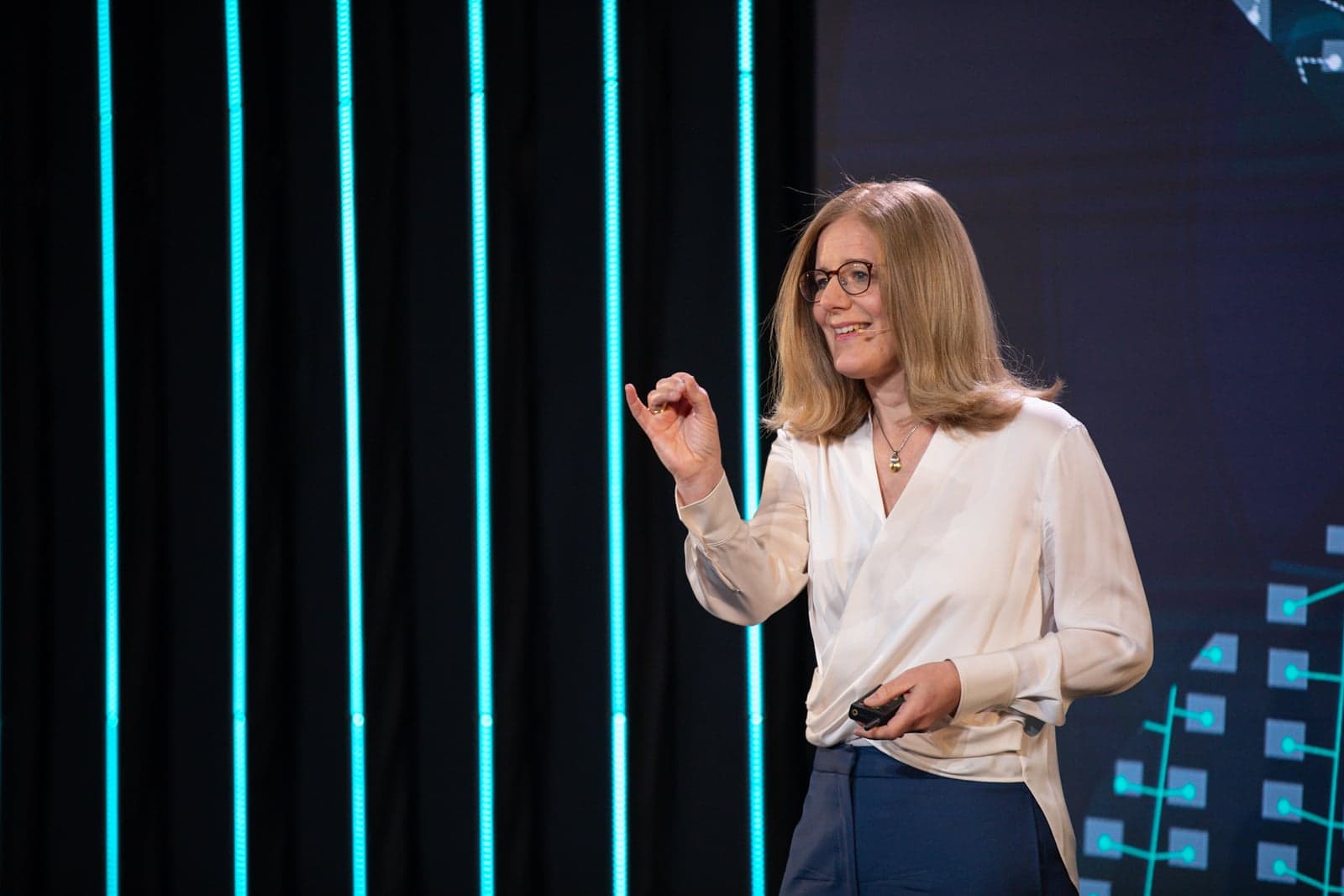
Siemens Grid Software chief executive Sabine Erlinghagen says companies' collaboration shows the path to “the proactive DSO of the future”.
Siemens and Dutch network operator Alliander have unveiled a collaboration they believe will alter “the fabric of how we run DSOs and TSOs”.
The companies revealed details of their alliance at Siemens’ Grid Software Summit in Amsterdam, which brought together representatives from 51 countries across five continents.
The event was opened by Sabine Erlinghagen, chief executive of Siemens Grid Software, who said DSOs and TSOs were facing the challenge of “keeping the lights on in an affordable way when demand for capacity is growing at an unprecedented pace”.
That, she said, meant a “complexity that is harder to manage every day”.
She said: “These challenges are so profound that incremental change will not be enough. What it requires is a real change in the operating model… in the fabric of how we run DSOs and TSOs.
“It's the transformation from a rather passive DSO in the past to a really proactive DSO of the future.”
Digital foundation
To aid that transformation, Erlinghagen used the summit to launch the latest evolution of Siemens’ Gridscale X platform.
Gridscale X is designed to provide a digital foundation for utilities to manage their grids at greater speed and complexity at scale. She also unveiled the next generation of its PSS E transmission planning software on Gridscale X, introducing advanced AI-powered capabilities.
Did you miss:
How joint city-grid interfaces can improve energy system planning for DSOs
Podcast: Scaling observability and controllability for smarter distribution grids
“Gridscale X is the integral digital backbone that bridges long-term planning and real-time operations to enable true system operations,” said Erlinghagen.
“The platform can support self-developed applications, enabling utilities to migrate their own applications onto Gridscale X to run and scale them on a shared grid model, integrating their innovations directly into system operations workflows.”
These challenges are so profound that incremental change will not be enough. What it requires is a real change in the operating model… in the fabric of how we run DSOs and TSOs.
And Alliander – the largest network operator in the Netherlands, covering roughly 40% of the country – has become the first utility to integrate its own custom-built applications directly into the Siemens platform, which has resulted in the company expanding medium-voltage grid coverage from 65% to 100% and migrating 85 applications onto Gridscale X.
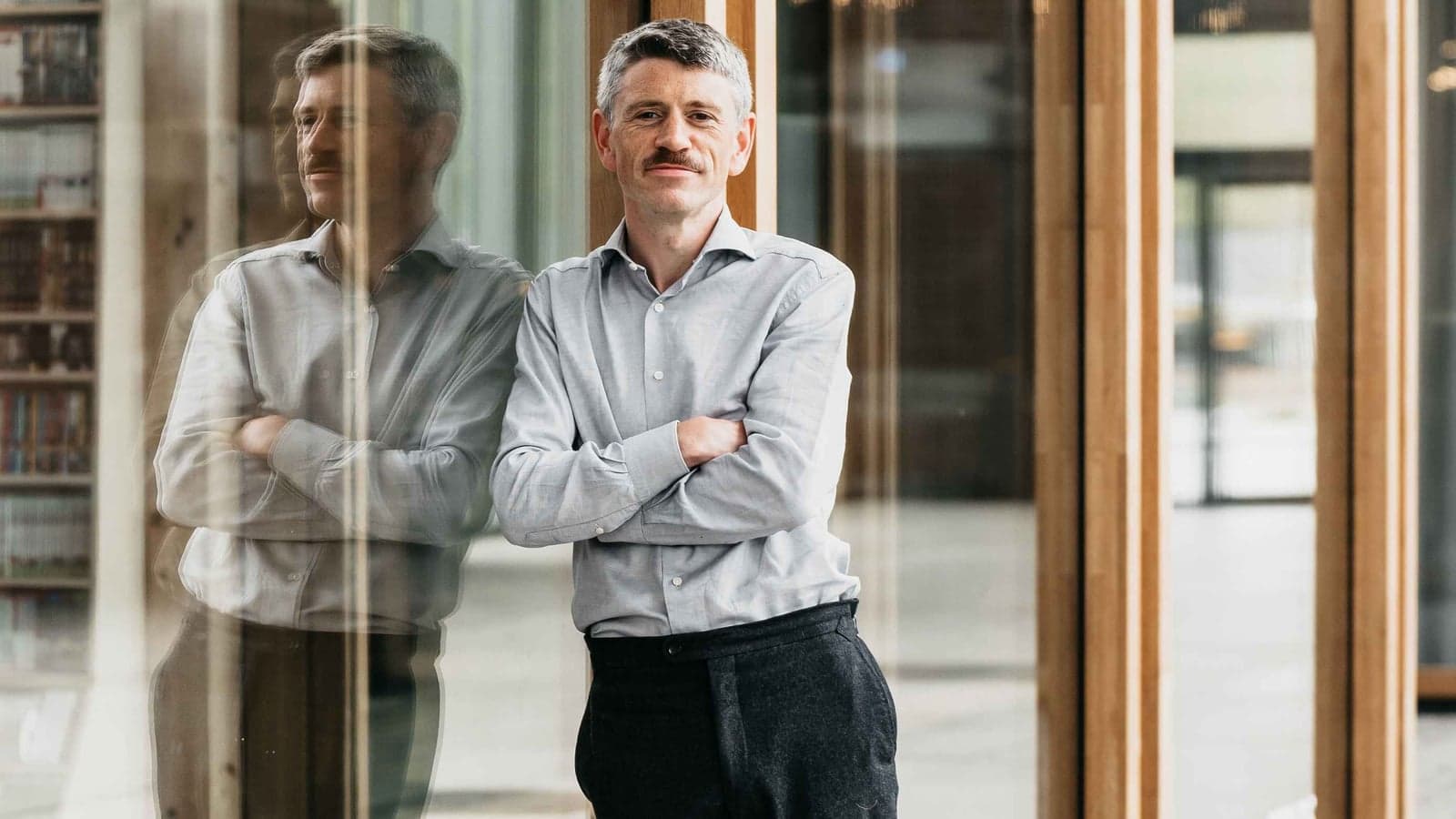
Joris de Groot, Alliander’s Chief Transition Officer, joined Erlinghagen on stage and said that the Netherlands’ well documented grid bottlenecks meant the company often felt “a canary in a coal mine for what's happening or could happen around the globe in terms of grid congestion”.
He said prior to the Siemens collaboration, bosses at Alliander had asked themselves: ‘how do we utilise the grid better’?
And their answer was to embrace flexibility – and de Groot stressed that flexibility within the grid was “here to stay”.
Leveraging flexibility
He said that for many DSOs, flexibility “is still a kind of temporary solution until we've expanded the grid to whatever is needed in many scenarios… but we say ‘no’.
“Yes, expanding the grid is necessary, but this flexibility is – and will remain – a key component of the future energy system. Flexibility will become the standard rather than the exception.”
Industry insight: Fragmented infrastructure monitoring is holding back Europe’s grid upgrade
Echoing Erlinghagen’s vision of rewriting what it means to be a DSO, de Groot said embracing flexibility meant Alliander was “overhauling our company... not only about grids and software, but how we actually do business”.
By layering its own software with that of Siemens, he said Alliander was “wrapping” system operations around the whole company “to leverage flexibility in a market-based manner”.
Flexibility is – and will remain – a key component of the future energy system. Flexibility will become the standard rather than the exception.
And this was shifting the company from “an operator-based model to an almost fully-autonomous model being run by the system operations platform.
Erlinghagen said a DSO “means inserting a step between long-term planning that is looking years ahead, and real time operations that are reacting to the here and now. It's that middle piece: introducing system operations. The forward looking, the forecasting, the anticipating and the doing something about it before it even occurs.”
She conceded that “such transformations are hard. Because they're about people, first and foremost, and they're also about processes. And one of the reasons for the difficulty is if you master the people and the process, then technology starts to be in the way. Old legacy systems, IT and OT, haven't been built for that operating model from planning to system operations and real-time operations.”
“We're living in the past and in the future at the same time.”
Download the Enlit industry report 2026 on energy system resilience solutions
Related tags
Latest content
Partner content
+3
How flexibility management software can help utilities to increase grid capacity
Fergal Burke explains how Siemens‘ digital twin technology can support TSOs and DSOs to gain critical visibility over the grid and move towards sustainable, autonomous grids.
- Enlit Editorial Team
- 23/02/2026