Solar as the key to achieving energy democracy in Africa
Pamela Largue
Posted on: 22 May 2024
Africa is a continent where 600 million people do not have electricity access, but the abundance of solar resources can solve this problem.
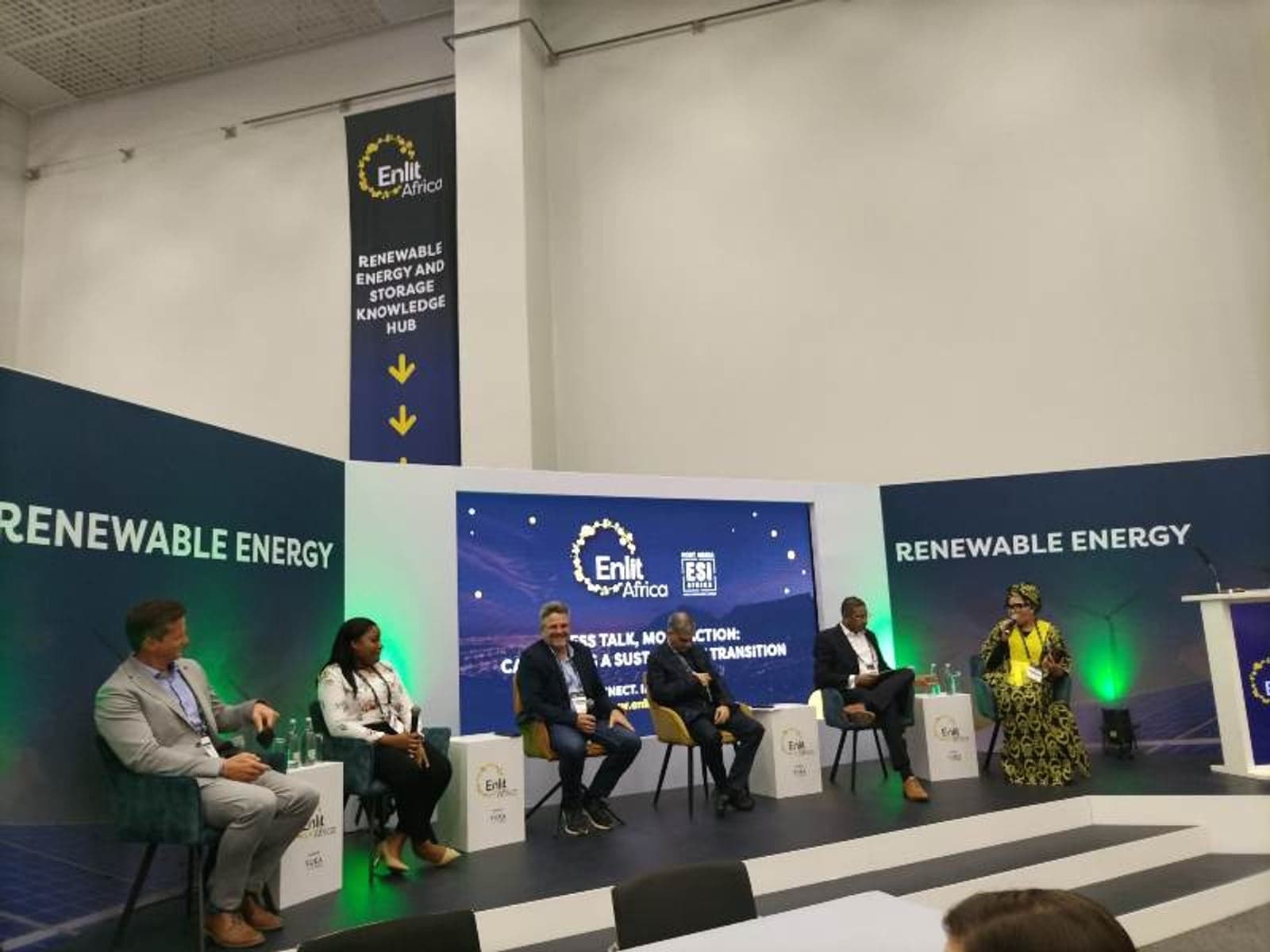
Africa is a continent where 600 million people do not have electricity access, but the abundance of solar resources could help solve this problem.
Statistics concerning the lack of electricity access on the continent are well known, and a panel discussion hosted at Enlit Africa in Cape Town focused on how we can change these figures rather than merely repeating them year after year.
Rethabile Melamu, CEO of SAPVIA, began the conversation by stating that of the 550GW of global solar capacity installed in 2023, only 5GW was installed in Africa.
She stressed that this needs to change.
“We are sitting on gold,” said Melamu, stating that solar has the power to change lives, drive economic growth and create jobs.
Have you read?
WEC hears how to unlock energy investments in Africa
Africa climate activist tells energy sector to stop ‘waking the dead’ of fossil fuels
Solar’s potential for the people: A focus on South Africa
Wido Schnabel, head of strategic alliances & business development, Middle East and Africa at Canadian Solar, explained that solar is a truly democratic energy source, making it a powerful tool for Africa.
In South Africa, for example, between REIPPP bid windows one and seven, the country has seen a large cost decline in solar coupled with increased technology efficiencies.
Schnabel stated that in 2014 grid parity in the solar industry was achieved. "Anybody that owns a roof, no matter how small it is, and doesn’t use solar for at least a portion of their electricity needs, is wasting money.”
The progress in the sector has caused an 'explosion in embedded generation' which has had a direct impact on society said Schnabel, a sentiment echoed by Melamu.
Melamu referred to her experiences of solar PV being deployed at a small scale as particularly impactful. These solutions have provided electricity to families in disadvantaged communities that haven’t had energy access for over a decade.
"People can now charge their phones and run their appliances – that is the role that solar PV plays."
Schnabel proposed what he refers to as "the dream," a plan to build one million solar roofs in the townships in South Africa. A modular solar system of between 3-5kW coupled to the grid could make a massive impact.
And what's more, he explained, because it's modular, it's more affordable, especially if tapping into available subsidies.
Schnabel concluded that the solar sector also provides significant opportunities for job creation, which should not be underestimated.
In terms of job creation, he said, "We have a huge opportunity...Look at Europe, they are struggling with workforce, they need to get workforce imported. We have unemployed, schooled and trained people here.”
A focus on grids
Unsurprisingly, one of the key topics of discussion around how to maximise Africa's solar resources concerned grids and the modernisation thereof.
Ralf Blumenthal, head of Siemens grid software Middle East and Africa, made it clear that while grids are sometimes an afterthought in conversations about renewables, they must be front and centre.
“Sometimes we forget how important it is - we need to build the streets if we want more cars running on them.”
Globally, about 7000GW of renewables are installed but cannot be dispatched because of a lack of grid access.
“We aren’t talking about just a little glitch”.
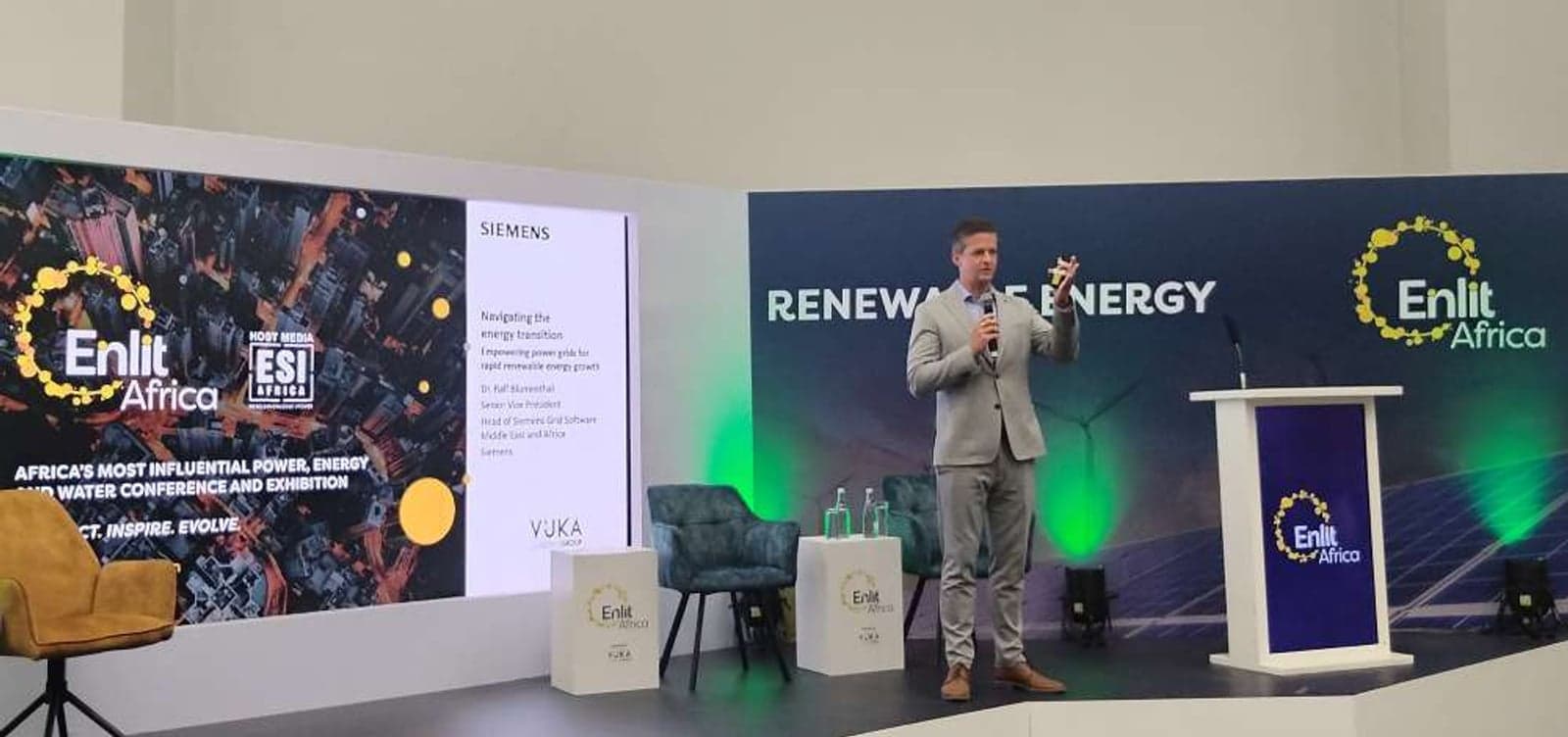
The amount of renewable energy that needs to go into African grids needs to increase by a factor of 10 by 2030, said Blumenthal, which means significant changes at speed.
When talking about the global utility industry over the past century, he adds: “We are used to sailing in very stable waters and now within 10 years, we are trying to build up and change what took a century to build up.”
According to Blumenthal, the introduction of microgrids, storage and EVs is bringing greater complexity and means that "grid management is flipping completely," referring to the increasing impact of the consumer on the grid.
He called for more efficient grid planning and the effective use of software and automation to ensure more PV can be integrated.
Furthermore, the effective interconnection of Africa's grids will be critical.
Solar as part of Africa's bigger green industrial picture
While panellists agreed that solar is the way to a speedy and inclusive energy transition, hybrid projects also hold a great deal of promise that can't be ignored.
Schnabel referred to a model by think tank Rethink X, which when applied in the South African context, showed that with 80GW of solar, plus 50GW of wind and 30GW of storage, the country would have a completely independent grid built on renewables – no coal, no nuclear.
Sherwin Harris, CEO of Oya Energy, stressed that solar and storage are of great strategic importance for Africa at large and South Africa in particular to reduce emissions while being reliable and cost-effective.
The Oya project includes 155MW of solar hybridised with 86.4MW of wind and 242MWh of battery storage. The project, explained Harries, is the largest hybrid in Africa and demonstrates dispatchable baseload renewable power.
However, in order to encourage more renewable projects such as Oya and ensure society can reap the benefits, panellists highlighted the need for an agile government and policy that creates certainty.
Yunus Hoosen, acting head of investment promotion at the South African Department of Trade and Industry, spoke of the regulatory changes that have spurred the solar revolution in South Africa.
The first major policy reform was alleviating the cap on private sector generation. Since then, the Energy Regulation Act has allowed for energy trading and opportunities for private sector participation.
However, he stressed that South Africa and Africa now need an industrialisation agenda to ensure value creation throughout the energy transition.
Said Hoosen: "If you look at the trade wars, countries are looking beyond China for other options," adding that South Africa can offer opportunities for export to Europe and the rest of the continent.
According to Hoosen, while Africa is an exporter of primary products, "this [energy] transition gives Africa the opportunity to industrialise.”
Africa needs its own processing and critical mineral partnerships with other African countries, he said.
“If there's no mineral processing, you are just exporting your jewels out of the continent.”
Originally published on powerengineeringint.com