Solving the hydrogen storage problem through reticular chemistry
Pamela Largue
Posted on: 13 May 2024
Solid-state hydrogen storage is gaining a lot of attention as it addresses many of the challenges associated with storing hydrogen either in a pressurised gas or a cryogenic liquid.
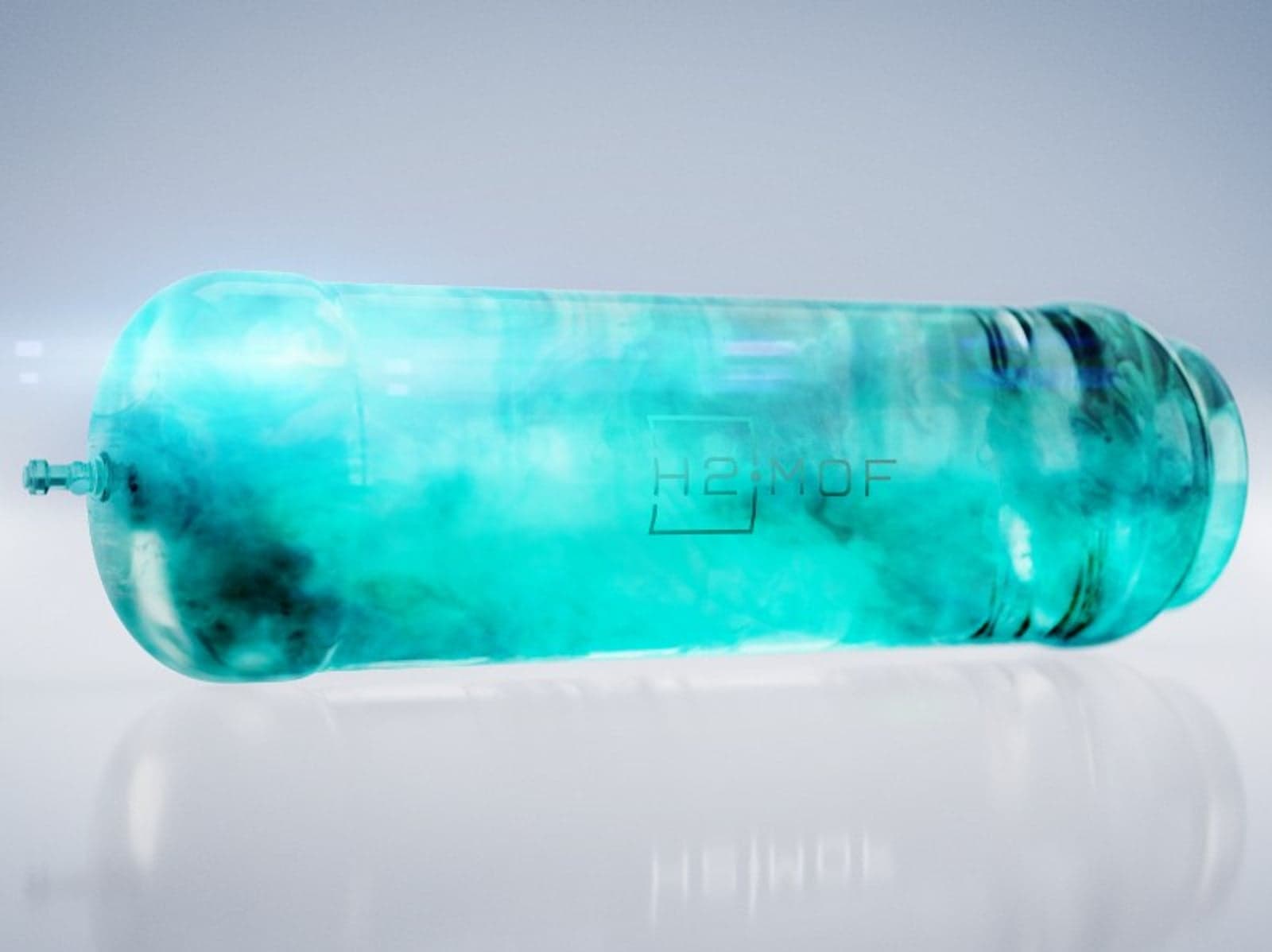
The US-based company H2MOF believes that molecularly engineered materials can provide the much-needed solution for the hydrogen storage conundrum. Pamela Largue spoke to Magnus Bach and Dr Neel Sirosh to learn more about the magic behind the science.
When Nobel Laureate and Professor Sir Fraser Stoddart and Professor Omar Yaghi joined forces to solve challenges associated with energy transition, focusing specifically on hydrogen storage, it was clear from the outset that this partnership could produce magic.
In 2021, these two great chemistry scientists co-founded H2MOF, which aims to use novel materials called MOFs or Metal–Organic Frameworks for solid-state hydrogen storage.
A scientific breakthrough in this field could have a far-reaching impact on the decarbonisation of our energy systems, which is why Dr Neel Sirosh, CTO at H2MOF, and Magnus Bach, Vice President of Business Development, are inspired by the opportunity to work on such a critically important challenge with people they refer to as “some of the sharpest minds on earth”.
Have you read?
Hysata bags $111m Series B investment for novel electrolyser tech
Study to explore viable green hydrogen economy in South Africa
The problems with hydrogen storage
Bach and Sirosh elaborated on the challenges of hydrogen storage, the inspiration behind H2MOF's solution.
Bach didn't mince his words stating: [Hydrogen] is the ultimate dark horse that once and for all can solve this decarbonisation challenge that humanity is facing.”
But the existing technologies will not easily scale because of cost and energy inefficiencies, he explains. Therefore, the wider adoption of hydrogen is challenged.
“To utilise hydrogen to the extent that we can decarbonise the energy system...We need transformational technologies rather than incremental improvements on the existing technologies because they're just not going to fly at the end of the day.”
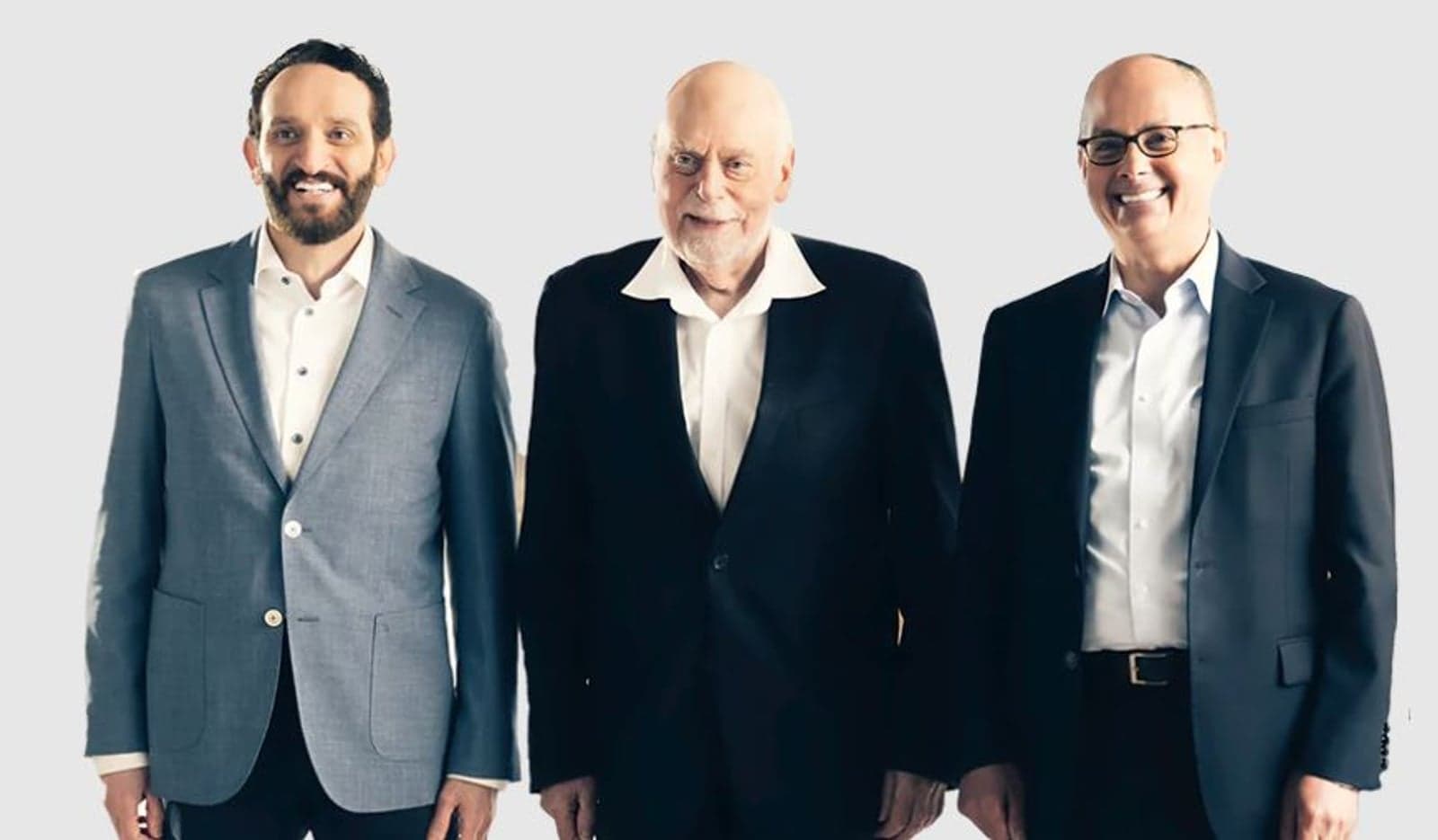
Sirosh agrees, expanding on the specific challenges associated with hydrogen storage. “Beginning with some of the first hydrogen projects in the mid-90s, hydrogen storage has always been one of the bottlenecks.
“Hydrogen is typically stored as a high-pressure gas or a cryogenic liquid, and there are a number of challenges associated with it.”
According to Sirosh, considering the pressure and chemical corrosion associated with hydrogen, the type of materials that can be used for storage is limited.
Steel bottles tend to be expensive and heavy. “Typically, if the bottle weighs about 100 kilogrammes you can store maybe half a kilogramme to one kilogramme within that bottle. That's it.”
And when it comes to transportation, trucks are limited in terms of the weight they can carry. “You would end up transporting maybe about 200 kilogrammes of hydrogen in a transport trailer that weighs around 40,000 kilogrammes,” says Sirosh.
Sirosh explains that new technologies such as carbon composite tanks are becoming available, but while they are lighter, they are also more carbon and energy-intensive to produce and involve compressing hydrogen to very high pressures.
H2MOF's multi-pronged solution
Sirosh provided details concerning the complexity of hydrogen storage, a key focus for H2MOF's solution.
“We can liquefy hydrogen and transport it in very large quantities. But liquefaction takes up almost 40% of the energy content of hydrogen produced and it’s very expensive. The delivered cost of liquid hydrogen is very high due to the high cost of liquefaction and boil-off losses.”

“Hydrogen is produced as a low-pressure gas, we compress or liquefy it to enhance its density for storage and transportation, which significantly increases the delivered cost of the fuel.
“If hydrogen does not need to be compressed to 350 or 700 bar, but rather goes through one or two stages of compression to a much lower pressure, the net effect is lower cost hydrogen.”
In other words, H2MOF keeps it at a low pressure and transports it at similar densities as compressed hydrogen, lowering the cost to the customer.
In this way, H2MOF’s solution is lowering the levelized cost of hydrogen, explains Sirosh, while helping to boost the demand side by facilitating transportation and use in industrial applications or power generation.
Bach continues: “There's also the safety metric to consider in the sense that it's associated with some safety concerns to store and transport hydrogen at super high pressure or as cryogenic liquid at 253 degrees minus.” Those concerns can be mitigated, but it comes with costly safety measures.
H2MOF solid-state solutions do not require these safety measures while also avoiding the energy penalty and consumption linked to both liquification and compressed storage, which according to Bach, makes this a “potential game changer.”
Also of interest
Site visit: Injecting hydrogen into Portugal’s gas network
Opportunities for hydrogen in the Polish energy transition
Understanding MOF’s
Bach and Sirosh explain that the H2MOF solution uses reticular materials such as MOFs.
MOFs or Metal–Organic Frameworks are crystalline porous materials made of metal ions surrounded by linking molecules. The metal ions form nodes that bind the arms of the linkers together to form a cage-like structure, providing MOFs their extraordinarily large internal surface area.
According to researchers, if you could lay out the available surface area in a teaspoon of this material, it would cover an entire football field.
H2MOF designs and develops a novel material (e.g. MOFs) that attracts hydrogen molecules towards the nano-scale cavities of the material.
The hydrogen molecules are retained inside the material and can be released when needed.
According to Bach, not only does the sector appreciate the need for such transformational solutions, but the reception has been “astonishing”.
“We are being approached with many inquiries from big and small organisations alike from a variety of sectors.
Says Bach, “There is increasing recognition that we're producing a lot of hydrogen, but what on Earth are we going to do with it? How are we going to store it? How we're going to transport it?”
Sirosh explains the main applications for the solution, including gas transportation tanks, ground storage and on-board fuel tanks.
“There are pent up demands and customer complaints about the current technology on every one of these application areas.”

Sirosh returns to trucking to illustrate. “If you take a heavy-duty truck, it's hard to electrify and hydrogen is one of the best ways to decarbonise the trucking industry.
“It's almost impossible with high-pressure tanks. It's possible with the liquid tanks, but liquefaction is expensive and you need to deal with the evaporative losses.
“So when we say that we can come up with a way to carry the 80 kilogrammes without having to get rid of your sleeper compartment for the driver, they get excited.”
And that is just the tip of the iceberg, says Sirosh.
Bach adds that when they speak about hydrogen storage at low pressure and near-ambient temperatures, it sounds too good to be true.
Read more
Mapping hydrogen, skills and energy planning for Dutch energy transition
Why betting on green hydrogen is the key to decarbonising our societies
“But when you start unfolding the proposition and discussing what it actually means in terms of gravimetric density and the like, then you can almost see a sparkle in the eyes.”
According to Bach, in the laboratories, H2MOF is doubling the weight storage ratio compared to what is currently commercially available in the market. “So not only can we increase the range a great deal but we can also use significantly less energy in the process of storing,” concludes Bach.
Next steps for H2MOF – a journey to commercialisation
Currently, the team is looking to identify different raw materials that can be used in the containment packaging; materials that can manage the required low pressure and near-ambient temperatures.
They are also focused on getting the materials out of the lab and into testing environments, prior to scaling up and commercialising.
Sirosh highlights that while hydrogen has come and gone over past decades, this time, he is observing a change.
“This time, it’s different, hydrogen is considered an integral part of the decarbonisation efforts, not just in transportation, but in industries and power generation.
“Now we are talking about hydrogen going into massive grid-scale energy storage.
“Hydrogen is grown up and I’m totally amazed by the massiveness and how far we’ve come.”
Now all we need is a kind of magic, everyday storage solution.
Gain insights about the challenges and opportunities of building a viable hydrogen economy in this episode of the Enlit Energy Transitions podcast with Professor Dr Emmanouil Kakaras, Executive Vice President, Mitsubishi Heavy Industries EMEA.