Space-based carbon emissions tracking gaining ground
Jonathan Spencer Jones
Posted on: 11 January 2023
Long term data on CO2 emissions from the Bełchatów power station in Poland have demonstrated the potential of space-based observations for tracking at the local scale.
Long term data on CO2 emissions from the Bełchatów power station in Poland have demonstrated the potential of space-based observations for tracking at the local scale.
As carbon emissions come under ever greater scrutiny their tracking is becoming more and more important, both for countries but also for individual companies and facilities.
And a new study from NASA has indicated how space-based data may be harnessed for this task.
With a time series of data from NASA’s Orbiting Carbon Observatory (OCO) 2 and 3 missions over the period from 2017 to 2022 on CO2 emissions from the Bełchatów coal-fired power station in central Poland, the researchers identified changes in the levels that were consistent with hourly fluctuations in electricity generation.
Have you read?
Space’s role in our low-carbon future: Science fact, not fiction
Energy Transitions Podcast: COP27 – From debate to delivery
In addition, both temporary and permanent unit shutdowns for maintenance or decommissioning, which reduced the plant’s overall emissions, were also detected.
The Bełchatów power station, the world’s fifth largest, is Europe’s largest thermal power station and also has the distinction of being the region’s single largest emitter.
Ray Nassar, a senior researcher at Environment and Climate Change Canada and the study lead, says that the finer details about exactly when and where emissions occur are often not available.
Indeed most CO2 emissions reports are created from estimates or data collected at the land surface.
“Providing a more detailed picture of emissions could help to track the effectiveness of policies to reduce emissions. Our approach with OCO-2 and OCO-3 can be applied to more power plants or modified for carbon dioxide emissions from cities or countries.”
CO2 data
The OCO-2 satellite was launched in 2014, with light analysing spectrometers tuned to detect CO2 and map the emissions on scales ranging from regions to continents.
The instrument samples the gas indirectly by measuring the intensity of sunlight reflected off Earth’s surface and absorbed by CO2 in the column of air from the ground to the satellite.
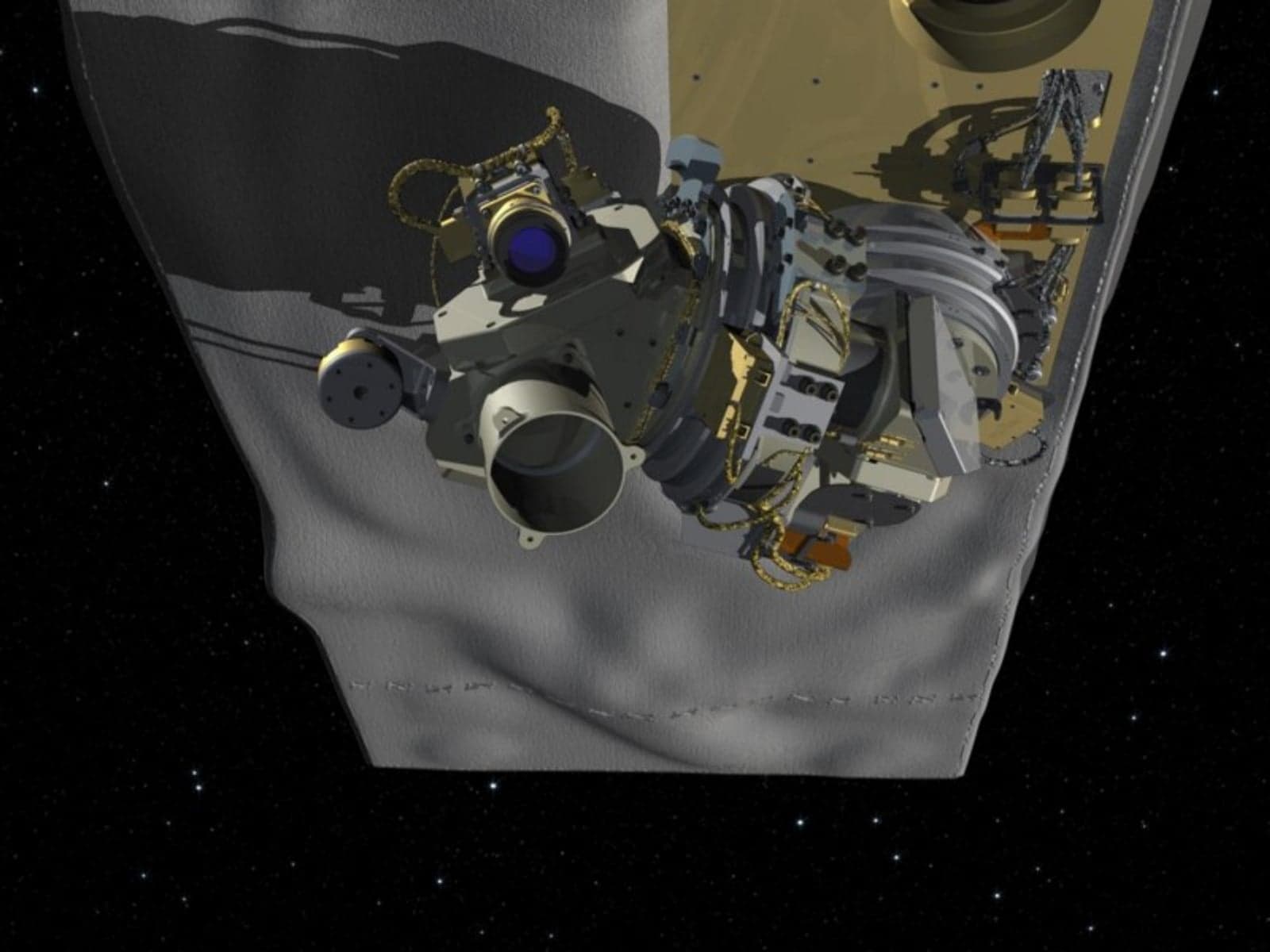
The OCO-3 instrument, which has been flown on the International Space Station since 2019, was built with spare components from the OCO-2 mission and also includes a mapping mode that can make multiple sweeping observations as the space station passes over an area, allowing the creation of detailed mini-maps from a city-scale area of interest.
Neither OCO instrument was originally designed specifically to detect emissions from individual facilities such as Bełchatów, so these new findings have proved a “pleasant surprise” for the research team, which is continuing to refine the tools and techniques to extract more information from the data.
NASA has recently announced that mission operations will be extended for several more years – five or six are anticipated – aboard the space station. With its mapping mode, the data is expected to be used more extensively in quantifying CO2 point source emissions in the future.
The results also are expected to inform the European Space Agency’s planned Copernicus Anthropogenic CO2 Monitoring (CO2M) mission, which is scheduled for launch in 2025, and other future satellites to support CO2 emissions reduction monitoring and verification.
Mineral dust and methane monitoring
The OCO-3 instrument is now also operating alongside another greenhouse gas monitor on the space station, the Earth Surface Mineral Dust Source Investigation (EMIT), which was launched in July 2022. In addition to detecting various mineral dusts, the EMIT instrument has demonstrated its potential for mapping methane.
Power plants and refineries account for about half of global CO2 emissions from fossil fuels.
The Bełchatów power station, with a capacity of around 5,100MW, is slated for closure by the end of 2036.