Space-based solar ‘steering’ prototyped
Jonathan Spencer Jones
Posted on: 9 April 2024
GB space-based solar developer Space Solar has revealed that a wireless beam has been successfully ‘steered’.
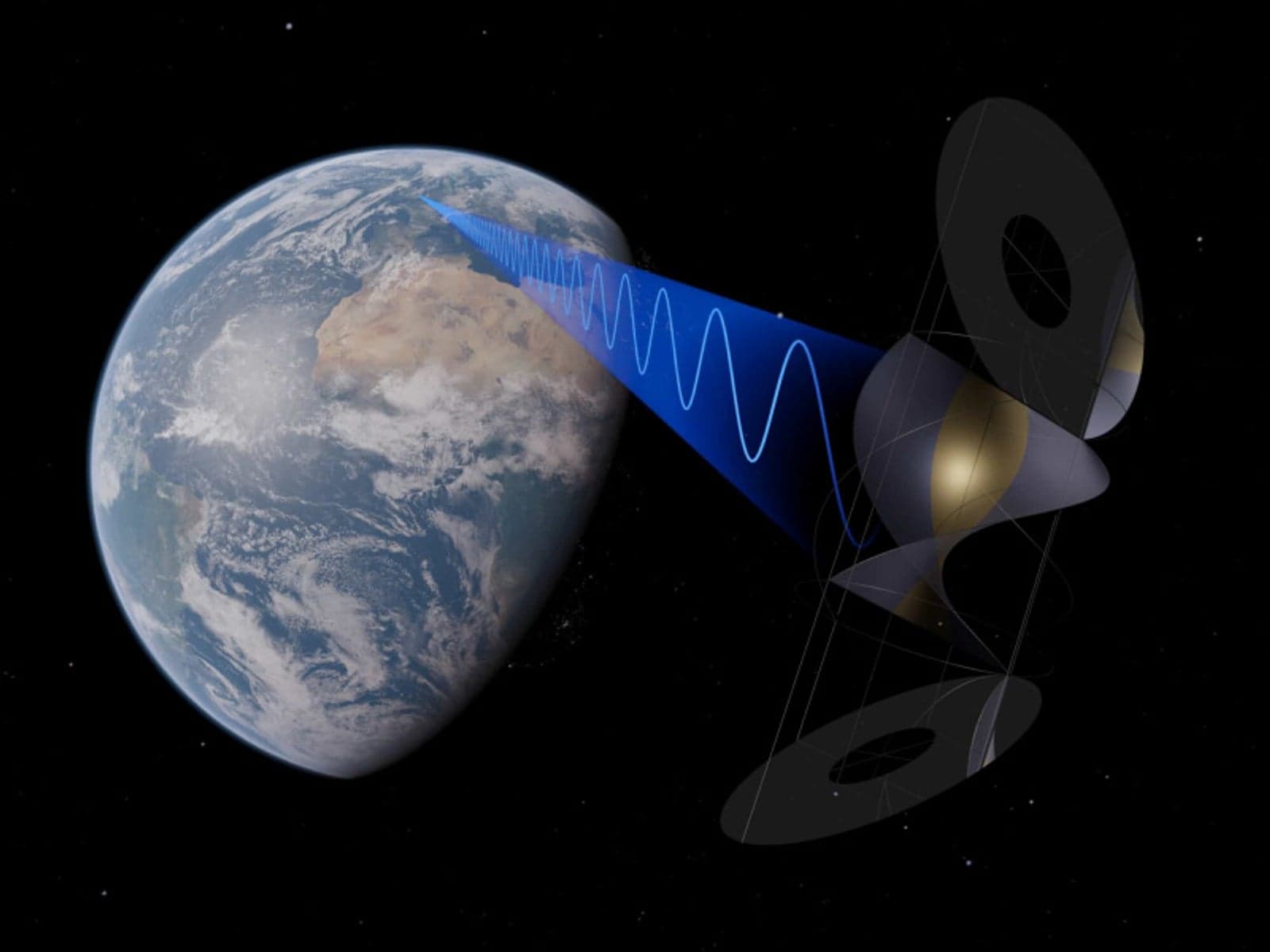
GB space-based solar developer Space Solar has revealed that a wireless beam has been successfully ‘steered’.
Space Solar’s CASSIOPeiA satellite concept, with a complex of mirrors and solar panels to harness solar energy and convert and deliver it to Earth in the form of microwaves, will need to be constantly rotated towards the Sun – and now a team at Queens University Belfast has shown that this is feasible, according to the company’s founder Martin Soltau.
In an interview with Sky News Soltau explained that the team had been able to ‘steer’ a wireless beam across a lab to turn on a light.
"This is a world first. You can get constant energy all the time,” he was quoted as saying.
Have you read?
GB’s CASSIOPeiA space-based solar concept validated
RESPONDENT – harnessing space data for renewables integration and smart grids | Enlit World
"This is really going to have a substantial impact on our future energy systems."
CASSIOPeiA is envisaged as a kilometre-scale satellite distant over 35,000km above the Earth in a near geostationary orbit, where it would be enabled to stay in essentially a fixed location above the Earth.
However, as it orbits its attitude would need to be adjusted to ensure the constant collection and supply of the renewable solar power.
In the interview Soltau also revealed that Space Solar was in talks with SpaceX for delivering CASSIOPeiA into space and that it could involve almost 70 launches carrying items, which would then be assembled into a satellite by robots.
He also addressed possible consumer concerns about safety and said that most probably the receiving stations, which would collect the microwaves and reconvert them to feed into the national grid, would be offshore where they would be well away from any populated areas.