Sulzer in pioneering molten salts storage project
Pamela Largue
Posted on: 20 October 2023
Sulzer will support a pilot project aimed to validate the commercial viability of storing renewable energy in molten hydroxide salts.
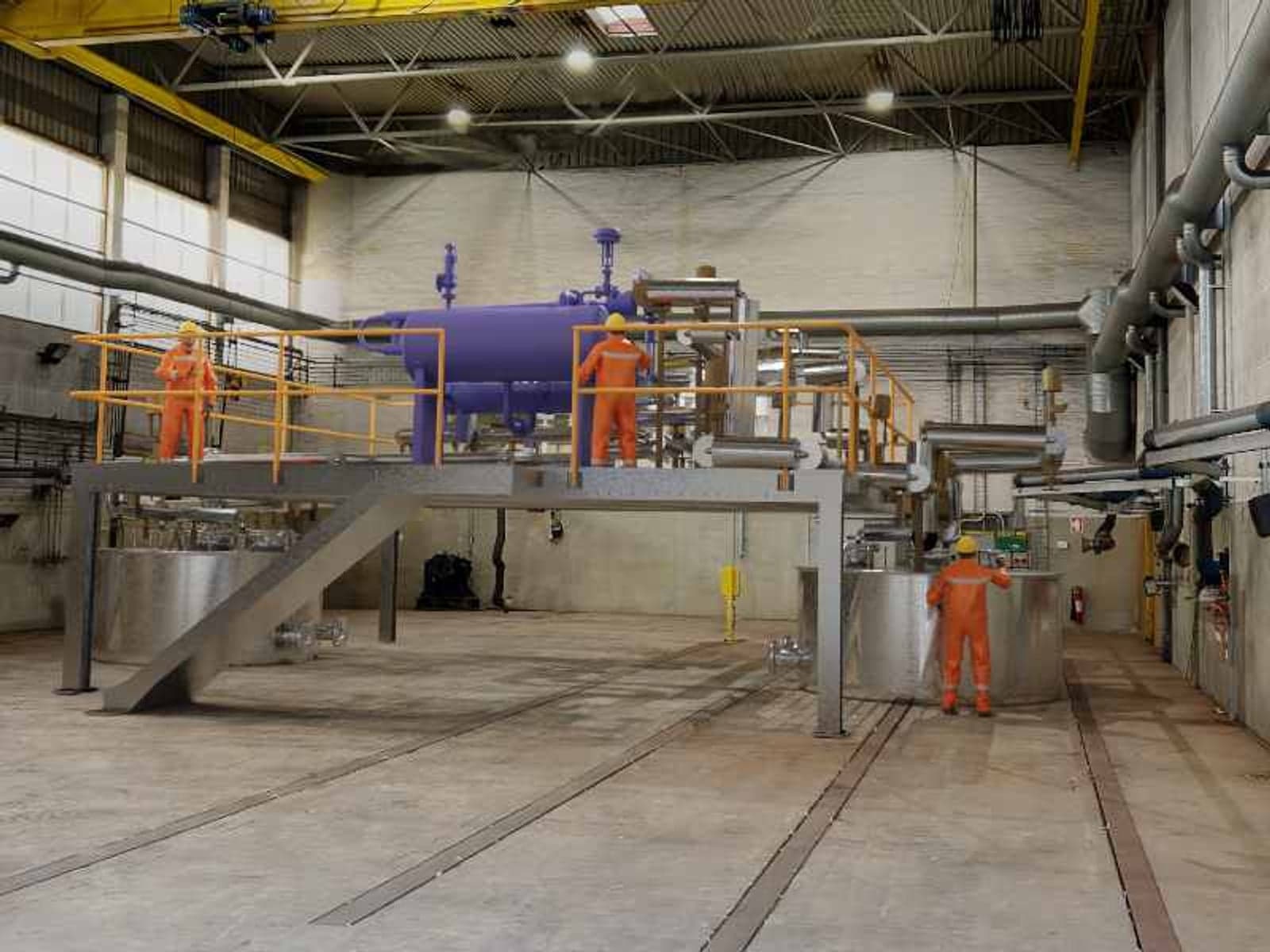
Chemical and process engineering specialists Sulzer has been selected to support a pilot project aimed to validate the commercial viability of storing renewable energy in molten hydroxide salts.
The Molten Salts Storage (MOSS) pilot project is situated at the Semco Maritime’s facilities in Esbjerg, Denmark, and is being built with a 1GWh capacity. This is enough to store the equivalent daily electricity consumption of some 73,000 homes.
MOSS aims to address the issue of renewables intermittency with a storage system that uses molten hydroxide salt, also referred to as drain cleaner. According to Sulzer, this salt is less expensive and more accessible than molten salts used for energy storage to date.
Sulzer’s executive chairwoman Dr. Suzanne Thoma commented in a statement: “MOSS has the potential to unlock stable renewable energy for future generations. It is literally that critical and exciting. Together with our partners, we are working to enable economies around the world to become more efficient and sustainable. As a business leader and a scientist, it really doesn’t get much better!”
Have you read?
Avery Dennison commissions 2.7GWh concentrated solar platform
Energy storage needs greater innovation say Europe and Africa commissioners
In the statement released by Sulzer, the company explains that molten hydroxide salt is ideal for renewable energy storage as it can be heated to extremely high temperates and stored for up to two weeks.
According to project builders Hyme Energy, during charging, electricity from renewables is converted into heat through electrical heaters. Salt from the cold tank is circulated through the heaters and heated up from 350ºC to 700ºC, then stored in the hot tank for up to several days.
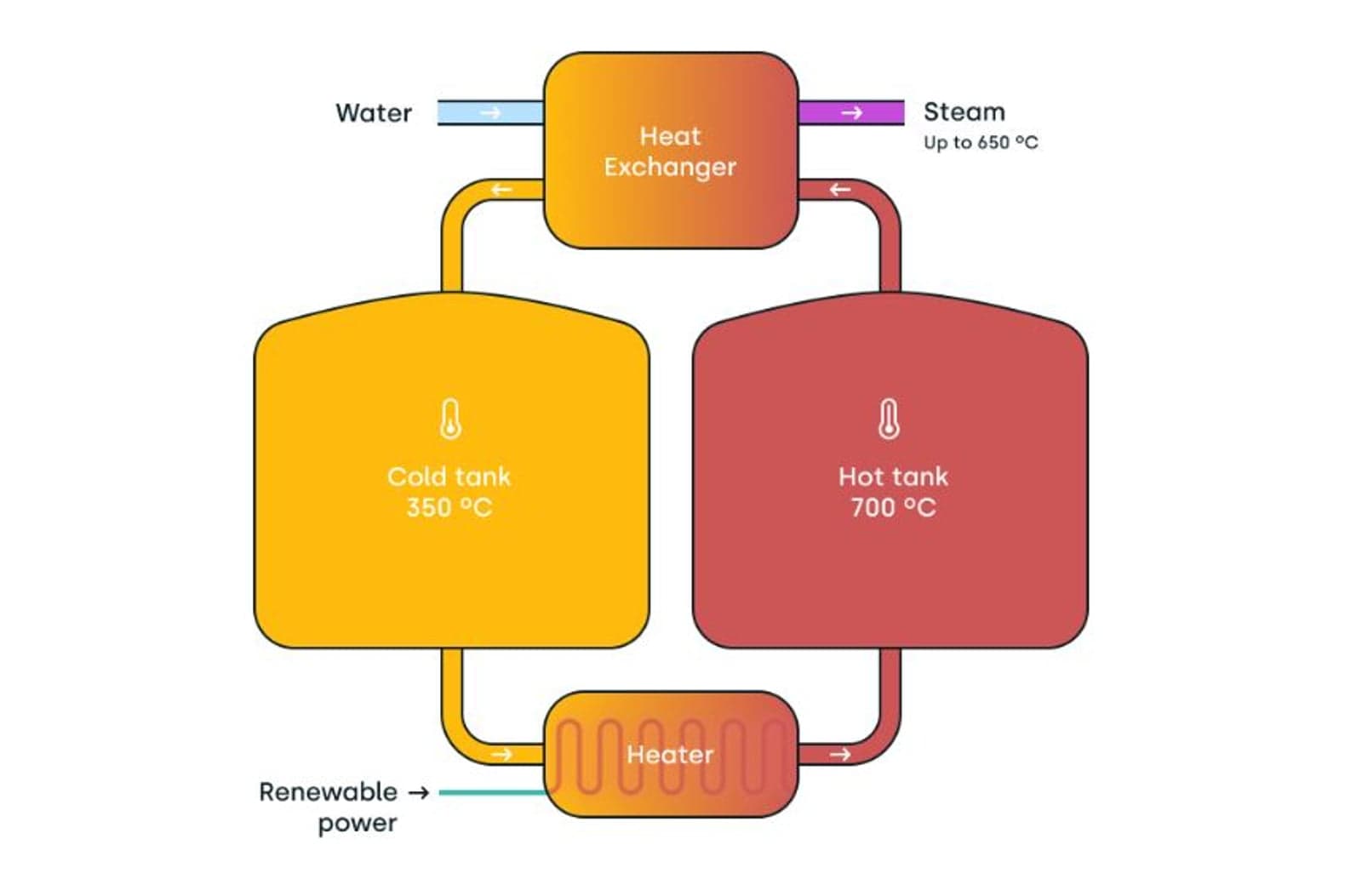
During discharge, the energy stored in the hot tank is released by circulating the hot salt to a heat exchanger where the heat is transferred to water and turned into high temperature steam. Steam can be used directly in an industrial process or used to power a turbine and deliver electricity and heat. The cooled salt is pumped back into the cold tank until the next charging cycle.
The pilot plant is expected to go operational in 2024.
MOSS consortium members include Aalborg University, Alfa Laval Aalborg, DIN Forsyning, Energy Cluster Denmark, Hyme Energy, KIRT X THOMSEN, Seaborg and Sulzer. In addition to member contributions, the consortium project is funded in part by the Danish Energy Technology Development and Demonstration Program (EUDP).