The strategic importance of Ukraine's energy infrastructure
Pamela Largue
Posted on: 25 February 2022
Christopher de Vere Walker of SEEPX Energy takes a deeper dive into Ukraine's energy infrastructure and explains how Russia's invasion could impact the country.
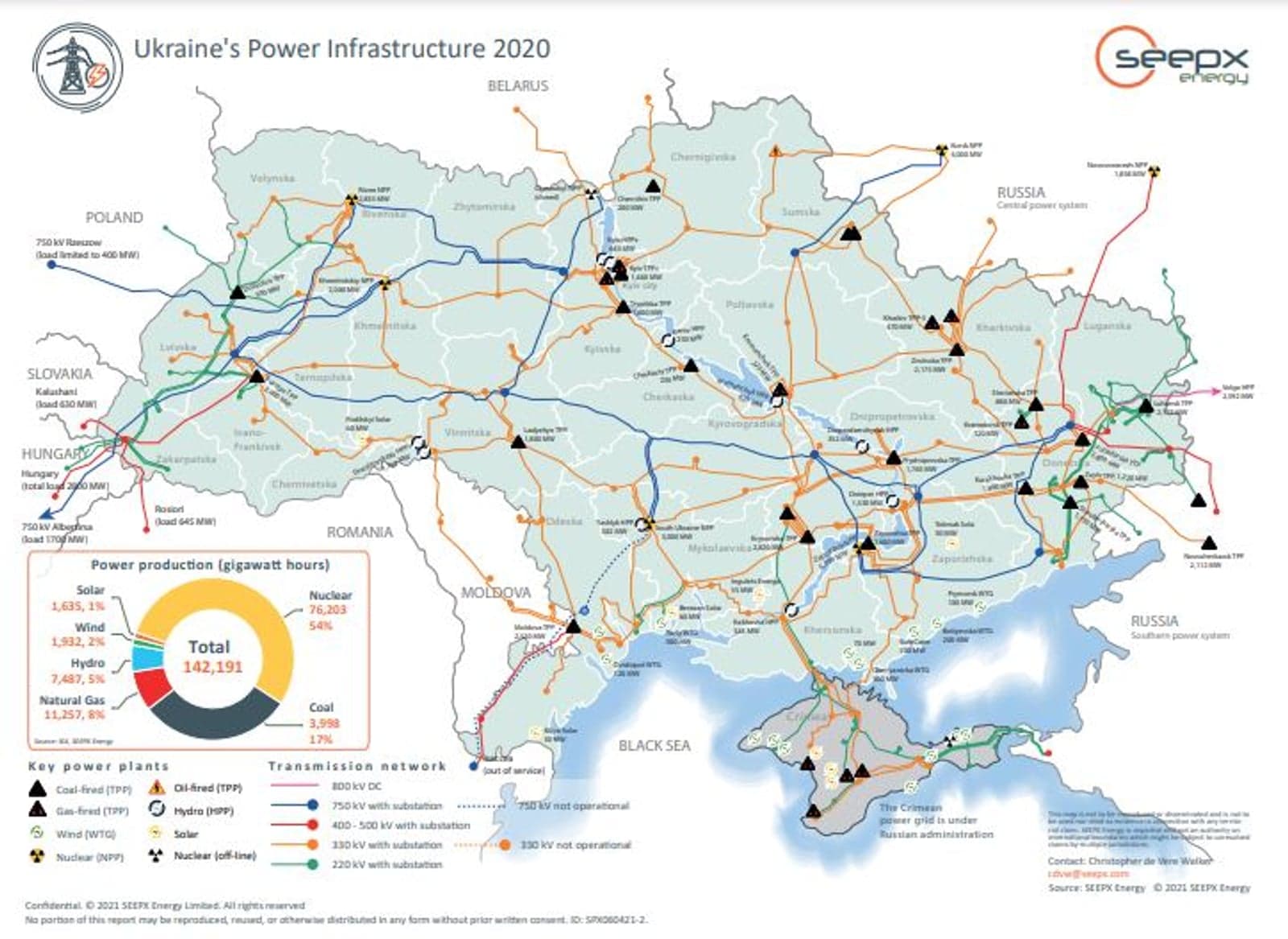
In order to gain a deeper understanding of Ukraine's energy infrastructure and unpack how Russia's military aggression could potentially impact the country and region at large, Enlit Europe spoke to Christopher de Vere Walker, Director of SEEPX Energy, geospatial data and infrastructural risk specialists with a focus on Russia, Ukraine and Central Asia.
What are the defining characteristics of Ukraine's energy infrastructure?
In terms of generation capacity, more than 50% of the country’s power is generated by nuclear, produced from several plants across the country. The next largest provider is coal, supplying about 17-20%, followed by gas and hydropower.

Renewable energy (including small hydropower plants) has been rapidly growing in recent years, in 2020 representing up to 10% of the energy output.
One of the key challenges facing the country is that its generation fleet is ageing. About 50-60% of generation capacity was built before 1980 and the bulk of Ukraine’s nuclear fleet was built between the '80s and '90s, with 3 GW built since. Notably, Ukraine’s nuclear fleet is Russian-designed VVER reactors. Much of Ukraine’s thermal capacity needs replacing and there has been little in the way of new generation built in recent times (with the exception of renewables).
How would you describe Ukraine's strategic importance in terms of energy?
When Ukraine's power grid was designed in Soviet times, it was never designed to be independent of Russia, it was designed to be operated as one integrated grid.
This presented a strategic weakness. During the 2014 incursions in East Ukraine, the grid was damaged, which presented a challenge to balancing power. Therefore, both Russia and Ukraine had to find ways to mitigate this, which meant developing grid infrastructure - something they have clearly done.
In particular, Ukraine has also been quite active in strengthening its grid in recent years, which has made them less vulnerable to Russia. Although it's worth noting that Ukraine and Russia still maintained several links to ensure adequate balancing, such as in the northern and eastern parts of Ukraine, which are connected to several Russian nuclear plants. Essentially, Russian power exports to Ukraine have been growing in recent years—in 2021 net Russian exports to Ukraine reached 5.5TWh.
Ukraine has not been idle, although they still struggle with grid reliability and the system does not have sufficient flexibility. Ukraine lacks sufficient power reserves in thermal generation which means the system operator is constantly curtailing renewable output. Still, in 2020 the number of disturbances increased by more than 40% compared to 2019. The majority of all disruptions (58%) occurred in the overhead HV lines. Notably, 70% of transmission lines are in operation for more than 40 years and thus nearing the end of their service life.
Rather than building new power plants, with the exception of renewables, they have taken a more strategic approach, upgrading generation when feasible, building renewables despite intermittency challenges, and of course, strengthening the grid to unlock stranded capacity.
Related content
Analysis: Impact of the Ukraine crisis on Europe’s energy markets
IRENA: How to future-proof economies against fossil fuel volatility
For many years, Ukraine has done a lot of work in synchronising its grid with the European grid, selling excess capacity to neighbouring countries.
Even though the connections are in place, such as to Poland, Slovakia and several connections into Hungary, Europe is cautious about purchasing power that might contradict EU green directives. ENTSO-E would not welcome power generated by coal, for example.
Coupled with Ukraine’s grid stability, this has slowed Ukraine’s efforts to gain greater energy security through synchronisation with Europe.
If Russia takes control of Ukrainian energy infrastructure assets, what could that scenario look like?
As a rule, the army is likely to try and keep the lights on. However, in the chaos, there is a threat of blackouts through accidental damage or if the army sees a military advantage to knocking out parts of the grid.
However, there is one scenario that is troubling. In Fukushima, the meltdown was caused when the backup generators were unable to take over when the main grid went offline - the reactors could not cool.
If there was significant resistance to military forces, an accident of this nature could happen . Nuclear power plants will continually need to receive secondary power, and as a rule, many of these plants risk not having sufficient power back up to support this - it should be a concern.
In short, what are the main risks to keep in mind?
From a military point of view, the grid is a deep risk. I can't think of a recent war where a country with nuclear power plants has been invaded.
However, Russian military leaders will be hoping not to damage or disrupt nuclear power plants, as they have no control over the potential fallout.
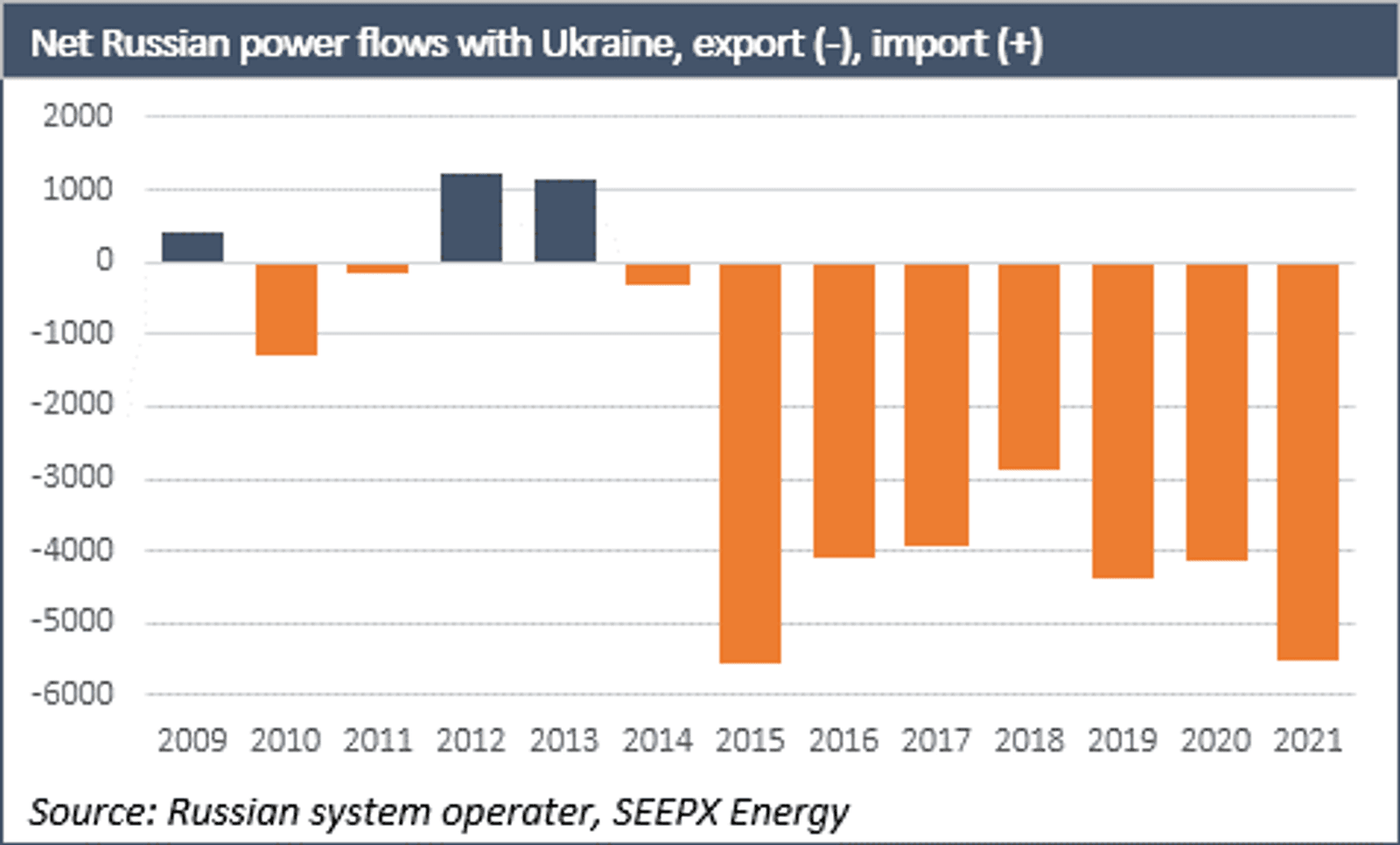
Ukraine does export some power to neighbouring countries, which might be interrupted during this turbulent time. Overall, Ukraine exports and imports around 5TWh and 2.5TWh respectively.
Most notably, Hungary‘s line capacity is more than 2,800MW and imported around 2.1TWh from Ukraine in 2020, however, ENTSO-E will have a contingency plan to wheel that amount of power if Ukraine’s lines are damaged. It is not improbable that Russian forces will knock out these lines.
Russia has been extremely proactive in terms of installing and revitalising new capacity, as well as strengthening and modernising its own grid. They have overseen an impressive upgrade to their own power system.
In my opinion, if Russia occupies Ukraine, which is unlikely, they will probably invest heavily in building gas and transmission infrastructure, as they did in Crimea. The gas pipelines into Ukraine are robust and using the existing gas network would make sense, particularly if in years sanctions effectively reduce gas exports to Europe.
Of course, with Germany taking Nord Stream 2 off the table, Russia will need to transit gas through Ukraine, which could increase their own risk. Ultimately, this could have implications for energy markets across Europe, impacting supply and the price of gas, which is already feeding through to the broader energy markets.
Christopher de Vere Walker shared these insights based on extensive geospatial data resources built up over many years. Visit the SEEPX Energy website to learn more about his work, as well as view insights and maps.
Related tags
Latest content
+2
Germany’s nuclear u-turn and its continental ripple effects
Germany’s shifting stance on nuclear power could accelerate acceptance across the continent and lead to a more resilient, integrated, and decarbonised European power grid, writes Muhammad Rafey Khan of PTR.
- Guest/partner contributor
- 23/07/2025