Three fusion ‘hubs’ to be established in Germany
Jonathan Spencer Jones
Posted on: 18 May 2026
Germany’s ministry of research is tendering for three topic specific ‘hubs’ for fusion research and technology development.

The three hubs, or ‘competence centres’, which were foreseen in the country’s Fusion 2040 research programme, are on magnetic fusion, laser fusion and the fuel cycle and material development.
Their aim is to pool competences and resources to deliver the first fusion power plant in Germany in the 2030s.
In addition to dealing with the key research and development issues on the respective topics, goals are to help increase the technology and market maturity, stimulate the development of the necessary supply chains and train and attract young talent and skilled workers.
Each hub is required to establish a management and governance structure and to undertake planning and road mapping and promotion of relevant r&d projects.
Also of interest
Who is leading the global fusion energy race?
Each hub should preferably be located at one main location, but virtual substructures or networks are conceivable in order to integrate other partners who do not have or cannot set up a headquarters at the planned location.
Fusion hubs
Magnetic fusion
The magnetic fusion hub is focussed primarily on stellarators, with the current state of the technology largely based on the results from the Wendelstein 7-X research facility, and is expected to expand Germany's leading role in stellarators.
A possible operation with tritium must be considered, and concepts of energy generation by magnetic confinement must be deepened.
In addition, sub-technologies that should be further developed include magnets and high-temperature superconductors; plasma stability, diagnostics and control; plasma heating systems; plasma-side reactor components; robotics and maintenance systems for fusion reactors; and energy conversion.
Laser fusion
The laser fusion hub is planned to build on Germany’s leading role in fields of photonics, optics and laser technology. Due to Germany's distinctive ecosystem, the necessary skills are available in the field of nanostructure and manufacturing technology for research inertial fusion targets.
Topics for further r&d include ignition concepts and targets; combustion chamber and plasma-side components with consideration of operation with tritium utilisation; lasers and optical components; inertial fusion energy-specific diagnostics; robotics and maintenance systems for fusion reactors; and energy conversion.
Fuel cycle
The fuel cycle and material development hub is aimed to advance these areas with current approaches still at an early stage. Tritium exists naturally only in very small quantities and a fusion power plant can likely only be operated economically if the tritium is incubated during the fusion process.
Such fuel cycles have not yet been demonstrated experimentally and the main task of the hub is to create the structures for a first fuel cycle system and to demonstrate its feasibility. This also includes technologies for the breeder blanket and the processing of fusion fuel feedstocks, including processes for lithium enrichment.
Another aspect is the development of materials that can withstand the extreme conditions of a fusion power plant and meet the technological and economic requirements. In addition, a concept for a neutron source that is suitable for testing materials, as well as the wall and breeder technologies, can be developed and implemented.
Common themes across all hubs include concepts for safety, protection and disposal (in cooperation with the fuel cycle hub); design review creation for the establishment of research infrastructures or technology demonstrators and digital twins and integrated process models.
Towards fusion in Germany
In March Munich-based Proxima Fusion, which was spun out of the Max Planck Institute for Plasma Physics in 2023 and is evolving its Wendelstein7-X experimental stellarator concept, signed an MOU with the State of Bavaria, multinational energy company RWE and Max Planck IPP to deliver Germany’s first commercial fusion power plant.
Under the MoU, the first step will be the delivery of the demonstration stellarator, Alpha, near the Max Planck IPP in Garching in the early 2030s.
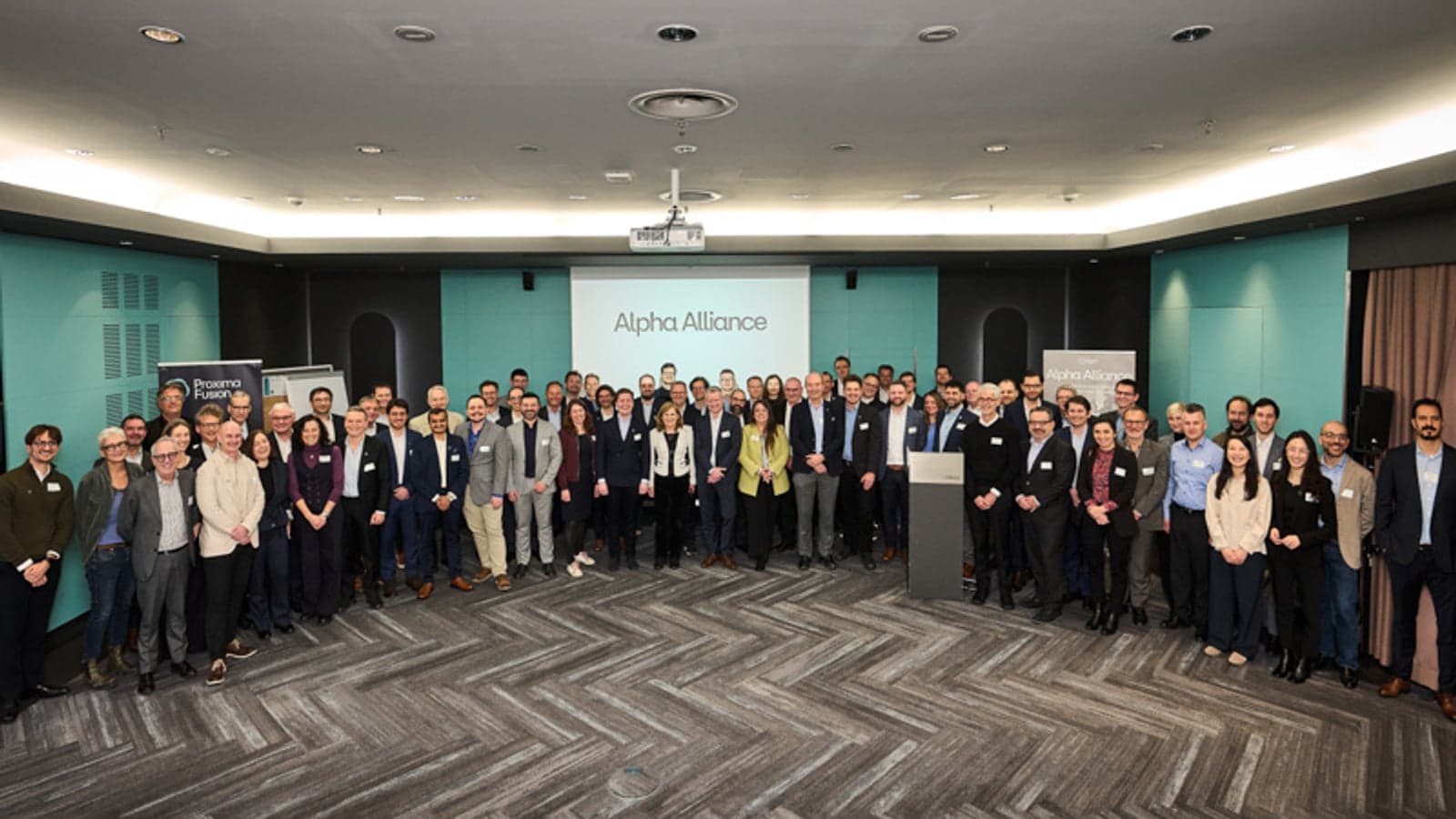
At the same time the company launched the Alpha Alliance bringing together a growing number of European and international companies – now over 50 – with capabilities across materials, components, assembly and the infrastructure needed for Alpha and more generally to scale fusion.
Proxima Fusion has now given further impetus to this plan with the establishment of an industrial development board bringing together leading industrial and energy experts to advise and advance the programme.
Its members are Luc Rémont, former CEO of EDF and Executive Vice President at Schneider Electric, Dr Michael Bolle, former CTO and CDO of Robert Bosch and Chairman of Board of Trustees of the Carl-Zeiss-Foundation, Ann Mettler, former Director-General at the European Commission and former head of Europe at Breakthrough Energy, and Erich Clementi, Chair of E.ON and former IBM executive.
Related tags
Latest content
+3
EU Energy Projects Podcast: How the 2Cool2Waste cluster is turning waste heat into an opportunity
In this episode of the EU Energy Projects Podcast, I had the pleasure of welcoming Mohaddeseh Maktabifard and José Luis Corrales Ciganda, both representing the inspiring 2Cool2Waste cluster; an initiative uniting EU-funded projects that transform waste heat from an overlooked by-product into a practical, clean-energy resource.
- Areti Ntaradimou
- 03/12/2025