Ticking the boxes to make green hydrogen viable at scale
Pamela Largue
Posted on: 4 February 2025
Pamela Largue speaks to one of the co-founders of an Australian hydrogen project that is showing green shoots of success.
Pamela Largue speaks to one of the co-founders of an Australian hydrogen project that is showing green shoots of success.
While green hydrogen has a massive contribution to make in reaching our decarbonisation
goals, ensuring that projects are commercially viable can be challenging.
The cost associated with producing green hydrogen can be significant, with equally significant amounts of renewable energy and water required.
Furthermore, it’s critical to establish a well-functioning supply chain, from electrolyser manufacturing to the transport of hydrogen derivatives.
One initiative thinks it has ticked all these boxes, and as such has a winning recipe for success: the Green Springs hydrogen project located south of Tennant Creek in Australia’s Northern Territory.
Green Springs is the brainchild of founders David Green, Nicholas O’Day and James Leong, who, under the banner of project developer and fund manager CIC, are committed to proving the commercial viability of green hydrogen.
The project includes a 10GW network of modular renewable hydrogen production units functioning off-grid, and will produce more than 500,000 tonnes of renewable hydrogen every year.
Green explained that it all started with a joint venture integrating solar and batteries, “before batteries even became fashionable.
“We got to thinking about how you could develop the green hydrogen industry at scale using renewable energy.”

The team began assessing governments’ policies around decarbonisation and establishing a green hydrogen global industry and trade framework.
It was through this continued assessment that Green and the team identified the criteria for a successful hydrogen project.
Said Green: “We didn’t have assets we needed to protect like oil and gas companies, or royalties that we need to protect like governments that make money from selling or from exporting coal and gas and oil.
“We were able to start with a clean sheet of paper and determine what was needed for a successful project, and to be successful you need to be able to compete directly with the carbon-based fuels on price and volume.”
About 70% of the cost of producing green hydrogen comes from the electricity, explained Green, so renewable resources would be key to keeping costs low.
“We looked all over the world, and it happens that Australia really sits right at the top with a couple of other locations as having the best solar resource.”
Location, location
Green said that choosing the right location for the project was critically important because being off-grid raised the question of how to get your product to market.
“The Green Springs Project site covers 3,000km2, 1.4 times the size of Singapore, someone told me.
“A critical factor for us was to identify a site which had existing infrastructure that we could utilise and therefore avoid having to build that cost into the cost base.” The Green Springs location is ideal, added Green, as the national freight rail runs right through the land, as does the National Highway. LNG gas pipelines, which are feeding in from depleting gas fields, run on the western side of the land.
“It’s certainly the best you’ll get in Australia.
“When you add the total distance between our project by rail to the port, and then by ship to Japan or Korea, we’re still the closest of any of the export locations.”
And one final consideration, said Green: “We have positioned the project outside the cyclone path in the northern part of Australia”.
Water as a vital element
However, location was not the only factor to be considered, said Green. A thorough multi-factor analysis would consider water availability too.
As the climate changes, the amount of rainfall will change, as well as where it falls. Also, said Green, desalination is increasingly difficult to deploy, and is environmentally damaging.
Said Green: “[Hydrogen] projects are often announced in water-stressed areas, as those areas have better solar radiation. The question becomes, how do you capitalise on that?”
Water stress means these projects are significantly disadvantaged as time goes on, explained Green, as is their ability to continue to produce at a reasonable cost.
To mitigate water scarcity, Green and the CIC team came up with a novel idea, using technology well known throughout the Western world.
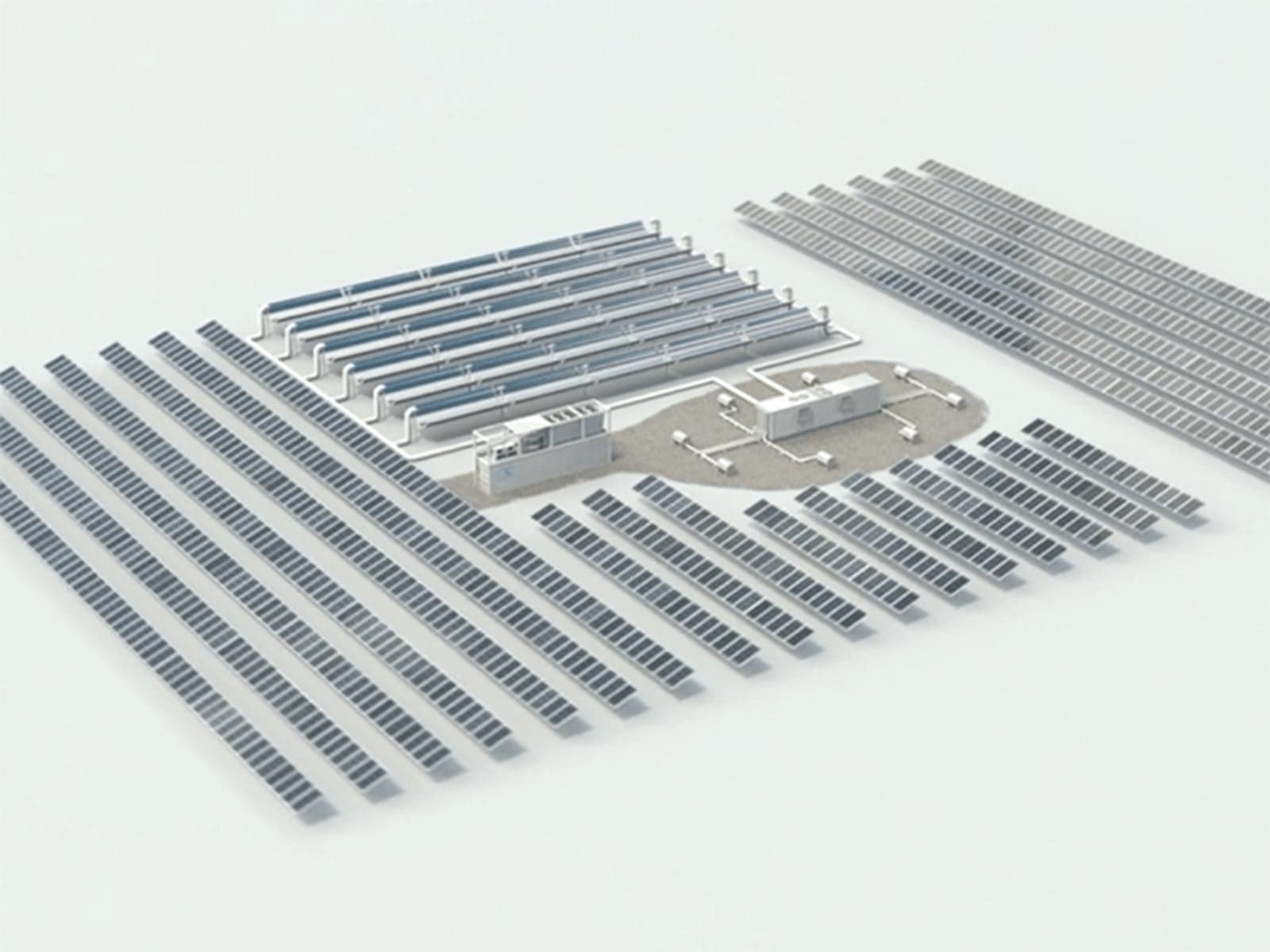
That technology is atmospheric water generators. CIC, together with partners GE Vernova, have developed a closed system of modules that each contain solar power generators, atmospheric water generators and electrolysers that allow for clean hydrogen generation to take place almost anywhere.
“If you think about this atmospheric water generator as a different version of an air conditioner, it’s a simple way to describe it. There are a couple of different approaches to dewatering air, but one that we’re all very familiar with is air conditioning whereby water is the waste product.”
With this atmospheric water generator technology in hand, the team developed a strong supply chain around the ability to access water.
“We have designed it in a modular form together with a 2.5MW electrolyser module that includes everything needed to produce hydrogen totally off the grid.”
The solution functions independently of any support infrastructure, said Green. And the only significant space needed is for the solar power, around 7.5 hectares for a unit.
Ultimately, the Green Springs project aims to achieve a US$2.00 hydrogen production price.
In order to achieve this, CIC is working to reduce what Green refers to as “dead weight capital” by optimising the equipment used in the project.
“What has been done in the past for large-scale energy projects is simply not going to work. There are many projects to produce hydrogen, but not hydrogen at the right price, and therefore subsidies are needed from government.
“Our philosophy is to design a project that is commercial in its own right.” Green explained that the modular approach contributes to managing largescale infrastructure risk, and because the system functions off-grid, CIC selected equipment that could effectively manage intermittent energy.
That removes the need for capital spend on batteries, said Green.
Furthermore, the atmospheric water generator negates the need for the electrolyser to have a water purification unit.
Replicating Green Springs
According to Green, the team has identified multiple sites around the world with the right sort of climatic conditions and infrastructure to support projects like Green Springs – for example, areas in the Middle East, northern Africa, and places like Spain, Portugal and Greece where the solar radiation is good.
What is needed, however, is a functional supply chain and a regulatory framework that can support its growth, said Green.
CIC is currently building a product and a strong delivery team, “and the intent is for the supply chain to follow us,” with manufacturing facilities located strategically to support projects.
The bigger picture
Green hydrogen is going to be required in staggering volumes, said Green, referencing the aviation sector’s increasing demand for sustainable aviation fuel as well as the requirements of the maritime industry and other hard-to-abate sectors like steel.
“Our 10GW project is a tiny drop in the ocean of the demand. Our view has always been that transition takes time, but you need to be early in and working with the right partners.
“The Green Springs project will produce just over 650 million tonnes of carbon offsets over the life of the project. If we can replicate that in a number of places around the world, that’s a huge contribution to decarbonisation.”
However, emphasised Green, people will only start using green hydrogen when it can genuinely compete on price, and Green Springs aims to make green hydrogen competitive.
“We are building a coalition of the willing: people who genuinely see that no one is able to solve this problem alone. It’s a matter of finding the right people to work alongside, rather than trying to cannibalise each other.”
Green hopes that projects like Green Springs will create a blueprint and a business case worthy of government’s attention, and will ultimately spur faster development of future projects.