TotalEnergies sells 50% stake in 800MW German battery portfolio to AllianzGI
Yusuf Latief
Posted on: 5 March 2026
To finish construction of the 11 battery projects, due operational by 2028, the partners will invest a total of €500 million ($581.8 million).
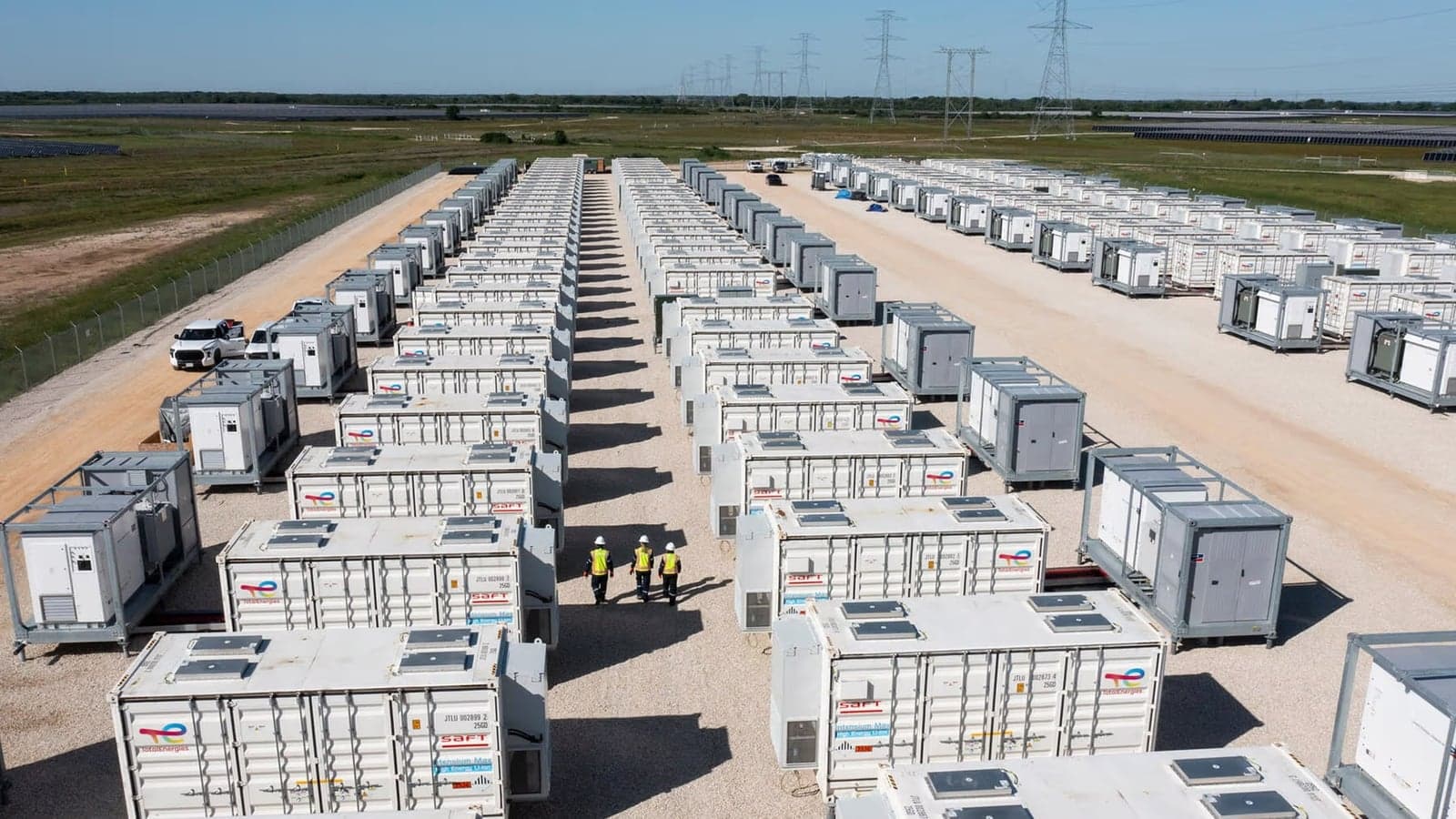
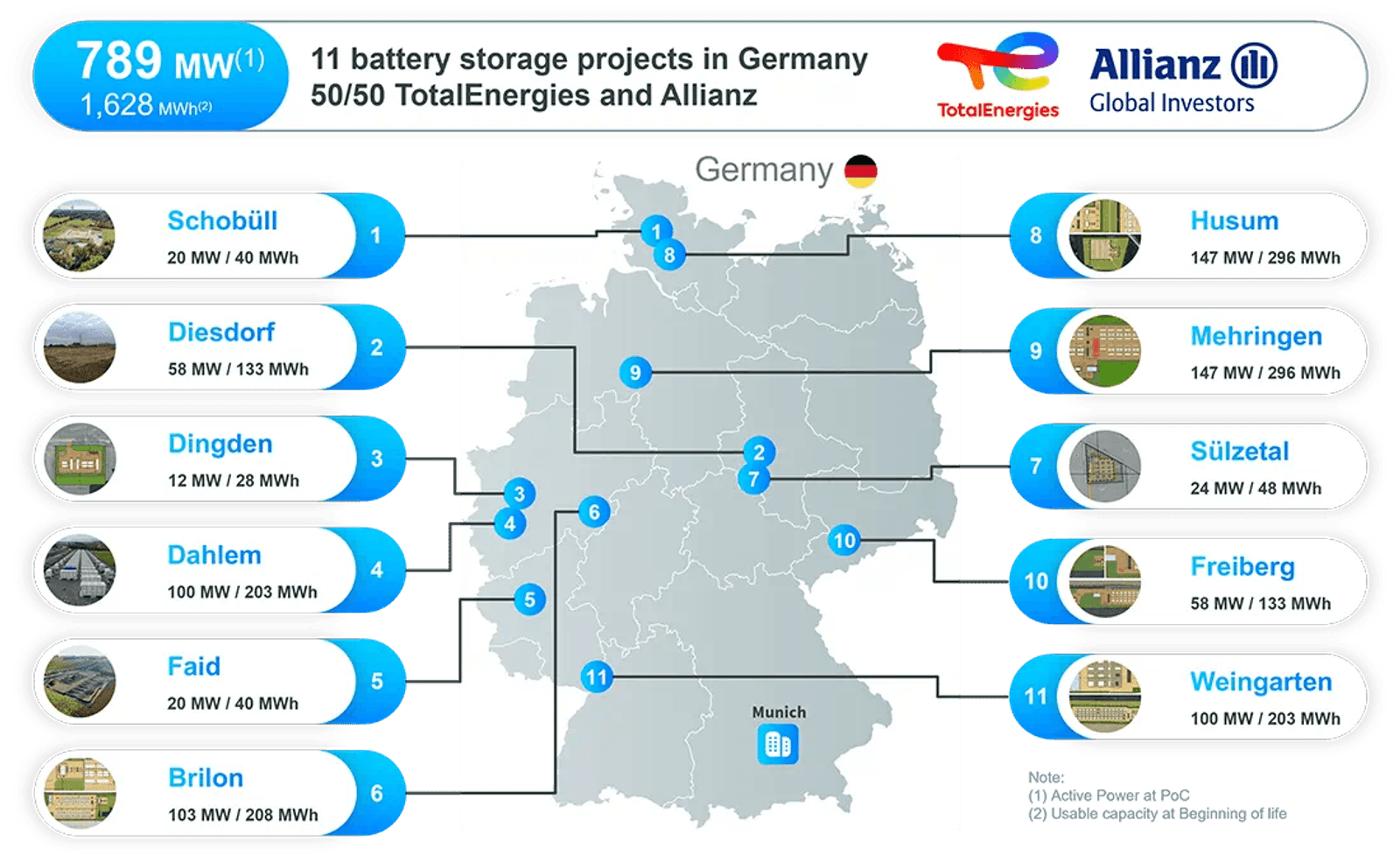
TotalEnergies has signed an agreement with Allianz Global Investors (AllianzGI) for the sale of a 50% stake in a portfolio of 11 battery storage projects, totalling 789MW/1,628MWh.
With the agreement, the partners will deliver an investment of €500 million in the critical energy infrastructure for Germany, of which 70% will be financed by debt.
The projects, developed by TotalEnergies' subsidiary Kyon Energy, are spread across Germany and will all be operational by 2028.
Most of them will use next-generation batteries supplied by Saft, a battery developer and subsidiary of TotalEnergies. TotalEnergies will remain the operator of the assets.
TotalEnergies profitability strategy
Under TotalEnergies’ Integrated Power business model, the company has been building a portfolio that combines renewables (solar, onshore wind, offshore wind) and flexible assets (CCGT, storage) to deliver clean firm power to its customers.
To achieve its 12% profitability target for the Integrated Power business, TotalEnergies plans to sell up to 50% of its wholly owned renewable assets once they reach commercial operation.
In a release, TotalEnergies President of Gas, Renewables & Power, Stéphane Michel, commented on their strategy and sale:
“In line with our business model, this transaction enables us to optimise our capital allocation in our integrated power activities and helps improve the sector’s profitability.
“This operation [strengthens] our development momentum in Germany, Europe’s largest power market, where we are deploying our clean firm power strategy, as illustrated by the 200MW PPA signed with Airbus recently.”
Have you read?
Margin call: energy retailers need profitability rethink
BlackRock’s GIP and EQT to acquire AES Corporation for $33.4bn
The German power market
TotalEnergies aims to have 100GW of renewable energy installed by 2030, prioritising Germany, the largest power market in Europe.
Germany is already a key market for the company, and they are present across the power value chain, including the development of renewable generation projects (wind, solar), flexible assets (battery storage), as well as trading and aggregation.
For AllianzGI, a global asset manager with €591 billion ($687.6 billion) in assets, the sale marks the first direct equity investment into a battery storage portfolio.
Said their Head of Private Markets, Édouard Jozan: “The shift to cleaner energy depends on strong infrastructure.
“As a pioneer in energy transition investing for more than 20 years with a portfolio spanning wind and solar farms, green hydrogen platforms, and an electricity interconnector, we are very delighted to partner with Total Energies on this important project in one of our home markets, Germany.”
Jozan emphasised in a release how the 11 projects will “help reinforce the country’s energy resilience, accelerate the energy transition, and deliver long-term value for our clients.”
Battery connections and Germany’s power grid
According to a joint statement by TotalEnergies and AllianzGi, once operational, the projects will directly contribute to the resilience of the German power system by reducing grid congestion and providing the flexibility needed to support the growth of renewable energy in the country.
Such systems are increasingly important to Europe’s largest economy, which has been experiencing power grid bottlenecks.
Dr Malte Jordan of Watson Farley & Williams (WFW), which advised TotalEnergies on the sale, commented on how large-scale storage assets are crucial for this resilience.
Said Malte, WFW’s Corporate Partner: “Large-scale storage assets are essential to enhancing grid resilience and enabling the continued growth of renewable generation, particularly in a market as central and fast-developing as Germany.”
During an Energy Transitions podcast, comparing grid congestion in the Netherlands and Germany, E.ON’s Oliver Franz, Vice President of European Regulation, shared his insights on grid capacity, how battery and data centres were “new kids on the block” for operators, and how flexibility is key for managing consumption.
Earlier this year, PV Magazine reported that more than 2.22 million small, medium, and large battery storage systems are now installed in Germany, totalling 25.5GWh in installed capacity.
According to Montel, three particular forces are pulling it into the mainstream.
First, volatile intraday spreads and frequent price reversals reward fast response and multi-hour shifting. Second, connection queues for renewables are pushing developers to co-locate batteries to make better use of grid capacity and reduce curtailment exposure. Third, equipment costs have eased from their 2022 peak, improving project economics even as interest rates stayed elevated.