Home
/
Transforming Europe's building sector: META BUILD’s role in decarbonisation and the energy transition
Transforming Europe's building sector: META BUILD’s role in decarbonisation and the energy transition
Guest/partner contributor
Posted on: 22 May 2025
The META BUILD Horizon Europe project is tackling one of the most pressing challenges in the European energy transition – decarbonising the building sector.
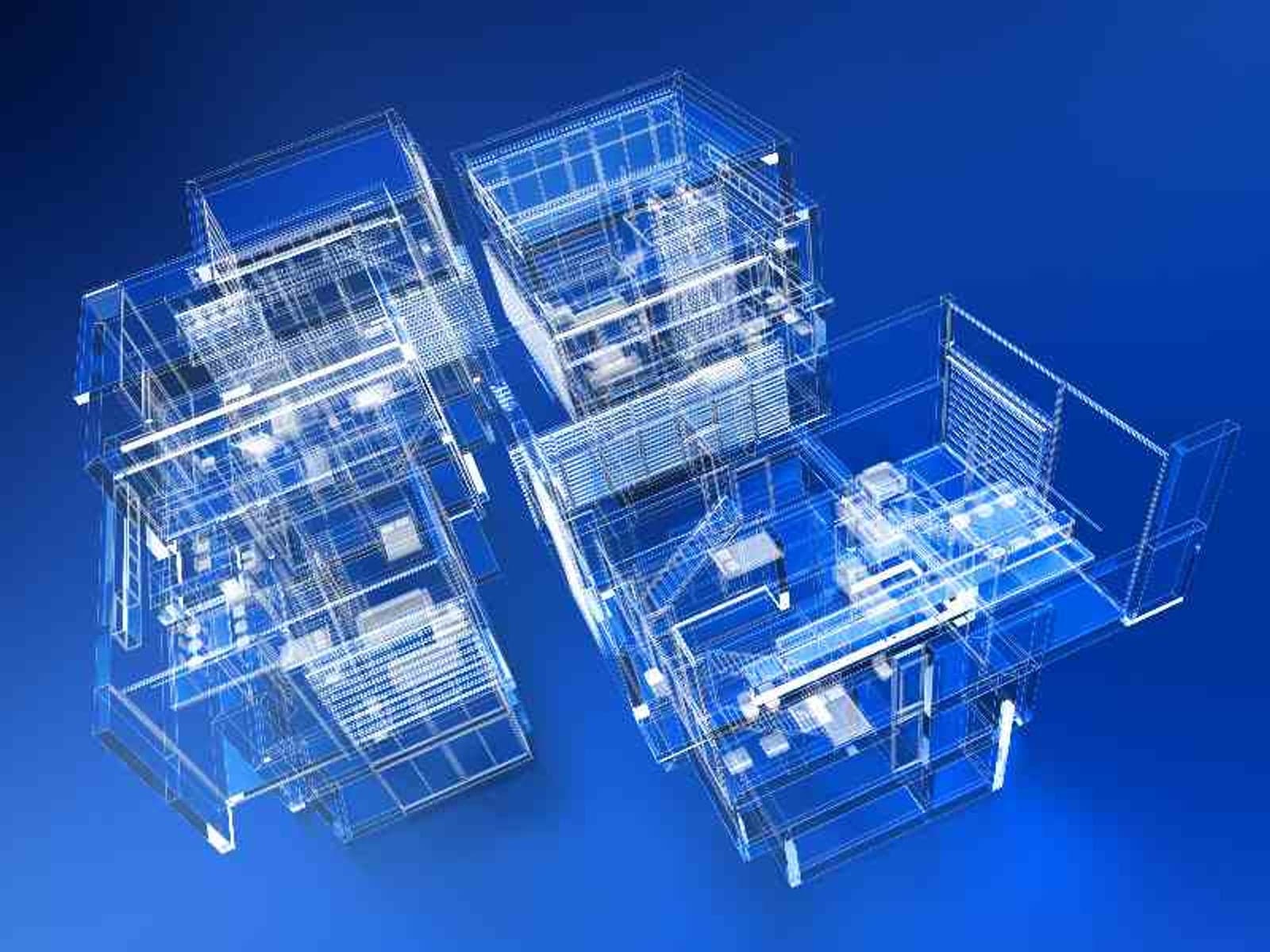
The META BUILD Horizon Europe project is tackling one of the most pressing challenges in the European energy transition – decarbonising the building sector.
Currently, heating and cooling systems in buildings rely heavily on fossil fuels, with natural gas accounting for 42% of energy demand. The goal of META BUILD is to accelerate the transition from these conventional systems to electrified, low carbon alternatives, thus supporting the EU's climate neutrality targets for 2050.
The challenge
The building sector in Europe faces several barriers in achieving decarbonisation. Traditional heating and cooling systems, typically running on high carbon emission fuels, are deeply embedded in existing buildings’ infrastructure, making large-scale replacement costly and complex.
Technologies that can support buildings decarbonisation, like heat pumps and renewable energy sources (solar, geothermal, wind) have made substantial progress in their affordability, both in small- and large-scale capacity, to provide an alternative solution in legacy heating and cooling building systems along with economic benefits and minimal to no reduction of building tenant comfort.
Widespread adoption and integration in buildings remain, however, a challenge, particularly when it comes to cost-effectiveness, scalability and replicability. In addition, integration of electrified heating and cooling, renewable energy sources, and storage solutions (thermal or electrical) into buildings in a seamless, coordinated way, remains a critical challenge.
Ensuring that the proposed technologies and solutions provide comfort to tenants, while being affordable and efficient, is key to the necessary building sector changes, to support the ambitious EU decarbonisation targets.
The solution: integrated, scalable and digital
META BUILD directly addresses these challenges by developing and demonstrating integrated solutions that electrify the thermal energy demand of buildings. These solutions combine existing technologies – heat pumps, renewable energy sources like solar power and energy storage systems – into a comprehensive, cost-effective approach to decarbonising building energy systems.
Specifically, working prototypes of heat pumps for enhanced performance are being developed. Innovations include
- Heat pumps with an inverter-driven, modulating system supporting multiple heat sources;
- High temperature heat pumps for district heating systems;
- High capacity heat pump systems hybridised with existing gas boilers, offering flexibility and scalability by allowing the integration of other decarbonisation-enabling technologies such as heating networks and PVT systems;
- Heat pumps with R290 propane refrigerant integrated with a phase change material storage system for efficient thermal energy storage during the phase transitions;
- Dual-source heat pumps able to use different energy sources, such as geothermal, aerothermal and PVTs, which can be integrated with heating and cooling networks as both a source and sink, allowing them to compensate for unexpected demand fluctuations while efficiently functioning as conventional water-to-water and air-to-water heat pumps.
The project aims to ensure that these technologies are not only technically advanced but also user-friendly and adaptable to existing infrastructure.
Furthermore, META BUILD places significant emphasis on digitalisation to optimise energy consumption. By leveraging smart energy management, the project facilitates the seamless integration of these technologies while maintaining occupant comfort.
META BUILD’s innovative approach involves renewable energy sources, such as PVTs with direct lamination and air-based PVTs, second-life batteries and the development of supporting energy management systems and technologies to optimise energy use in real time conditions and operations.
These digital technologies monitor building performance utilising digital twins, enable demand response scenarios in buildings energy assets, provide advanced model predictive control and proactive building systems maintenance services, helping to reduce energy consumption, lower operational costs and enhance indoor comfort.
This is particularly crucial for ensuring that the transition to electrified heating solutions doesn’t come at the cost of occupant well-being or affordability.
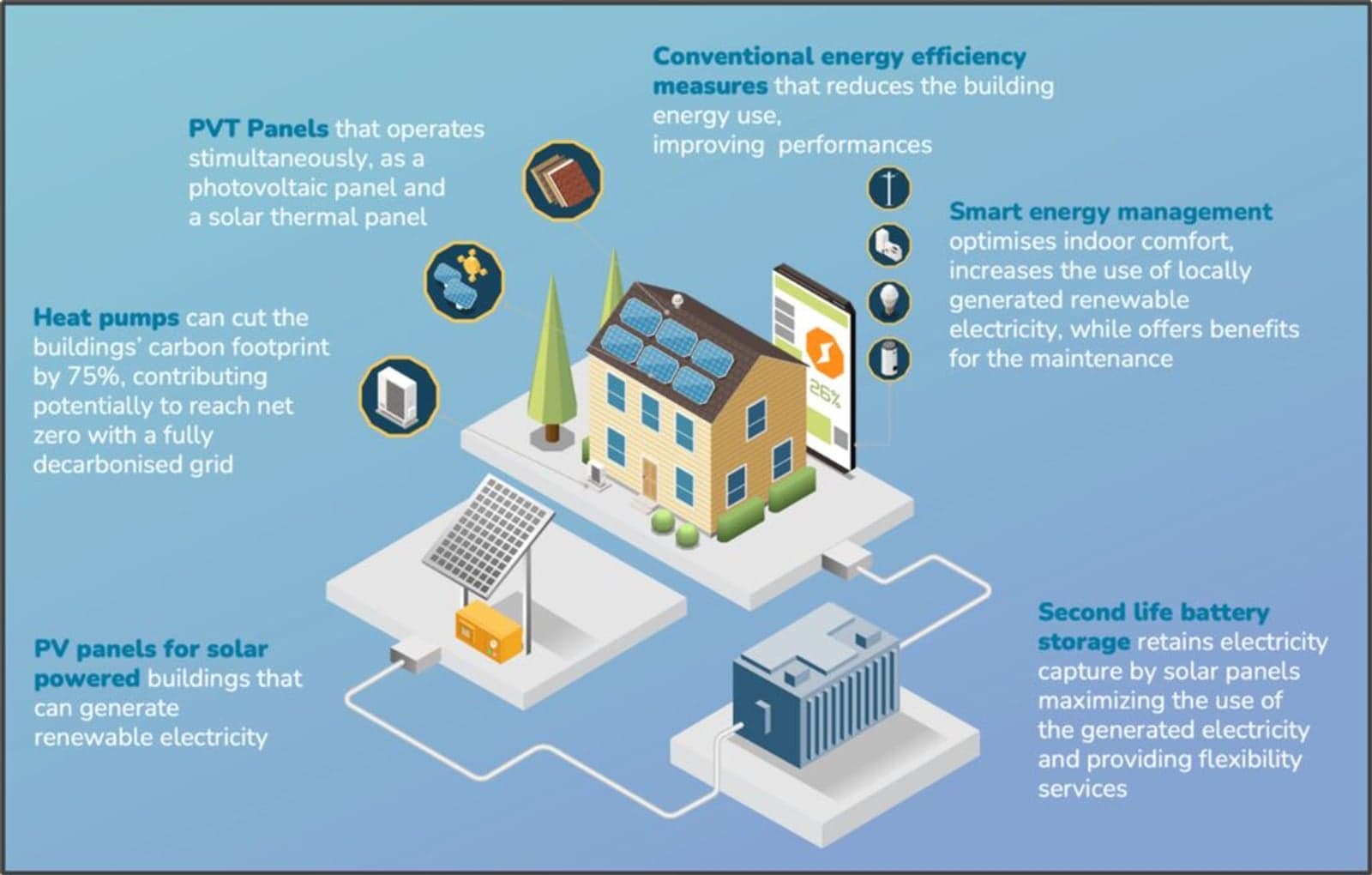
META BUILD’s digital solutions enable a high level of flexibility, allowing buildings to respond dynamically to changes in energy availability and demand. This flexibility is important for integrating renewable energy sources into the grid, further supporting the transition to a more sustainable and resilient energy system.
The impact: Decarbonising the building sector and accelerating the energy transition
With unique and varied piloted applications, META BUILD demonstrates the effectiveness of these integrated solutions in real-world conditions.
The demonstrators, spanning six European countries, provide valuable operational data on performance, scalability and cost-effectiveness of the technologies, ensuring that they can be adopted at scale across Europe.
To further test its scalability, META BUILD will deploy its solutions in seven smaller-scale demonstrators, acting as replication multipliers to allow drawing conclusions of their replicability and scalability and to explore their impact once technology maturity has been reached.
In addition to its environmental impact, META BUILD also supports energy security and grid stability. By offering buildings the ability to generate and store renewable energy locally, and by providing services like demand response and energy flexibility, META BUILD helps to stabilise the grid and reduce reliance on fossil fuel-based power plants.
Expected outcomes
META BUILD’s outcomes can be outlined as follows:
- To increase the application of the 'energy efficiency first principle' in the construction and renovation of buildings.
- To promote the decarbonisation of building thermal energy demand through electrification.
- To enhance building energy performance and encouraging the use of locally generated renewable energy and energy storage.
- To develop cost-effective, scalable solutions for the electrification of building thermal energy, reducing costs per building and facilitating mass rollout across Europe.
- To support the integration of energy flexibility services that contribute to grid stability and the overall efficiency of the power system.
Conclusion
META BUILD is poised to play a pivotal role in transforming Europe’s building sector. By addressing the barriers to electrifying thermal energy demand, integrating renewable energy and providing digitalised energy management solutions, the project is helping the EU reach its climate goals.
Its innovative approach will contribute to decarbonising the building sector, enhancing energy efficiency, and supporting grid stability, ensuring a cleaner, more sustainable future for Europe’s buildings.
For more information on the META BUILD project, visit the project website, LinkedIn profile and subscribe the META BUILD newsletter.
About the authors
Francesca Genovesi is EU Projects Officer at the European Heat Pump Association (EHPA).
Nikos Dimitropoulos is Project Manager at the Institute of Communication and Computer Systems in Zografou, Greece.
Professor Vangelis Marinakis is METABUILD Project Coordinator at the Institute of Communication and Computer Systems in Zografou, Greece.