UK and Canada partner to advance tritium management
Pamela Largue
Posted on: 16 February 2024
The UKAEA and Canadian Nuclear Laboratories have partnered on the development of technologies in relation to the management of tritium.
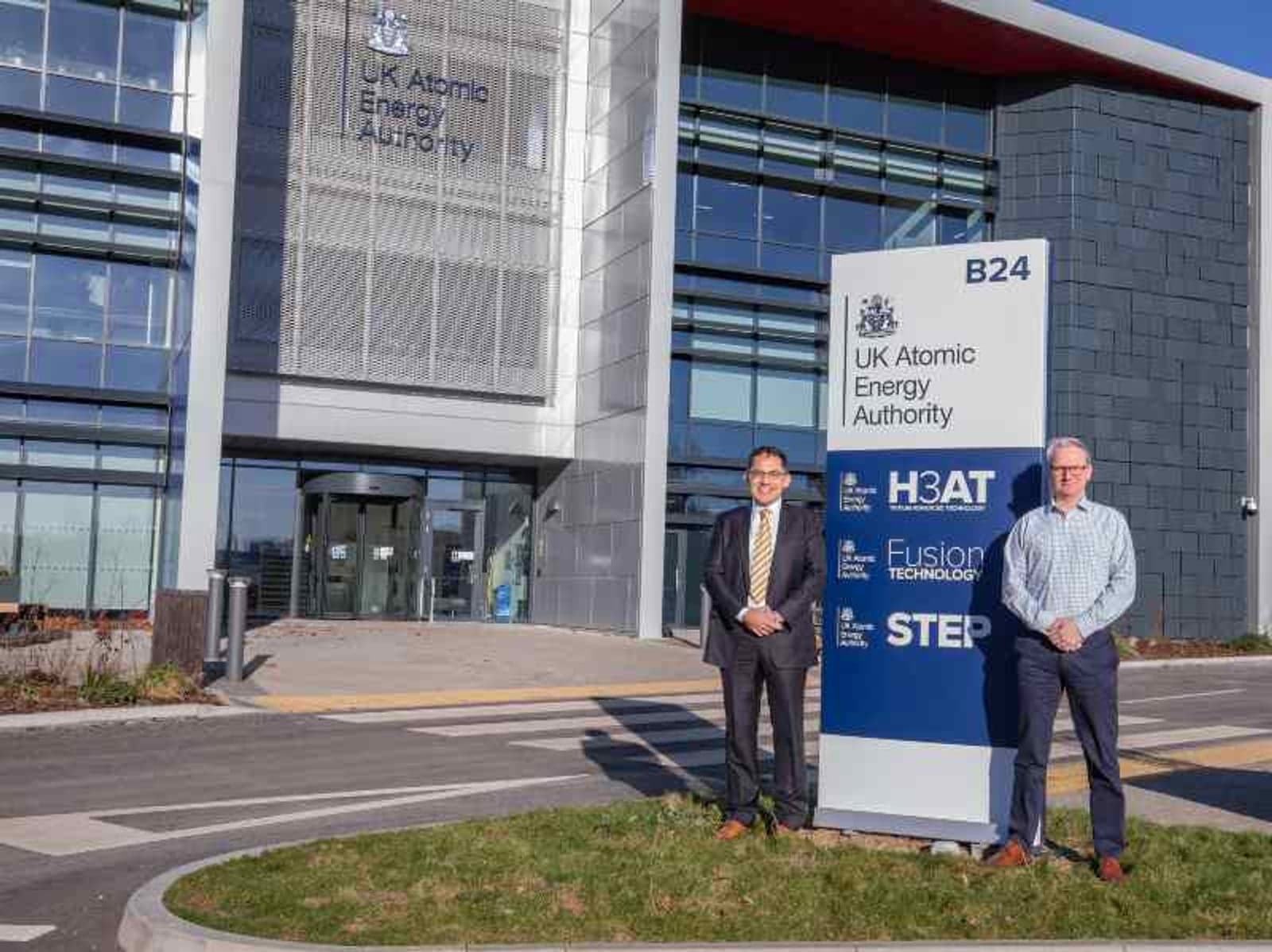
The United Kingdom Atomic Energy Authority (UKAEA) and Canadian Nuclear Laboratories (CNL) have partnered on the development of technologies concerning the management of tritium.
Tritium, a fusion energy fuel, is rare in nature, so managing tritium efficiently is critical to fusion energy’s commercial viability.
To this end, the partners signed a framework agreement that will facilitate joint research projects and personnel secondments, promote sharing expertise for consultancy services, and encourage collaboration to provide services to the fusion industry.
More specifically, both the UKAEA and CNL will use their facilities to advance the design of tritium processing plants, tritium-compatible materials development, tritium breeder blanket technologies, tritium decontamination, and analytical equipment and the modelling of tritium handling processes.
Stephen Wheeler, UKAEA executive director, commented: “Tritium is a key fuel for fusion energy, and developing a commercial scale fuel cycle for the handling and reprocessing of tritium is vital to the delivery of fusion as a clean energy source.”
“This collaboration between UKAEA and CNL brings together two of the largest and most experienced tritium research and operational teams in order to accelerate the development of new technologies for tritium processing,” added Wheeler.
Have you read?
Joint European Torus sets new fusion energy output record
UK boosts fusion energy development with funding for lithium tech
Hydrogen isotope management
A key focus of the partnership, and one of the first projects under the agreement, will be on hydrogen isotope management within the fusion fuel cycle, safely removing, processing, and reinjecting fuel to the plasma in a continuous manner.
The UKAEA stated in a release that "hydrogen isotope management is an essential part of the fusion fuel cycle. Tritium needs to be separated from other hydrogen isotopes in the exhaust gas so that it can be recycled and reused as a fusion fuel."
The first project will involve samples of candidate materials for isotope separation being analysed at both CNL’s facilities in Chalk River, Ontario, and UKAEA’s facilities in Culham, Oxfordshire.
“For our part, CNL has extensive expertise in the safe operation of facilities, storage and management of tritium, capabilities that will be critically important to this collaboration. Overall, we are thrilled to work with such a talented and internationally respected team of researchers at the UKAEA, and we cannot wait to get started,” remarked Ian Castillo, head of Hydrogen and Tritium Technologies, CNL.
This agreement complements the recent signing of a Memorandum of Understanding by the UK’s Energy Secretary, Claire Coutinho and Canadian Minister of Energy and Natural Resources, Jonathan Wilkinson at the International Energy Agency’s (IEA) Ministerial meeting.
In this episode of the Energy Transitions Podcast, Chris Mowry, CEO of Type One Energy and Chair of the Fusion Industry Association explains why fusion is more than a pipe dream and what policy and supply chain developments are needed to make fusion a reality.