UK boosts fusion energy development with funding for lithium tech
Jonathan Spencer Jones
Posted on: 19 December 2023
The UKAEA has awarded a total of £19 million (US$24 million) in two funding announcements for lithium and other technologies to advance fusion energy development.
The UK Atomic Energy Authority (UKEA) has awarded a total of £19 million (US$24 million) in two funding announcements for lithium and other technologies to advance fusion energy development.
In the first of the two rounds, nine organisations including start-ups, SMEs and academia were awarded £11.6 million for novel fusion materials and manufacturing and heating and cooling for fusion devices.
In the second, five organisations have been awarded £7.4 million to develop lithium technology for fusion.
For both sets of projects the feasibility has been demonstrated in an earlier funding round and the new funding from the ongoing Fusion Industry Programme, of up to £1.5 million for individual projects, is aimed to enable the development of proof of concepts.
Have you read?
Largest fusion device comes online in Japan
Energy Transitions Podcast: Digitalising nuclear power for enhanced grid stability
“Delivering fusion energy is one of the great scientific and engineering challenges of our time,” says Tim Bestwick, UKAEA’s Chief Development Officer.
“The Fusion Industry Programme is supporting businesses to overcome these challenges and help make fusion a commercial reality.”
Materials and heating and cooling
Novel nuclear fusion materials and innovative heating and cooling systems are essential to improving the availability of fusion power plants and driving up their performance.
Among the projects, 3-Sci is to develop and prototype high temperature sensors to advance diagnostics and monitoring of fusion machines.
Duality Quantum Photonics is to design and fabricate photonic chips for the detection of hot spots and Full Matrix is to develop a guided wave technology device for in situ monitoring of pipes and other features in fusion power plants.
Additive manufacturing is to be demonstrated in three projects. Alloyed is to advance the process for iron-based and oxide dispersion strengthened steels and TWI is to advance cold spray additive manufacture technology to create large-scale components from fusion-grade materials.
The University of Birmingham also is to scale up additive manufacturing and powder hot isostatic pressing technologies to produce complex, cooled tungsten components for fusion applications.
Two companies, Jacobs and Oxford Sigma, are to develop liquid lithium test facilities to investigate their performance and compatibility in fusion.
Two companies also are to investigate heating and cooling systems.
- Cal Gavin is to develop passive heat transfer enhancement devices to improve heat transfer efficiency in fusion machines.
- TWI is further developing its Coreflow welding technology for the design and manufacture of plasma facing components.
Lithium technologies
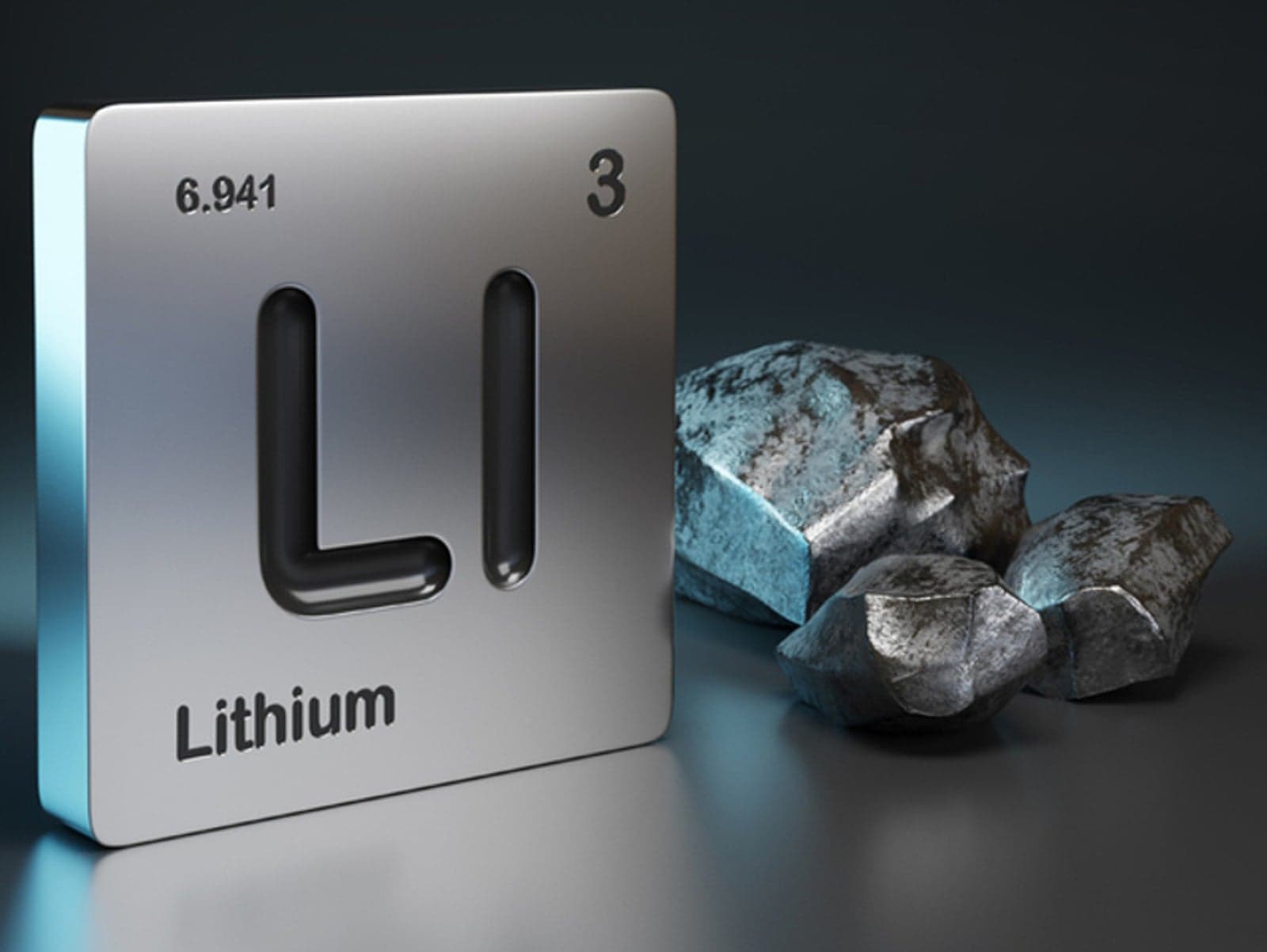
Lithium, a light alkali metal found in natural deposits in the Earth’s crust and for example in seawater, is considered key for fusion as it can be utilised for the production of tritium, which in turn is needed for the deuterium-tritium fusion process in tokamaks.
Five of the six projects awarded are focussed on lithium enrichment. Bangor University is to investigate lithium isotope uptake into microbes and Frazer-Nash is to work with the University of Bristol on plasma-based technology enrichments.
The University of Bristol also is leading another project on enrichment via centrifugation technologies, while the University of Manchester is to demonstrate a lithium isotope enrichment process based on solvent extraction using crown ethers.
A third project at the University of Bristol is on lithium breeder advancement and the University of Edinburgh is to demonstrate a process coupling tritium production and T2 gaseous extraction from a molten salt through chemical control.