US Government stops work on Ørsted's Revolution Wind project
Pamela Largue
Posted on: 26 August 2025
Ørsted has confirmed that an order has been received to stop all activities on the outer continental shelf related to the Revolution Wind project.
Ørsted has confirmed that an order has been received to stop all activities on the outer continental shelf related to the Revolution Wind project.
The order was issued this week by the US Department of the Interior’s Bureau of Ocean Energy Management (BOEM) and caused the company's shares to plummet 16% to a record low of DKr179 ($28).
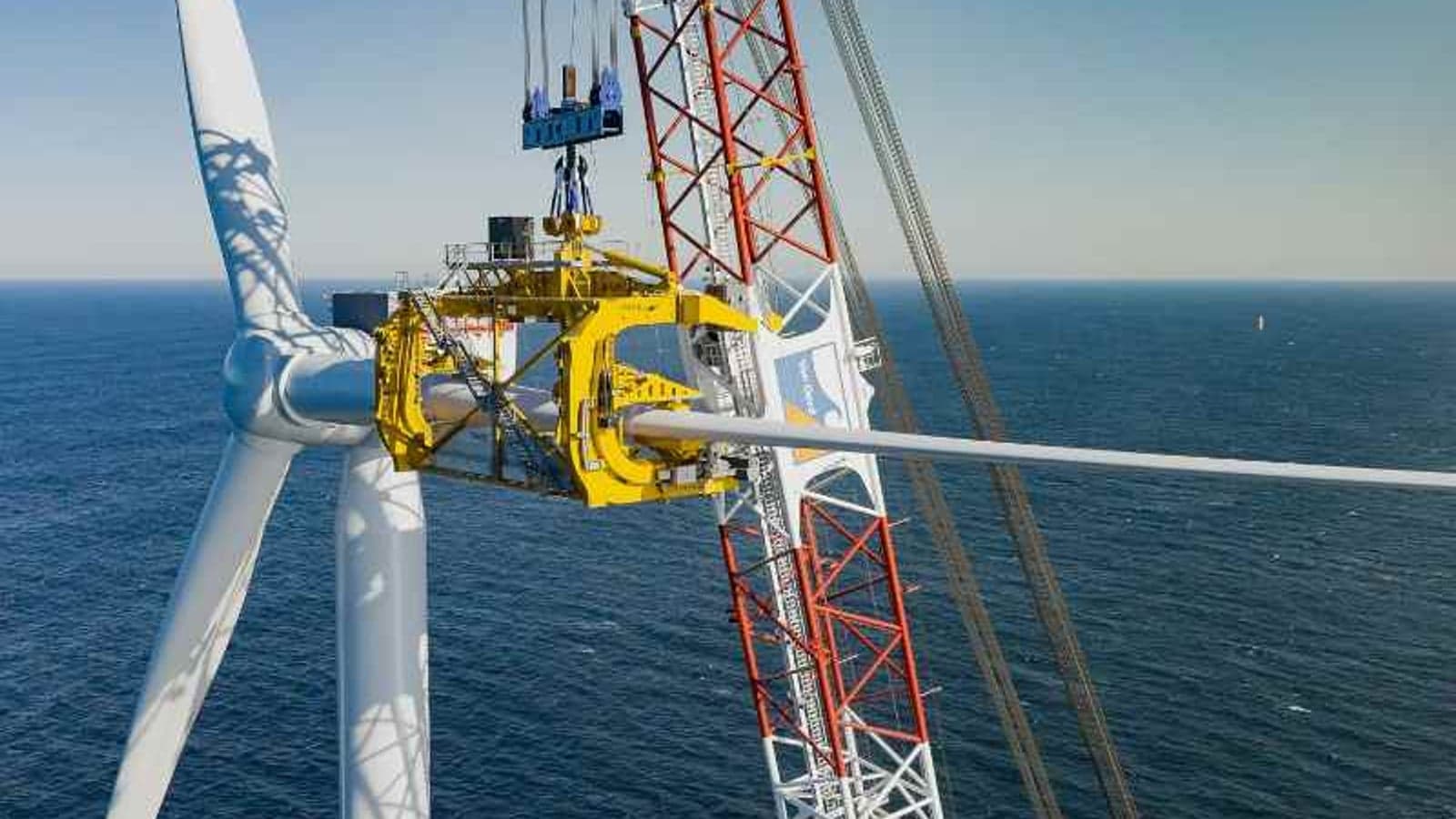
The project is currently 80% complete with all offshore foundations installed and 45 out of 65 wind turbines installed. It's fully permitted and has a 20-year power purchase agreement in the bag to deliver 400MW of electricity to Rhode Island and 304MW to Connecticut.
Revolution Wind, a partnership between Ørsted and Global Infrastructure Partners’ Skyborn Renewables, is now taking the steps needed to stop offshore activities safely.
The Danish energy firm is currently considering options moving forward, including potential legal proceedings. The company aims to continue with the project with completion planned in the second half of 2026.
Ørsted recently confirmed plans to move ahead with a capital raise of $9.4 billion to allow the group to fund the investment needed to finish the project.
Government review of offshore wind
The news follows a release from the US Department of the Interior, confirming the launch of a "full review of offshore wind energy regulations to ensure alignment with the Outer Continental Shelf Lands Act and America’s energy priorities under President Donald J. Trump".
The review aims to ensure federal regulations do not provide preferential treatment to foreign-controlled energy sources over domestic sources.
Secretary of the Interior Doug Burgum, commented: “The Department is fully committed to making sure that offshore energy development reflects President Trump’s America First Energy Dominance agenda and the real-world demands of today’s global energy landscape.
“We’re taking a results-driven approach that prioritises reliability, strengthens national security and upholds both scientific integrity and responsible environmental stewardship."
The Department has issued no further details regarding the relationship between the Revolution Wind project and any potential national security or environmental concerns.
Negative industry reaction
Much of the industry reaction to the news has expressed concern over the impact of project cancellation on electricity prices and availability in the New England area. Also, union worker jobs could be put at risk.
In a statement from American Council on Renewable Energy (ACORE), president and CEO Ray Long, said: “The Trump Administration’s decision to halt the Revolution Wind project off Rhode Island is an extraordinarily damaging mistake. This is a project that is nearly complete, fully permitted, and already putting 2,500 people to work and delivering billions in private investment to the region...
“This action also weakens America’s competitiveness. While China outspends us four-to-one on new energy and transmission infrastructure to power its AI-driven economy, the US is stopping a fully permitted, privately capitalised project that would strengthen our energy security. That is a dangerous path. Investors, workers, and ratepayers deserve better."
In a post on X, Rhode Island governor Dan McKee criticised the suspension and pledged to "pursue every avenue" to reverse the order.
The American Clean Power Association (ACP) also released a statement opposing the decision. ACP CEO Jason Grumet said in a statement: "Stopping construction now, when it is 80 percent complete, is more than a bureaucratic delay – it’s a broken promise to the communities, workers, consumers, and businesses counting on this project.
“This is not the first time extreme partisan politics has derailed sound energy policy. The unfortunate message to investors is clear: the US is no longer a reliable place for long-term energy investments."
A repeat of Empire Wind 1?
In April this year, Norwegian energy giant Equinor received an order to halt construction on the fully-permitted, 807MW Empire Wind 1 project.
According to marine data science specialists Spinergie, the stop-work order cost Equinor roughly $50 million per week in idle-vessel and contract penalties. The pause also left about 3,500 jobs on hold across the entire project supply chain.
Spinergie highlights that the project became a case study of political interference, with intervention from Norwegian officials and direct outreach from New York Governor Kathy Hochul required before the Trump administration lifted the Empire Wind halt in late May.
Analysts are warning political tensions between the US and Denmark could hinder negotiations, despite an agreement signed this week between California governor Gavin Newsom, Danish Foreign Minister Lars Løkke Rasmussen, and Denmark's US Ambassador Jesper Møller Sørensen.
“Denmark is committed to expanding our partnerships around the world – also with federal states like California,” said Danish Foreign Minister Lars Løkke Rasmussen on the MoU. “We are both frontrunners within green energy, innovation, and sustainability. If we combine our efforts, we can really push forward – not only for our own economies and societies, but also by inspiring others to pursue a green transition that creates jobs and growth at the same time.”