What will the energy sector's future workforce look like?
Yusuf Latief
Posted on: 19 April 2024
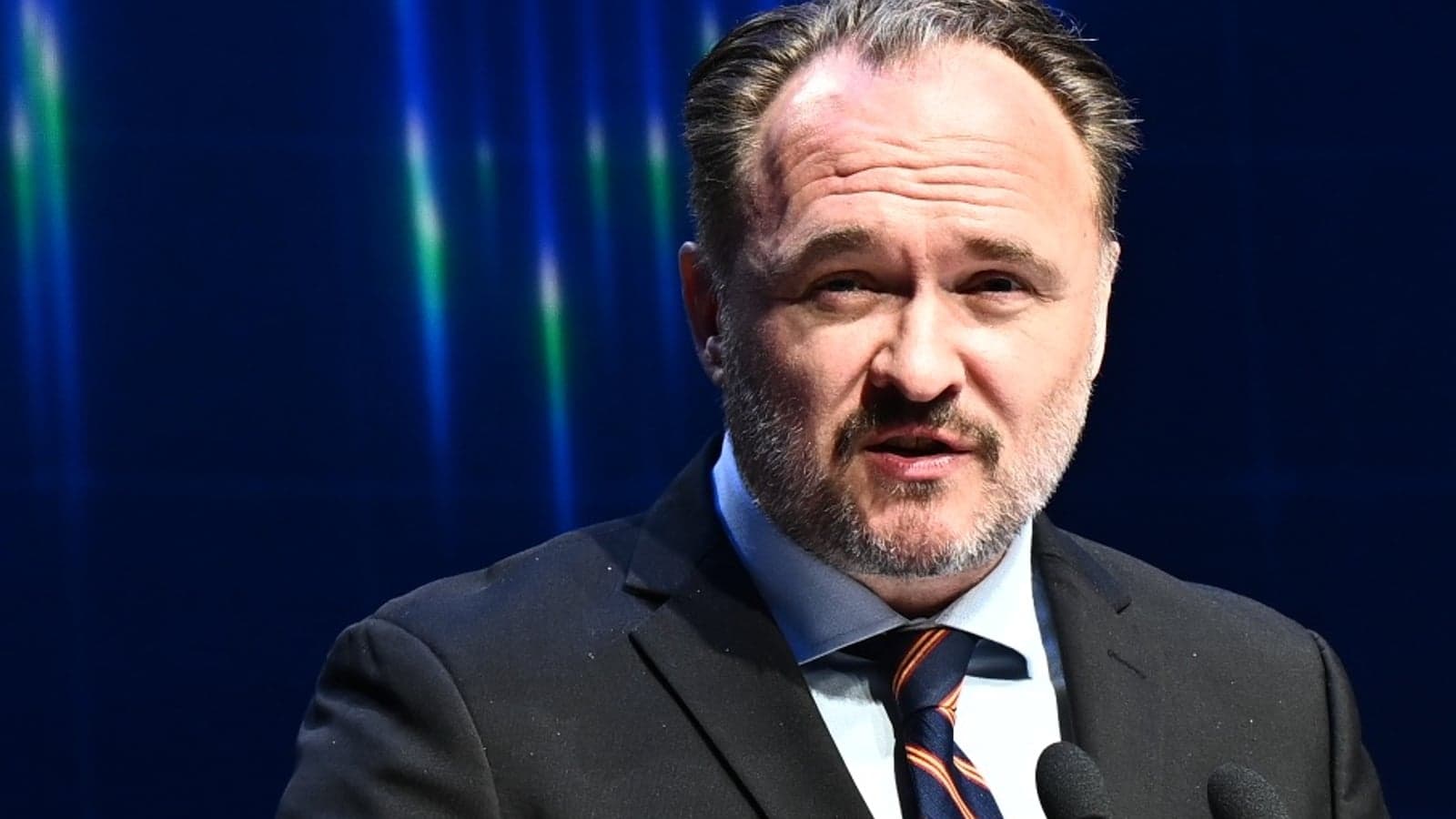
In an exclusive interview, Riccardo Barberis of ManpowerGroup explores what the energy sector’s workforce of tomorrow will look like.

In an exclusive interview with Riccardo Barberis of global recruitment firm ManpowerGroup, Yusuf Latief explores how the energy transition is also a skills transition and what the energy sector’s workforce of tomorrow will look like.
As innovations continue to pave the way to net zero, the global energy transition needs a significant workforce buff up to bring it to fruition. Skill requirements are becoming frequently more complex, evolving as new responsibilities and job titles are made from scratch.
Whether in the realm of artificial intelligence or battery energy storage, the workforce of tomorrow will be completely revamped compared to the present.
According to Riccardo Barberis, ManpowerGroup’s President for Northern Europe, structural change will be crucial to usher in the new energy workforce.
From what you've seen in Europe's energy sector, how have skill requirements evolved in response to the energy transition, and the rise of digital technologies?
In many ways, the energy sector has been the front runner in the skills transformation, because the transition to net zero has become the driver that fuels everything.
Although things could have been faster, it is still a major win that one in five cars sold in Europe today is electric, with 40% of potential buyers of a new car at least showing an interest in hybrid models.
Of course, we are also seeing change in other industries which are under pressure to modernise, but for the energy sector it’s been notably faster because in many ways innovation has been in its DNA.
With this major transformation and transition, the issue is no longer confined to the issue of “jobs” but is becoming more about the “task” - this is where our attention needs to be focused.
For example, we can compare the type of changes we are having now, compared to a few years ago - being a Software Developer or Data Analyst ensured job security.
But now, when we look at the role that generative AI has had in driving forward innovation, we can assume that Software Project Developer is a job that will, in probably five or 10 years, disappear, because generative AI will replace the need for software development.
Have you read:
Mapping hydrogen, skills and energy planning for Dutch energy transition
Why a skills-based strategy is vital to achieving operational goals in the power and utilities sector
The same can be said for machine learning. Today, Data Analysts are perhaps one of the most wanted types of profile, but we know already that in five or 10 years maximum they will disappear because of this technological change.
Because of this, we have to acknowledge that the type of transformation we are ushering in is not a simple case of moving from A to B. We can’t assume that, once everyone has reached B, we can all be happy because we have the skills we need.
No, the challenge is far more complex than that and it is here to stay.
We need to create an environment that supports evolving skills, rather than in my generation where, once you have the right education, you stay relevant in the labour market for 30 years.
We have to accept that the green transformation will always be evolving and we need to create a structural change to accept this alongside an ecosystem to support this.
Riccardo Barberis will be speaking at the 26th World Energy Congress in Rotterdam, 22-25 April 2024.
Register to be a part of the conversation
What will this look like for energy sector professionals?
When it comes to energy, the green skills that we need – the abilities needed to develop and support a sustainable and resource-efficient society - are becoming very different from what we are used to.
For example, we partnered with EIT InnoEnergy last year. We know that the structural change is going to be big, so we are partnering to train around 70 types of roles in the battery and storage segment.
In a combination of digital and in-lab training, we are supporting what is typically two- or three-months training.
This training will keep evolving - for example supporting skills needed for electric vehicle charging maintenance operators, production operators, safety managers, testing specialists and more.
There is a great opportunity for companies to comment and to be bold in the narrative of how the industry is contributing to the betterment of people’s lives.
We are talking about roles that we are defining now and we have to understand what the tasks are for these roles that we already know, versus the new tasks that we have to add on top.
Again, we need to move away from talking about job titles and be very granular in understanding the competencies needed for a specific job.
When we look at green skills, there are also processes that are becoming much more relevant in the energy sector than in other industries.
For instance, critical thinking, monitoring, active listening - those kinds of process skills are very relevant for the energy sector and there are many analyses that show that this is above the average of other industries or the jobs of the past.
Also, cross-functional skills are needed now more than ever because professionals need to have much wider knowledge of the full process, the full cycle of production and the value chain, to make sure that any task is performed properly.
What are some of the skill pools you’ve noticed that are underutilised?
Definitely women, especially in the energy sector where women represent just 16% of the workforce. The green transformation needs innovative solutions, new thinking and more talent – women have a valuable and important role to play here and a source of talent that employers must engage.
Another skill pool is refugees. We’ve done a lot in this area in the last 18 months, suggesting to companies how they can use cross-border recruitment to make sure they find workers who are already skilled and well-educated, although they might be in need of some training where necessary to fill in missing competencies based on their previous experience.
For instance, for some of the refugees that came out of Ukraine, we trained them to work with our international clients through a number of academies to ensure they are ready to step up to new roles after a couple of months.
These companies had to have a very clear idea of the skills they needed from people who were desperately looking for work because they were escaping the war.
We were able to target those skills after assessing the refugees’ past experience and, based on this, we got good attention from our international clients in certain markets in Eastern Europe, where they were desperately looking for exactly those kinds of skills to include in their own organisations.
What we advise companies to do is to think differently about tapping into these pools of underutilised talent as well as reviewing the processes they can use to attract the younger generation.
Have you read:
Enlit’s Future Energy Leaders: The workforce of tomorrow
Time for the solar workforce to shine
The energy sector has had an ‘image’ problem. Is this still the case?
There’s no doubt that the energy sector has had to work on its image.
Now, however, there is a great opportunity for companies to comment and to be bold in the narrative of how the industry is contributing to the betterment of people’s lives.
From our research, we know that candidates are much more willing today to work for a company that has a clear sustainable commitment versus other employers. So, these bold messages can be also be part of the employer’s value proposition.
When we segment the figures, we find that 75% of the candidates in Gen Z research a prospective employer’s green credentials.
Across other clusters of ages, the average is 55%, which is still significant, although the younger generation, who might be more likely to be applying for entry-level positions, are much more sensitive to the type of company they are willing to work for.
They want to work for companies that are committed to a higher cause. And the energy sector can provide for many exactly that opportunity – forward-thinking businesses that are making a real and impactful change.
Fast forward to an optimal net zero 2030, what will the workforce of tomorrow look like?
It will be a labour force extremely committed to a better planet, with a stronger sense of purpose, and much more present in the energy sector, although we will also see this trend replicated across other industries.
We are living in a very unique time. We have governmental attention, funds and business leaders committed to net zero, including 58% of the Fortune 500. This figure was 36% just two years ago.
Business leader are committing to change and consumers are saying they will pay a premium if the company they buy from is more committed to a sustainable planet.
Those three forces are creating unique momentum – it’s no longer about the “if”, but about when and how fast companies will transform.