Time for the solar workforce to shine
Guest/partner contributor
Posted on: 7 December 2023
Reaching the EU’s 2030 solar targets will result in the creation of over one million direct and indirect jobs in Europe’s solar industry.
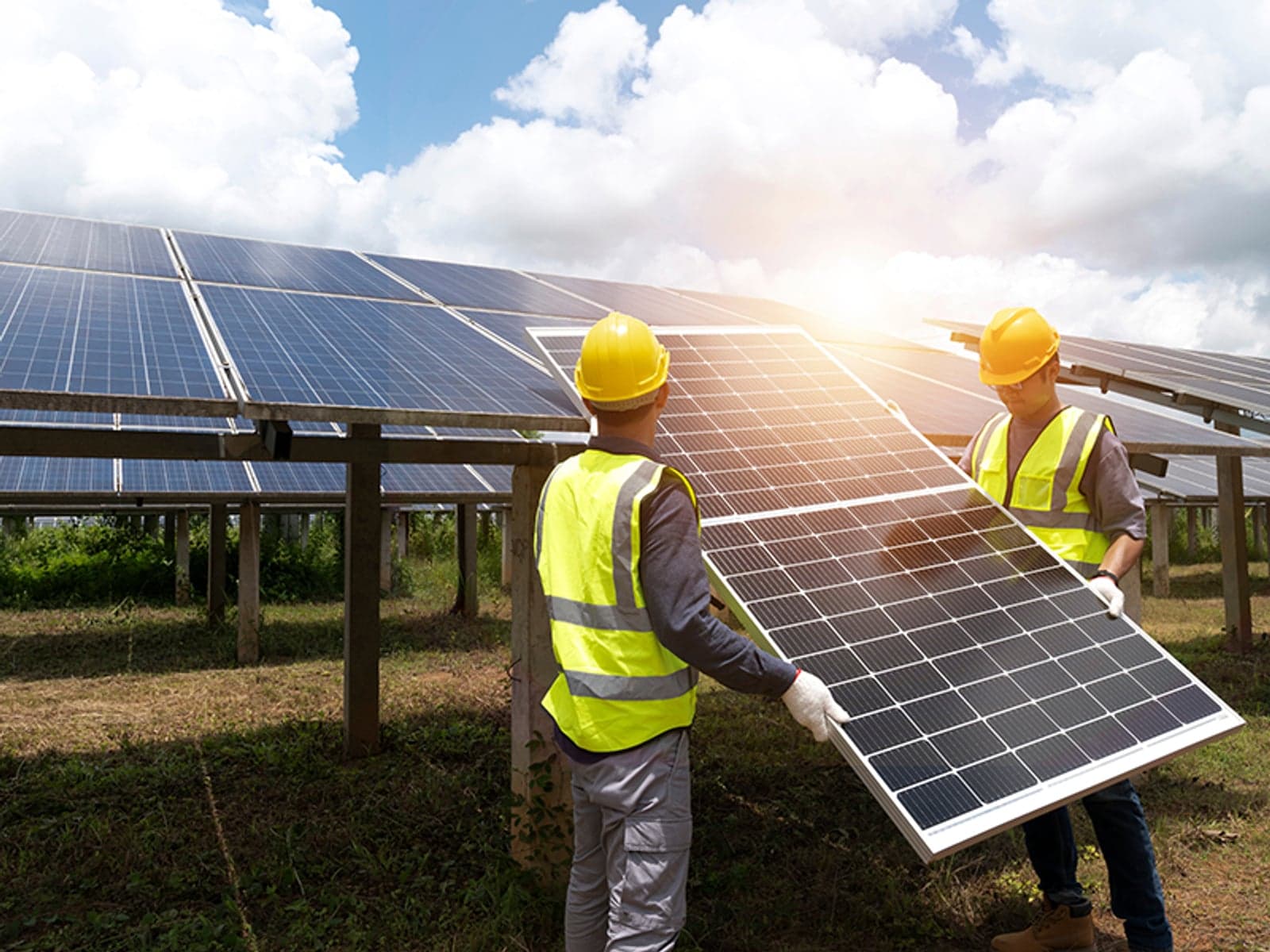
According to SolarPower Europe, reaching the EU’s 2030 solar targets will result in the creation of over one million direct and indirect jobs in Europe’s solar industry, more than doubling current employment numbers in the sector. Andreas Thorsheim explains what needs to happen to enable this solar workforce boom.
Renewable energy is on track to grow exponentially in the coming years and the solar workforce must grow to meet the demand created by global clean energy goals.
The good news is that this is easy to do. The installation, maintenance, and manufacturing, associated with solar energy is already generating a wide range of employment opportunities across various skill levels.
This is despite the fact we have barely scratched the surface, given the growth projections for solar power across Europe. Solar is the fastest growing renewable energy and represents over half of the 302GW of renewable capacity installed globally in 2021 according to SolarPower Europe.
As and when governments, companies and individuals all invest in solar projects, job growth in sectors like construction, Working on sun days engineering, and manufacturing receive a significant boost, contributing to local and national economies.
The idea that the renewable energy transition is in diametric opposition to growth and job creation is one we must dispel at its core.
Have you read?
Is solar + storage South Africa’s golden ticket out of darkness?
Watch this space: solar power boldly goes into new niche
And the deployment of solar panels, whether on residential rooftops, commercial buildings, or solar farms, requires skilled workers to install and maintain the systems. These jobs include electricians, technicians, and construction workers who specialise in solar installations.
Government-backed training programmes also help workers to acquire the necessary skills for these roles, especially when they are transitioning from other industries with overlapping, yet varied, skill sets.
An easy switch
Contrary to what some might assume, changing jobs to work in the solar industry is not always prohibitive nor cost-intensive new qualifications and training. People employed in electrical or construction industries are already becoming solar installers with minimal new training required, and this will continue as a trend.
The skills needed to become a solar installer are easily transferable from those of an electrical installer, so switching jobs to work in the solar industry is not a major upheaval for many tradespeople. Quite the opposite, as the opportunities presented from the solar surge are objectively highly appealing given the demand for solar systems across Europe, and especially in the UK, which is still catching up with the progress made by other European markets.
With the push towards decarbonisation continuing to ramp up, the need for green jobs is predicted to expand substantially. The British Energy Security Strategy, released in April 2022, outlined the UK government’s aim to increase the country’s solar capacity, simultaneously creating 10,000 jobs in the sector by 2028.
The idea that the renewable energy transition is in diametric opposition to growth and job creation is one we must dispel at its core.
Furthermore, the e-transition to renewable jobs, particularly with regards to solar, should not be viewed as a major upheaval or reskilling of our workforce, but merely a pivot. It is a small career change that can be done without re-education, and one that is enormously beneficial, both environmentally and economically.
Across all of our 13 European markets, Otovo does not see a lack of qualified installers: across Europe, installers have capacity and they want to fill up their order books, demonstrating the popularity and viability of being a part of the solar workforce.
More and more people are realising the value in having solar panels installed, and for installers, demand for services will continue to increase, making it a practical switch for those seeing demand for fossil-related services dwindling over time.
The solar workforce is the future
At Otovo, we continue to see a steep increase in the demand for solar installations, and consequently, increased demand for the services of our vetted and locally certified installers. There are numerous economic and environmental benefits associated with solar technology, and consequently the solar industry has seen, and will continue to see, tremendous growth.
The National Solar Job Census 2022 has reported an increase of 8,846 solar jobs across the US over the past two years. The solar industry is extremely adaptable; following immense demand last year, triggered not least by the war in Ukraine and the linked energy crisis, solar companies have expanded their teams tremendously to meet demand and evolving consumer views towards the self evident merits of solar installations.
Also of interest
The talent challenge: How to attract a skilled workforce for the energy transition
Solar boss worries about depth of renewable energy talent pool
Solar is also a very rewarding industry to work in: our installers feel that their work is contributing to a greener and cleaner world, as well as being assured of their job security due to the increasing demand for solar installations.
Over the last three years there’s been a 315% increase in the demand for solar installers, according to new data from hiring platform Indeed. Solar installers came out top of the site’s rankings of the 20 best jobs in the UK for 2023, which included looking at demand for staff, workplace flexibility, and salary. Our industry is not only a booming one, but a wholly fulfilling one.
The solar industry continues to experience rapid technological advancements. Improvements in photovoltaic efficiency, energy storage solutions, and grid integration are making solar energy more accessible and cost-effective. In the future, we could see solar panels coupled with battery storage technology in every home, and this would require more workers for installation and maintenance.
However, the industry is still in its infancy and there is always room for improvement. The European solar market is fragmented at the moment. In Germany, for example, almost 10,000 installation companies are present, yet the majority are not capitalising on digital tools, thus maximising deals and workflow.
Project chasing and planning are major time drains for installers. It is much more cost-effective to use the digital tools provided by a sub-contracting model with larger contractors or specialty providers. Their technology seamlessly fills the order books of installers, delivering sold jobs for installers instead of leads, as well as working closely with local installers post-project, handling customer aftercare and responding to quality control concerns by lending expertise on hardware troubleshooting.
Additionally, solar is still a new industry (versus legacy energy companies) so it’s not fully professionalised. A lot of installers are new to the industry so there is still a lot of improvement to be made just through repetition, experience, and learning.
Solar continues to surge in popularity, with governments vigorously pursuing the renewable energy transition and consumers desiring an energy solution which is significantly more environmentally and financially beneficial. As progress continues to be made, the solar industry will increasingly form a major part of the global energy workforce.

Andreas Thorsheim is the founder and chief executive officer of solar marketplace Otovo.
This article originally appeared in our annual print magazine The Guide. Click here to see the other articles.
Latest content
+2
Global shortage of skilled technicians predicted for wind sector
If the demand for wind energy continues to grow at its current pace, the sector is projected to face a 6-8% global shortage of skilled wind technicians by 2028. This is one of the key findings of the latest Global Wind Workforce Outlook 2024-2028 report released by the Global Wind Organisation (GWO) and Global Wind Energy Council (GWEC).
- Pamela Largue
- 03/12/2024