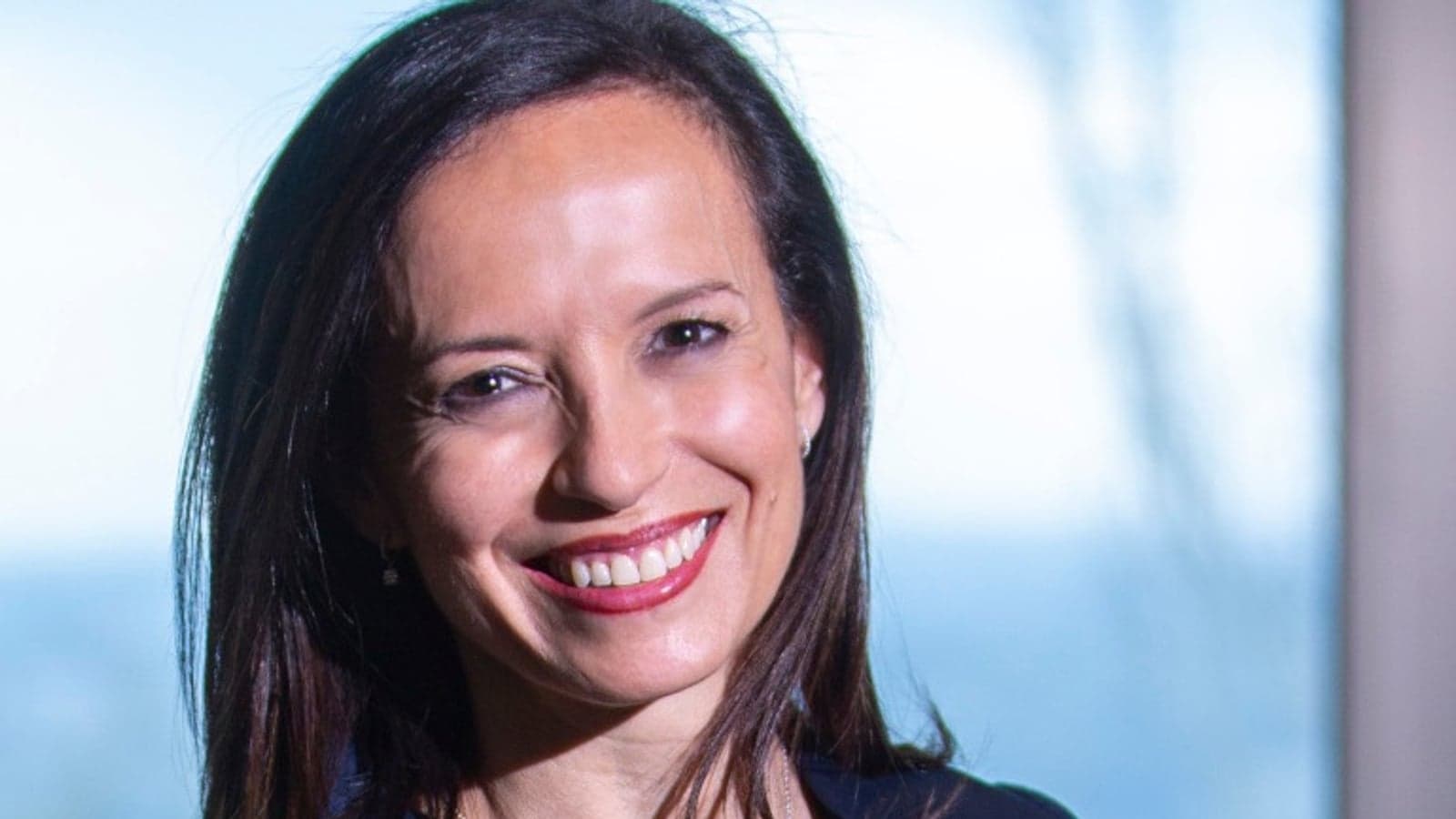
Why Ann Mettler believes now is the time to catalyse Europe
Pamela Largue
Posted on: 11 February 2026
Europe urgently needs to address its deindustrialisation and avoid replacing old dependencies with new ones, says former Vice President of Breakthrough Energy, Ann Mettler.
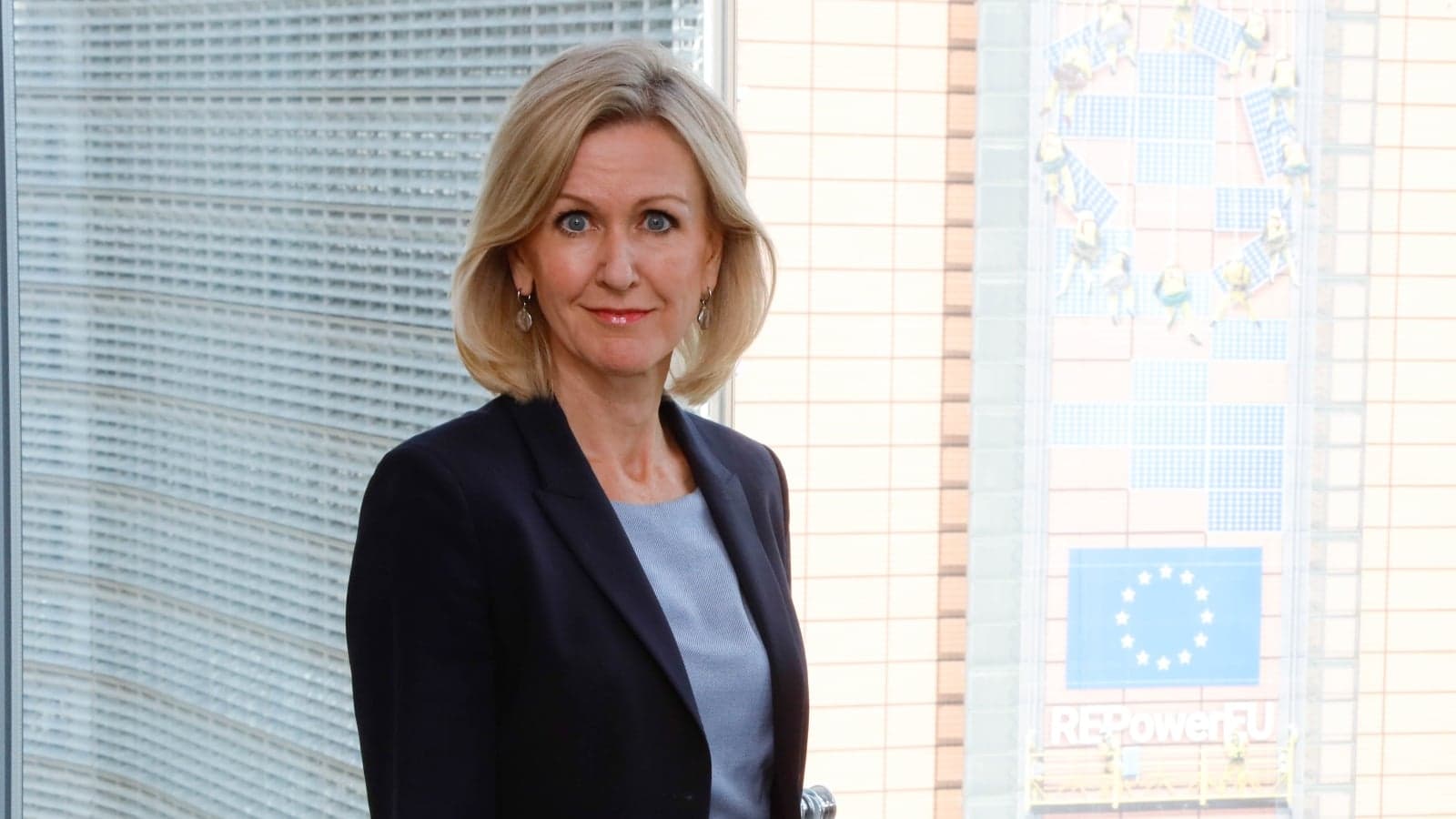
For Ann Mettler, the warning signals have been flashing red for years. However, it was the war in Ukraine and the energy crisis that followed that crystallised what she now describes as Europe’s defining vulnerability.
“When energy was weaponised, it became impossible to ignore,” she says. “Energy is not just a climate issue. It is the lifeblood of an economy—and the original security vulnerability.”
Mettler, a Board Member of the European Innovation Council and former Vice President at Breakthrough Energy, has spent much of her career working at the intersection of climate, innovation and industrial policy.
And it’s precisely that intersection, she argues, that Europe has consistently failed to address in a coordinated way. The result, she warns, is significant deindustrialisation and the potential of replacing old dependencies with new ones.
That conviction is what led her to launch Catalyse Europe, a think tank aimed at reframing Europe’s energy transition through the lens of competitiveness, security and sovereignty.
The limits of a climate-only lens
For decades, European energy policy has been framed almost exclusively around decarbonisation. While that focus remains essential, Mettler argues it has come at a high cost.
“You can’t look at energy only from the perspective of climate,” she says.
To illustrate her point, Mettler references Europe’s chemical industry, which is suffering under the weight of high energy prices, regulatory burdens and market volatility.
“No one signed up for decarbonisation through deindustrialisation,” she says, adding that while less industry means less emissions, it also means less tax revenues, industrial capabilities and technological leadership.
From fossil dependence to electrified vulnerability
As a resource-poor region, Europe has long relied on imports—something the war in Ukraine exposed.
The EU still imports around 50% of its energy, primarily fossil fuels, a figure that has barely changed in more than two decades, highlights Mettler.
Right now, we’re losing established industries and not standing up new ones. That’s bad economic policy—and bad security policy.
While the shift toward electrification is essential for decarbonisation, Mettler warns it risks recreating the same dependency problem on an even grander scale.
“We are just as dependent on fossil fuels as we were 20 years ago,” she says. “And now, as we electrify, we are building out new dependencies—because electrification is critical infrastructure.”
Solar panels, batteries, critical minerals, inverters, grid components: much of the clean energy supply chain is dominated by China.
Europe, she argues, has failed to learn its lessons from the energy crisis.
Energy is security
In the current geopolitical climate, security discussions tend to gravitate toward defence spending and military readiness.
Mettler worries that energy is being sidelined in that conversation—despite being foundational to everything else.
“Energy is actually the original security vulnerability,” she says, pointing to the impact of gas price shocks on European industry. “You can’t defend yourself, rearm, or modernise without secure energy systems.”
Have you read?
Shell chief urges European rethink of energy strategy
EU auditors warn of raw materials risk to energy transition
That means weaning Europe off fossil fuels not only for climate reasons, but because they are inherently weaponisable. It also means reducing dependence on China for the technologies that underpin electrification—from batteries to grid-scale storage.
Batteries, in particular, illustrate the stakes. Once associated primarily with electric vehicles, they are now central to grid expansion, energy storage, defence applications and drone technology.
“Are we really going to fly European drones with Chinese batteries?” Mettler asks. “What vulnerabilities are we creating?”
The gap Catalyse Europe aims to fill
When Breakthrough Energy wound down its European operations, Mettler saw a vacuum open at the intersection of climate, competitiveness and security.
Catalyse Europe was born to fill that gap.
Co-founded with John Fuller, the organisation is intentionally small, agile and pan-European, spanning the EU, the UK and Norway— of which the latter Mettler calls “Europe’s energy superpower.”
In an era of economic coercion and weaponised interdependence, she believes the answer is not another large, bureaucracy-heavy institution.
“We don’t want to compete with others doing similar work,” she says. “I want to work with a coalition of the willing—to amplify what’s already happening and make other projects possible.”
How Europe undermined its own champions
Mettler is blunt about Europe’s track record. She has watched, over decades, as the region’s technological and industrial leadership slowly eroded.
“It has almost become impossible to sustain leadership in clean energy sectors,” she says.
Even in areas where Europe still has strong capabilities—such as wind energy—companies have lost global market share. At the same time, policymakers continue to prioritise cheap prices without accounting for the structural costs imposed on European firms.
“If cheap prices are so important,” she asks, “why have we imposed such high costs on our own companies—energy costs, regulatory burden, taxes, compliance?”
The result, she argues, is a lack of competitiveness due to policy.
Also of interest: Why China is leading the EV race
“We need to start pricing in security, sovereignty and the loss of industrial fabric,” she says.
“Right now, we’re losing established industries and not standing up new ones. That’s bad economic policy—and bad security policy.”
From supply security to strategic autonomy
Energy security used to mean having enough supply. Today, it means avoiding excessive reliance on any one country or technology.
What’s missing is strategic foresight: an honest assessment of where current policies are leading.
“If you look at the trajectory,” she says, “it doesn’t lead to ‘Made in Europe’. It leads to ‘Made by China in Europe’—with more Chinese foreign direct investment and fewer trade policy levers.”
“Europe is a target,” she says. “And it can’t defend itself.”
Europe’s untapped advantages
Despite her urgency, Mettler suggests Europe still has an ace up its industrial sleeve.
Chief among them are globally respected companies with strong governance standards, transparency and accountability. In a world increasingly concerned about trusted suppliers, that matters.
I’ve learned that even when you spoon-feed policymakers, they can still make the wrong decisions
She also sees opportunity at the intersection of energy and digital technology. Software platforms, grid optimisation tools and system-level integration will become as important as hardware.
“You want trusted vendors managing the nuts and bolts of the energy system,” she says, citing companies like Siemens Energy or the UK-based firm Kraken.
In the future, she suggests, components may come from different places—but control systems, digital infrastructure and system integration must remain in European hands.
The cost of “cheap”
At the heart of Mettler’s argument is a simple but powerful idea: what once looked cheap has turned out to be extraordinarily expensive.
From subsidising fossil fuels during the energy crisis to rapidly building LNG terminals while neglecting storage, electrified heat and industrial decarbonisation, Europe has paid a high price for short-term fixes.
“Market volatility is toxic for industry,” she says. “If even a fraction of what we spent on fossil subsidies had gone into clean technologies ready to scale, it would have been transformational.”
That frustration fuels her sense of urgency.
“I’ve learned that even when you spoon-feed policymakers, they can still make the wrong decisions,” she says. “That’s why we need to ring the alarm bell now. The choices we make today will shape Europe for decades.”
For Mettler, Catalyse Europe is not just a think tank—it is a call to rethink energy as the foundation of Europe’s economic strength, security and sovereignty.
“Energy powers everything we want to build next,” she says. “The question is whether Europe will still have the agency to decide how.”
This is the question Mettler and, now for the first time, Catalyse Europe plan to pose at the Munich Security Conference, taking place between 13 and 15 February in Germany.
The answers carry more weight than ever before.
Join Europe’s leading industrial energy users at the annual European Industrial Energy Days (EIED).