Why China is leading the EV race
Pamela Largue
Posted on: 21 January 2026
As competition with the United States accelerates, China’s EV policy framework has put it firmly in pole position, Davos' WEF hears.
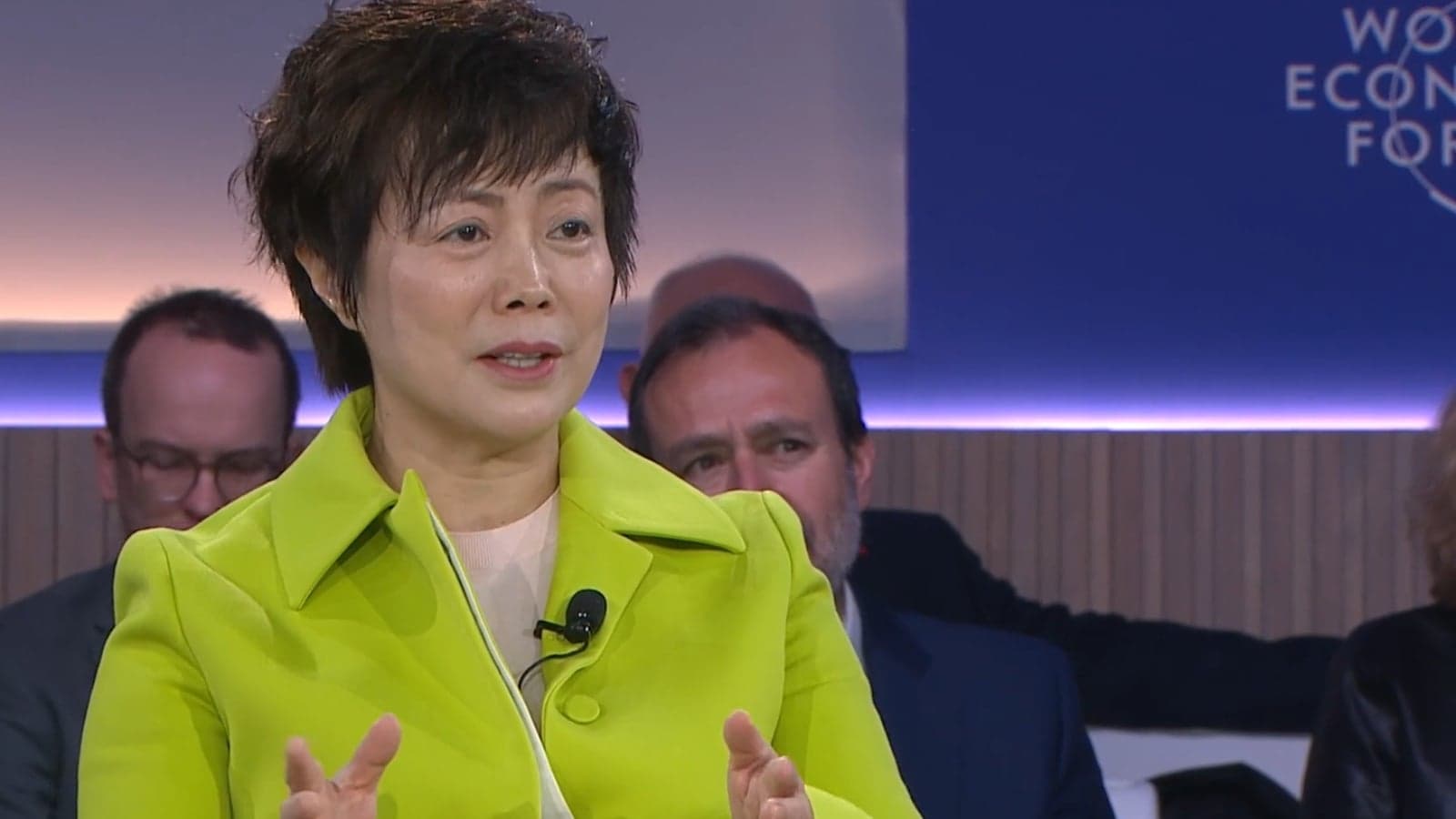
The 2026 World Economic Forum (WEF) opened in Davos this week and EVs were high on the agenda, more specifically which country is dominating the global EV market.
It was only fitting that Stella Li, executive vice president of BYD, was part of a panel discussion on the topic.
BYD has scaled faster than almost any other EV company and according to Li, it’s the country’s regulatory framework that has allowed the company, and others like it, to flourish.
Li says success starts with policy, “a total commitment to reduce CO2 and to the Paris commitment.
“[China] took strong action and in the past 20 years they have not changed.”
Whereas some countries go back and forth on policy commitment, China has not.
Li was joined on the panel by US Governor of Michigan, Gretchen Whitmer, who acknowledged the impact of political headwinds in the US.
Have you read?
Why skills and charging infrastructure will decide Europe’s EV future
How a Finnish tech company is turning EVs into a virtual power plant
“Chaos is really bad for business,” says Whitmer, explaining that the unpredictable policy shifts have caused a pause in manufacturing and investment.
She acknowledged the lack of a clear and static policy is making it more difficult for industry to go all in.
However, she adds: “We can’t slow down even if the policies have changed in Washington DC – we must continue to move forward on this.”
This is indeed the case when considering that EV penetration in China is currently sitting at 52%.
Elaine Buckberg, Senior Fellow at Harvard University's Salata Institute for Climate and Sustainability, and former Chief Economist of General Motors, lauded China for its commitment to accelerating EV uptake.
“China has used a wide array of policy instruments to both incentivise battery production and the consumer.”
She also cited the powerful impact of greenhouse gas and fuel economy regulation that compel automakers to plan the vehicles they bring to market.
“Stable incentives are really powerful,” something China has managed to do well.
It’s something Europe is considering says Buckberg, who noted that Europe remains the leading market for adoption.
Supply chain diversification
Of course, policy is not only critical for the manufacturing and adoption of EVs.
Panellists also highlighted the role of policymakers in supply chain diversification.
The WEF predicts that by 2035, EVs will account for 80% of total lithium demand, 50% of cobalt and 30% of rare earth elements demand overall.
CEO of metals producer Vale, Gustavo Pimenta, commented on this statistic, saying: “This is one of the key challenges that we face. 50-60% of the battery cost comes from the minerals and we are finding it harder to find new mines to develop.”
Pimenta stressed the importance of reducing the cost of EVs, ensuring dependence on subsidies is minimised.
“This will be done by ensuring we have the most efficient supply chain and bring those minerals to the marketplace quicker.”
He also strongly urged governments to expedite licensing and stimulate partnerships between industry stakeholders.
However, diversifying is easier said than done, emphasised Pimenta. “It’s an industry of heavy capital deployment that tends to favour where you can buy the commodity at the lowest price.”
China’s dominance in processing the critical minerals needed for EVs makes it all the more urgent for Europe and the US to diversify their supply chains.
According to Buckberg, research and innovation in battery chemistry will help in this regard.
And it was the mention of innovation that brought Li back into the conversation with enthusiasm.
“EVs not only allow the replacement of the ICE car, but they also bring a lot of innovation.”
According to Li, Chinese consumers buy into innovation and commit to buying because they see the value in technology. This renders government subsidies unnecessary.
Li suggests that China has done well to avoid over-reliance on subsidies, a lesson that Europe, the UK, and the US can learn from.
“Sometimes subsidies are more like a drug; it won’t make you strong,” she concluded.