Why betting on green hydrogen is the key to decarbonising our societies
Guest/partner contributor
Posted on: 11 April 2024
Green hydrogen can provide the sustained supply and high temperatures needed for energy-intensive industries| explains Rosilena Lindo Riggs.

National Secretary of Energy for the Republic of Panama Rosilena Lindo Riggs explains the steps her country is taking to become a green hydrogen hub.
In the face of the escalating climate crisis, Central America stands at a critical crossroads.
Globally, the past eight years have been the hottest on record. Countries across our region are consistently ranked highest in the world according to risk of being impacted by extreme weather events.
It is clearer than ever that we need to accelerate action to tackle runaway climate change and protect people and planet from its ever-worsening impacts.
Shifting to carbon-free energy solutions is the urgent low-hanging fruit of decarbonisation. In Panama, we believe in the principles of the 24/7 Carbon-free Energy Compact, established at the UN in 2021. This movement unites governments, regions, and economies worldwide to push for carbon-free energy systems that are 100% renewable at all times.
Panama, Kenya, Iceland, Vanuatu, London, and Copenhagen are among 147 signatories to commit to global action, stimulating others to follow.
We believe that meeting these principles - ensuring electricity is met with carbon-free energy sources, every hour, every day, everywhere - will be impossible without green hydrogen. That is, carbon-free hydrogen, and its derivatives, produced by electrolysis using renewable electricity.
Have you read?
Baker Hughes backs green hydrogen tech manufacturer
Mapping hydrogen, skills and energy planning for Dutch energy transition
In energy systems dominated by renewables, additional technologies are vital to ensure uninterrupted access to clean energy and to decarbonise energy-intensive sectors like steel production, chemicals, long-haul transport, and aviation. This is where green hydrogen comes into its own.
Green hydrogen can ensure uninterrupted clean energy, with hydrogen produced from excess renewable energy being used when the sun isn’t shining or the wind blowing. It can also provide the sustained supply and high temperatures needed for energy-intensive industries.
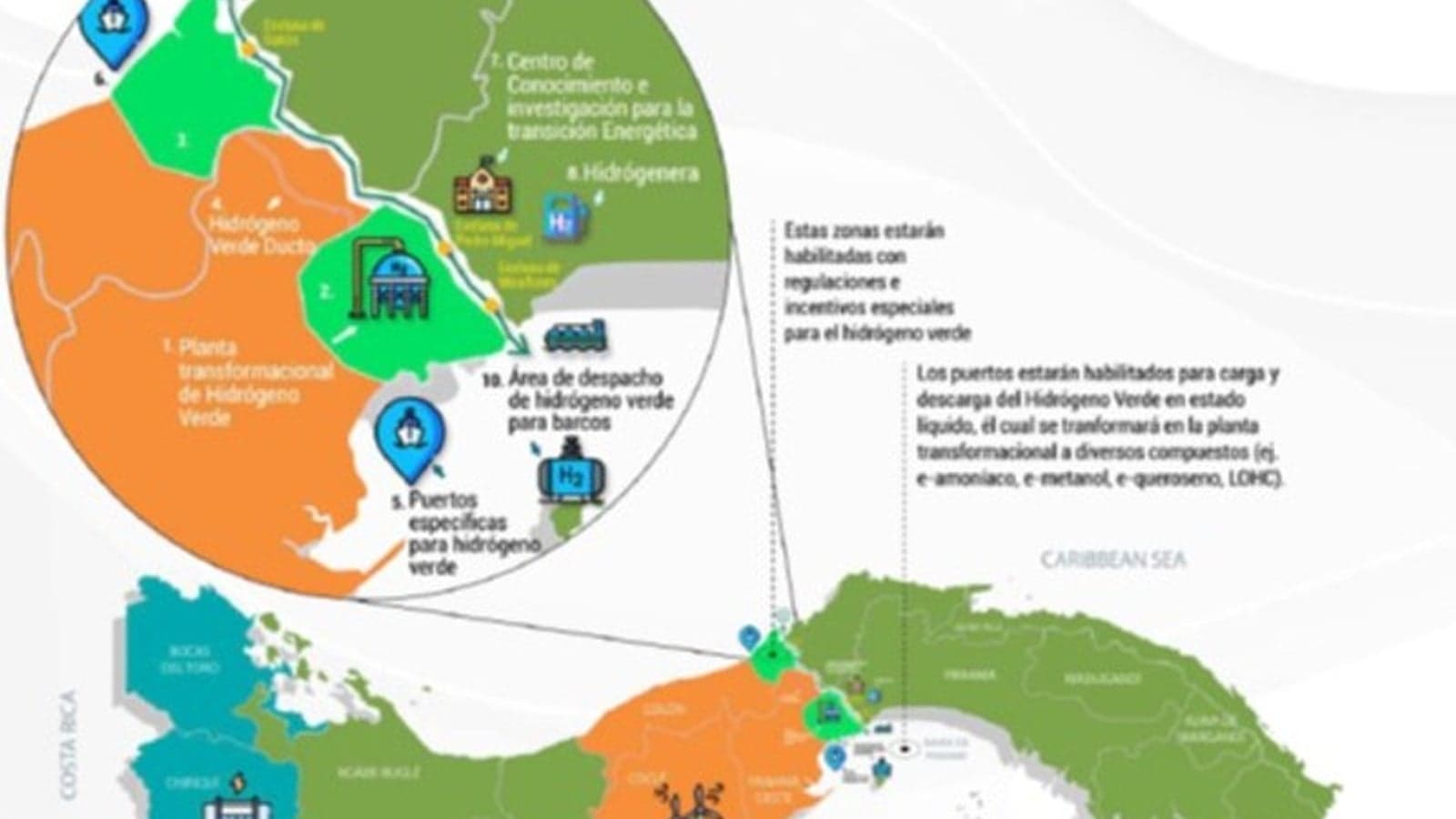
In Panama, we are already taking steps to become a transformational hub for green hydrogen with our National Green Hydrogen and Derivatives Strategy, which calls for the production of 500,000 tons of green hydrogen or its derivatives by 2030 and four times that amount by 2040.
We are also preparing the regulation for the installation of the Green Hydrogen and Derivatives Hub, including coordinating the hydrogen certification process and the investment on shared infrastructure.
In doing so, we aim to diversify Central America’s energy mix, strengthen our region’s energy security, become the storage place for a strategic clean fuels reserve, and boost the local jobs economy.
The maritime industry is an especially promising market for clean fuels, with pressure on shipping companies to achieve net zero by 2050 under the International Maritime Organisation's 2023 Strategy on Reduction of GHG Emissions from Ships.
Leveraging Panama’s position as a key transit point for seaborne trade, where 3% of all world trade passes through the Panama Canal, will be particularly important for exports of green hydrogen, ammonia or methanol from expected hydrogen hotspots such as Chile to European markets.
Domestically, our pilot projects like H2ub Verde Panama are already exploring blending green hydrogen with traditional fuels to help achieve decarbonization goals.
Yet barriers stand in the way of green hydrogen helping countries go 24/7 carbon-free. The technology is in the early stages of development and needs nurturing to grow.
The International Energy Agency states rising costs, driven by the headwinds of the global economy over the past year, combined with lagging policy support from governments, is stymying the potential of low-emission hydrogen, testing the resolve of developers to follow through on projects.
A further barrier is the materials required to develop electrolysers – a critical technology for low-emission hydrogen production – are in short supply, making it challenging to achieve economies of scale. While electrolysis capacity for dedicated hydrogen production has grown significantly, the pace slowed in 2022 with only 130 MW entering operation, 45% less than the previous year.
Regional coordinated action from governments is crucial to send clear signals to the market to stimulate demand and investment and implement the regulatory frameworks necessary to accelerate growth. In doing so, we can scale new energy transition technologies and become more attractive for technology producers.
In Central America, ample renewable resources present an opportunity to make our electricity sector – already one of the cleanest in the world – even cleaner. But for this to happen, regional investment must increase substantially, doubling by 2030 to USD 150 billion and rising fivefold by 2050.
Central America has enormous potential to become a leader in clean energy and green hydrogen, becoming a global supply chain for all economies.
We are starting to see the positive impact of global government support to incentivise the green hydrogen economy. In the US, green hydrogen producers are benefiting through the Inflation Reduction Act – incentivising innovation and growth in the sector.
Across Central America, the Inter-American Development Bank Group, in collaboration with regional governments, expects to provide $450 million in concessional loans and grants to support the expansion of green hydrogen projects.
Across Central and South America, and the Global South, where finance for clean energy innovations is more challenging to secure, such incentives are vital to creating the right market signals and incentivise action that benefits local economies.
The headwinds are already turning. PWC predicts production costs for green hydrogen will fall in step with declining renewable electricity costs by around 50% by 2030.
Latin America remains a global leader in hydrogen project proposals, after Europe, representing about 15% of announced global investments. This is a major opportunity for economies in our region to transform our energy landscape.
We all share the responsibility to refocus our efforts to reverse worsening climate impacts. Enabling the energy transition requires governments to provide the inhabitants of each nation with the opportunity to contribute to the reduction of their carbon footprint through energy.
Only through radical cooperation between governments, international organizations, agencies and corporations as part of the 24/7 Carbon-free Energy Compact, can we enhance growth opportunities to create safe, resilient, and thriving societies.
About the author
Rosilena Lindo Riggs, currently the National Secretary of Energy for the Republic of Panama, was Senior Regional Energy Expert & Project Manager, Development of a Solar Water Heating Market in Panama UN Environment, Latin American and the Caribbean Regional Office. She was also Executive adviser to the Minister of Environment of Panama, and former Climate Change director in the Ministry of Environment.