Why improving power resilience in healthcare is a matter of life and death
Yusuf Latief
Posted on: 9 December 2025
When the lights go out, healthcare can fail. This is how Direct Relief made power resilience part of their humanitarian aid projects.

When extreme weather or conflict strikes, the first systems to fail are often those on which healthcare depends most. For Sara Rossi, Managing Director of the Health Resiliency Fund at Direct Relief, the link has become impossible to ignore: outages are increasingly a public-health threat.
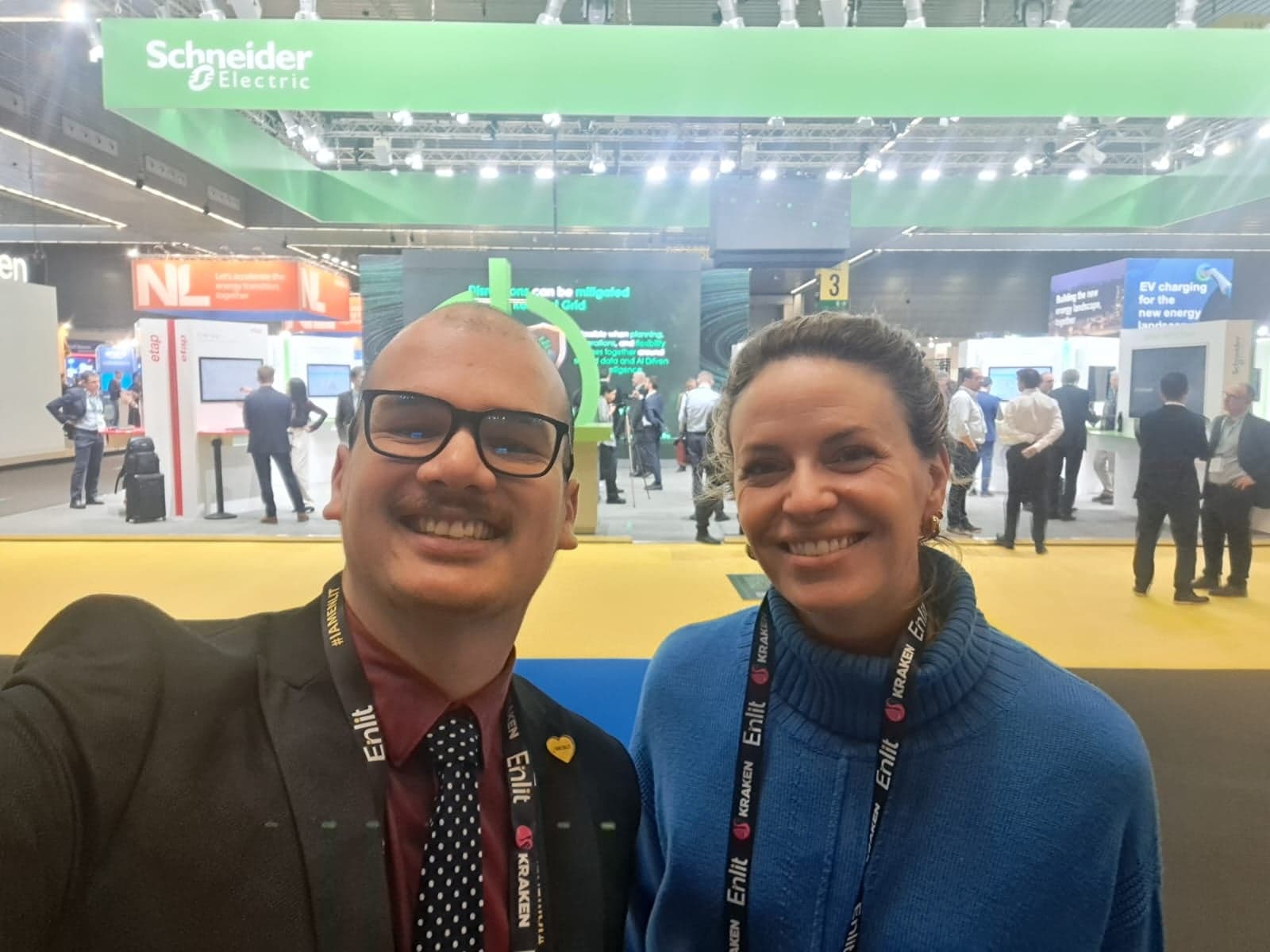
“Health fundamentally relies upon the availability of power,” said Rossi, who sat down with me during Enlit Europe in Bilbao.
With a background in public health, Rossi explains that Direct Relief had long focused on medical support—yet in disaster zones and regions with unreliable electricity, the biggest constraint was suddenly the most basic one.
“Power outages are very common and consequential and can be really limiting for health outcomes.”
A wake-up call in Puerto Rico
The organisation’s pivot to energy resilience stems from one key event: Hurricane Maria in 2017. When the storm hit Puerto Rico, “80% of the island was left without power for weeks, many areas for months.”
Direct Relief, a humanitarian nonprofit, was at the time supporting clinics on the island, and rapidly realised that healthcare providers had a single, desperate priority: electricity.
“All of them, without fail, repeatedly let us know that power was the most urgent need on which many other things relied.”
Every load is critical, because patients’ care is critical.
At the time, Direct Relief did not supply energy systems. But the scale and urgency of the crisis forced a shift; the organisation built capacity to deliver custom solar micro grids through grant funding.
What began in Puerto Rico has now expanded globally as extreme-weather-driven outages increase in frequency and severity.
“These crises from extreme weather events are happening more and more frequently. They're more intense, they're longer lasting, and the power outages, likewise,” Rossi says.
Healthcare, she notes, has no tolerance for downtime: “Every load is critical, because patients’ care is critical.”
Power reliability gaps
Direct Relief’s Power for Health initiative targets different types of power-reliability gaps.
In high-income regions, the focus is on backup during planned or unplanned outages, especially in wildfire- or hurricane-prone areas. In California, preventive shut-offs during high winds trigger regular reliance on backup power. Clinics holding “$250 to $500,000 worth of vaccines” risk losing them during prolonged outages.
“If there's a power outage that's long lasting, those medicines become unviable and have to be disposed of, and it's very difficult for them to procure new replacement vaccines. That's a big use case in the US or in the southeastern US [specifically], where hurricanes are a major risk. We've done work in Florida and New Orleans, Louisiana - places where, annually, they're getting pummelled by increasingly strong storms.”
In lower-income countries, where approximately half of Direct Relief’s work takes place, the company operate in about 22 countries, “those places that don't have great energy access, especially in rural and remote areas under blue skies.
“Year-round, they benefit from the solar micro grids because they provide better energy access, reliability, and security than they had before.”
Have you read?
How AI can deliver self-healing grids to beat the blackouts
The Iberian blackout: Lessons from the control room
War-zone blackouts
Beyond looking to plug these gaps, Direct Relief is also working in active conflict zones, where electricity power grids are deliberately targeted.
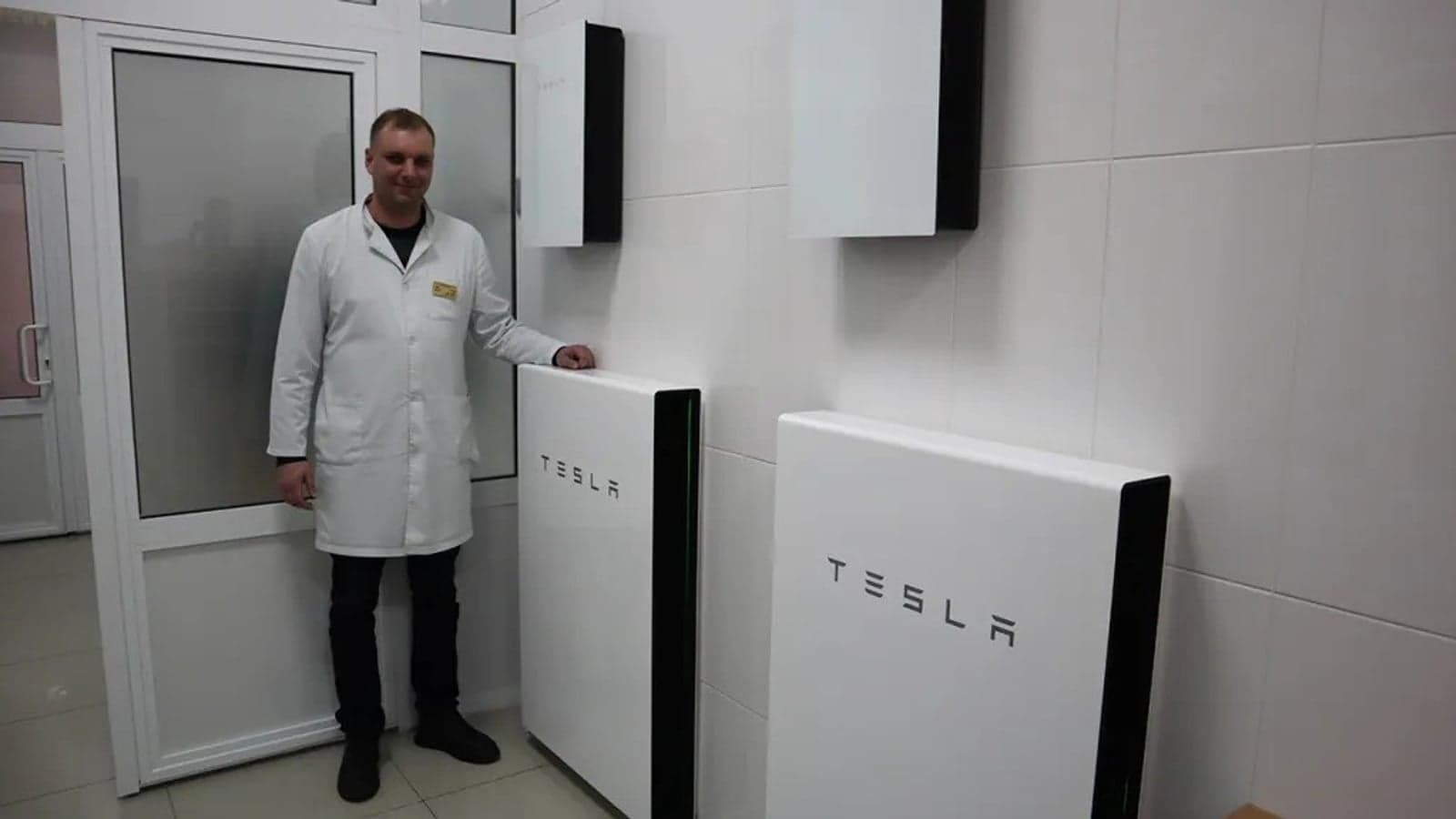
Rossi spoke during Enlit Europe about battery storage as humanitarian aid, highlighting a major project supporting Ukraine’s government. Working with Tesla, the government of Poland, Ukraine’s Ministries of Health and Digital Transformation, and a local NGO, Direct Relief coordinated the delivery of around 2,500 Tesla Powerwalls.
This backup fleet—deployed across thousands of facilities—covers essential needs: “heat and light… emergency rooms, operating theatres… vaccinations and medicines, cold blood banking.” About half of the systems went to clinics and hospitals.
Evidence of the impact of this type of initiative is only anecdotal, adds Ross, due to the nature of an active war zone, making it difficult to secure quantitative data on the fleet's performance.
However, Rossi says that the results are still striking. “We have heard that there's actually been zero outages or problems tapping into that backup power.”
The Powerwalls operate without solar input because Ukraine’s grid, though repeatedly hit, remains intermittently available, allowing batteries to recharge between attacks.
Scaling through partnerships
Direct Relief handles logistics, funding, and last-mile delivery—but Rossi is clear that success depends on collaboration.
“Direct Relief cannot do any of this on its own,” she says. The organisation partners with utilities, OEMs, and technology companies to design and deploy systems that meet clinical needs.
Current partnerships include Schneider Electric’s Access to Energy programme in India and Malawi, and EDP’s programme, also called Access to Energy, recently announced in November. Collaboration with OEMs such as Tesla brings advanced storage technology to settings where outages directly endanger lives.
Challenges remain. One is awareness: “If we're speaking to a public health audience, that's sort of the crowd that understands why we do what we do, but they aren't necessarily in the position to offer the resources that we lack.”
Another is long-term sustainability. Direct Relief does not drop off equipment and leave. “We try to set up these healthcare providers… for success,” Rossi says, including training, on-the-ground capacity building, and dedicated grant funding for operations and maintenance.
In Ukraine, for example, Tesla trained 45 engineers in Poland before their deployment and continues providing remote support.
At Enlit Europe, Rossi summarised Direct Relief’s message to the energy sector: “Energy companies have technology and expertise that can dramatically strengthen global health systems.”
She argues European utilities and manufacturers can “make a life or death difference for clinics and low-income countries with technologies they already deploy every day.
“Our vision with the power for Health Initiative at Direct Relief is to build a world where every clinic has reliable power, a cornerstone of equitable climate resilient health care.”