Why industrial energy efficiency needs product-level standards
Guest/partner contributor
Posted on: 25 July 2026
Environmental performance must be assessed at the product level with the same rigour as cost, safety and uptime, writes Bin Lu of Schneider Electric.
Across Europe, industrial organisations face a growing trilemma: accelerating environmental regulation, rising stakeholder expectations, and sustained energy price pressure.
At the same time, competition is intensifying. And despite these pressures, operational requirements remain unchanged: performance, uptime and reliability cannot slip.
The challenge is that one critical enabler is still missing.
In many categories of energy-intensive industrial equipment, buyers still don’t have consistent, comparable methods to validate environmental performance.
Turning efficiency into an operational reality
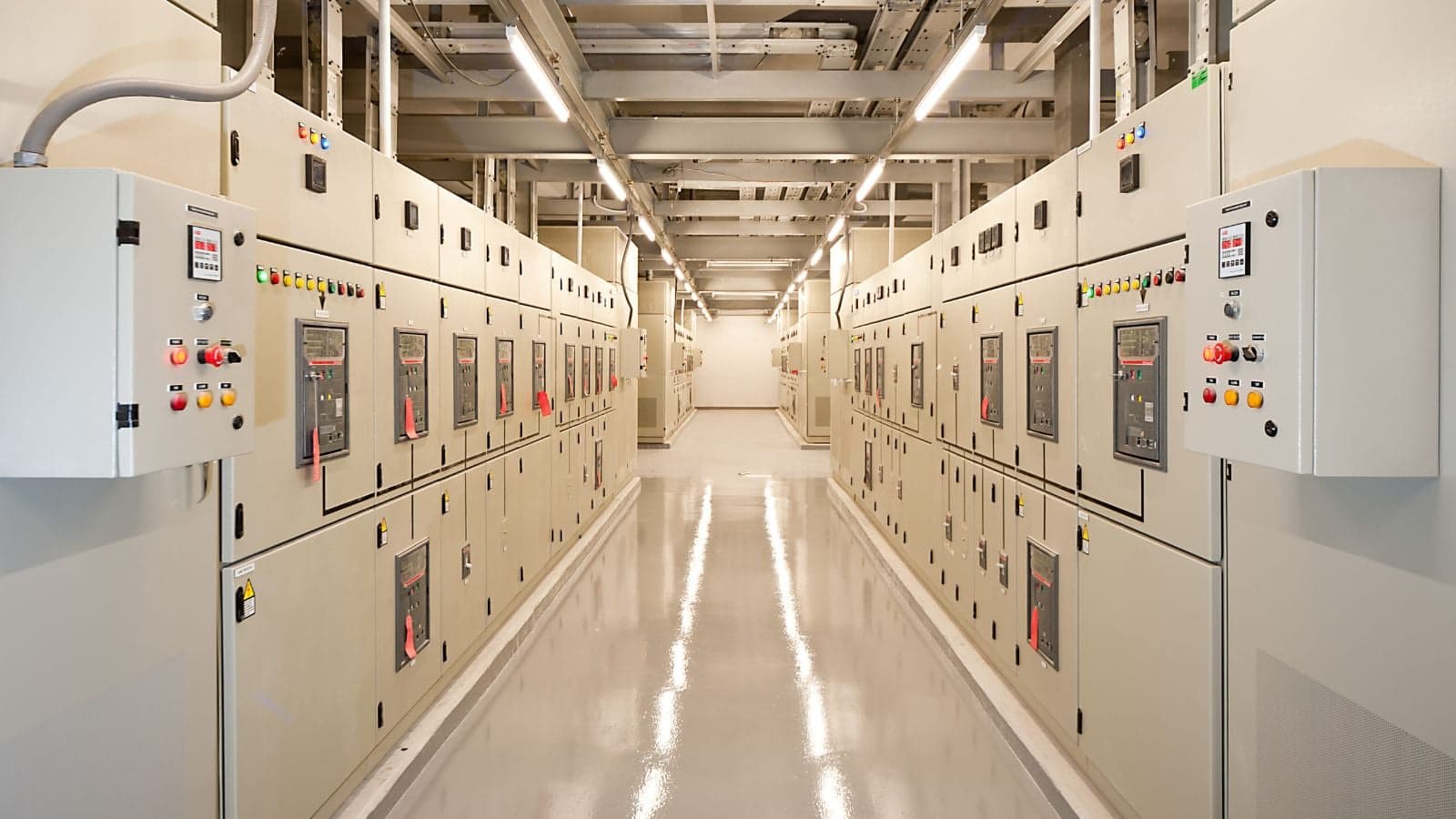
In industry, energy efficiency isn’t achieved only through big, headline upgrades. It is also determined by the performance of the electrical products that distribute, protect, and control power across a site—equipment like switchgear, circuit breakers, drives, motor control and protection devices. These products are installed by the thousands, operate continuously, and often remain in service for decades.
That matters because even modest improvements at the product level such as reduced losses, improved thermal performance, better power quality management, more precise protection, and better visibility into operating conditions, can compound across an entire facility. And in energy-intensive operations, compounding effects are exactly what separates incremental change from scalable progress.
Read more about: Energy efficiency
If the sector wants to scale energy efficiency, environmental standards for electrical products must become stronger, clearer and far more widely adopted. The most direct route is to expand independent, science-based third-party certifications and to accelerate harmonised product standards.
That gives purchasers a like-for-like basis for comparison—and it ensures manufacturers are recognised for real, measurable improvements rather than marketing language.
Why sustainability claims still fail the credibility test
Regulatory pressure is intensifying. For example, the EU's Empowering Consumers for the Green Transition Directive, applying from 27 September 2026, will require consumer-facing companies to substantiate environmental claims with evidence or stop making them. Industrial buyers are now demanding the same level of substantiation from their suppliers.
Yet in practice, environmental performance is still communicated through fragmented disclosures, self-reported claims, or sustainability statements that are difficult to compare supplier to supplier.
Greenwashing risk often arises not from deliberate deception but from ambiguity. Companies lack a trusted yardstick, and buyers lack a basis for comparison. According to the 2020 EU Commission, 53% of green claims give vague, misleading or unfounded information. The outcome can still be serious: reputational harm, loss of trust, and potential lawsuits.
Without comparable, product-level standards, buyers have no consistent way to evaluate or specify energy performance in tenders, or to verify whether two products that appear similar actually deliver different efficiency outcomes over their operational lifetime. That slows adoption of more energy efficient technologies and makes it harder for procurement teams to justify investments that reduce energy use and operating costs.
The three S’s buyers now expect: safety, sustainability, security
Unlike consumer gadgets, industrial electrical equipment like circuit breakers, drives and switchgear components is built to remain in service for decades. That longevity means specifiers, facility managers, design engineers, and procurement teams must weigh long-term consequences at the moment of purchase: safety, reliability, and lifecycle sustainability.
Have you read?
A strong 2040 EU energy efficiency framework is an imperative
EU proposes renewable energy and energy efficiency frameworks for 2030-2040
In power distribution, safety has always been non-negotiable. Fire risk, electrical hazards, thermal incidents, shocks, and failure modes aren’t theoretical. They’re real-world outcomes with serious consequences. This is why standards and certifications have historically concentrated so heavily on safety. Most people only notice power products when something fails, for example if the power goes out, equipment fails, or an incident occurs.
But expectations have expanded beyond safety alone. Customers and stakeholders increasingly want proof that products are not only safe, but more sustainable—and, as systems become more connected, more secure. That requires organisations to validate and report factors such as:
- raw materials and sourcing;
- composition and restricted substances;
- manufacturing and environmental management criteria;
- packaging and logistics impacts;
- durability and design choices that extend useful life;
- end-of-life pathways, including disassembly and recyclability.
In practice, these factors also connect directly to energy efficiency outcomes. For example, durability supports longer service life and fewer premature replacements. Transparency enables better asset decisions, and product performance data supports faster modernisation of legacy electrical infrastructure.
At the same time, as industrial operations become more automated, connected, and software-defined, cyber and information security are becoming part of the risk equation. Industrial buyers increasingly want proof that connected products meet recognised cybersecurity standards (IEC 62443), with disclosed vulnerabilities and a software bill of materials (SBOM) to match.
Taken together, this is why industry needs a fuller, comparable picture delivered through third-party certifications and recognised standards.
From sustainability claims to measurable benchmarks
Independent environmental labels have historically been more common in retail and consumer products; there is no reason industrial equipment cannot follow the same path.
As regulators and stakeholders ask for more credible proof, product-level certification frameworks like ECOLOGO, now being applied to industrial electrical equipment, can help the industry move from broad claims to comparable, independently verified data. Factors like materials, energy-efficiency ratings, safety, product lifecycle, and transparency are measured and independently verified against consistent sustainability criteria.
What needs to change—and who needs to lead it
To unlock industrial energy efficiency at scale, we need to mainstream product-level environmental certification across more categories, align standards bodies and regulators around shared definitions and metrics (instead of a patchwork of labels), and design for lifecycle outcomes from the specification stage.
Industrial decarbonisation won’t be delivered through promises alone. It will be achieved through measurable progress, verified performance, and transparency that earns trust.
ABOUT THE AUTHOR: Bin Lu is Executive Vice President, Power Products at Schneider Electric