From commissioning to reality: Making historic buildings truly smart
Guest/partner contributor
Posted on: 24 July 2026
New buildings can be designed smart but the real test is in bringing existing, often historic, buildings into the digital age, writes Canesia Amarysti.
Historical and heritage buildings are complex by nature: architecturally protected, they are difficult to retrofit due to constraints in the façade and structure.
The old nature of the building often means that the buildings’ constructions are not available for interventions. Still, they represent a significant share of Europe’s public and non-residential buildings, and therefore present a critical opportunity for improving energy performance.
The question is no longer whether they should become smarter, but how smart energy management can be achieved in practice.
Where real impact begins
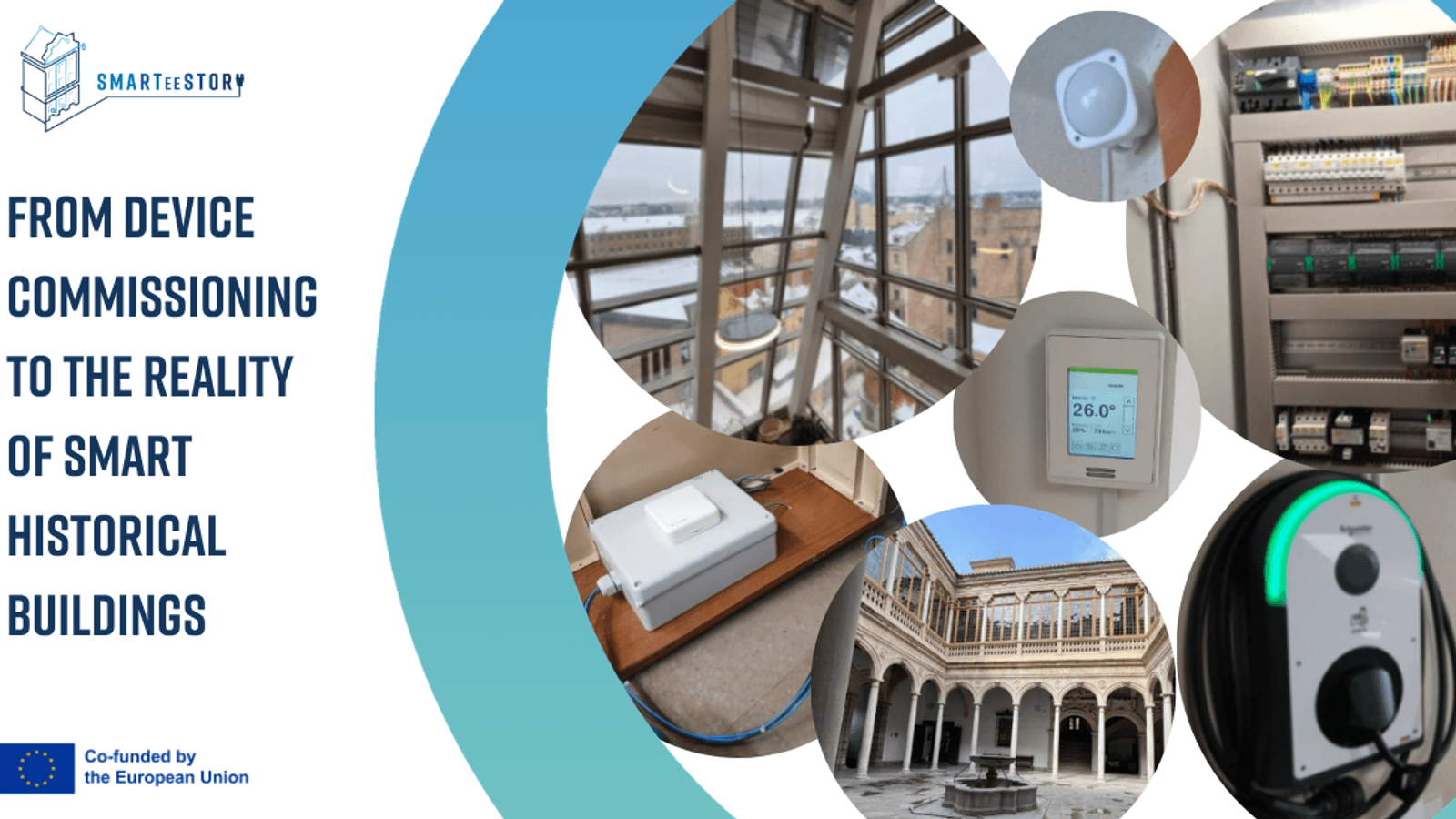
Introducing smart technologies into historic buildings is often framed as a technical milestone. In reality, commissioning is only the starting point. After installing sensors, smart devices, automation components and digital infrastructure, the devices are tested, calibrated and configured for operation and connectivity in the commissioning process.
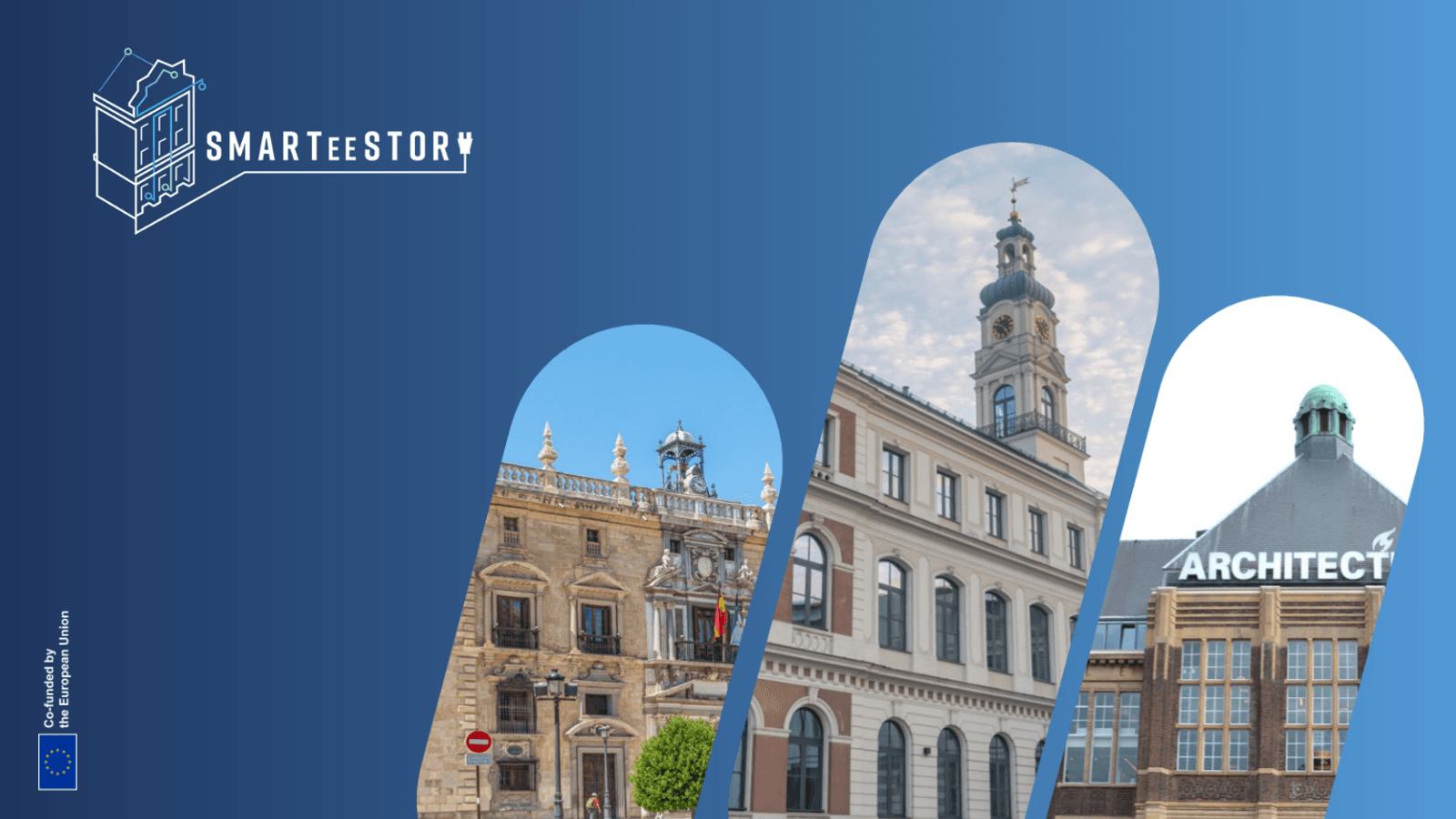
This marks the project completing a key phase: the integration of all these technologies into reliable and fully functional systems. Experiences from SMARTeeSTORY’s demonstration sites in Riga (Latvia), Granada (Spain) and Delft (Netherlands) show that the real challenge emerges during operation: when systems need to perform in complex, real-world conditions.
Here, technology must adapt to the existing infrastructure and systems, to building-specific constraints and to the daily operational routines and user expectations.
This highlights a crucial shift: smart readiness is not a fixed outcome, but a continuous process of optimisation and adaptation.
Historic buildings rarely allow for large-scale interventions. This limits the feasibility of traditional retrofit approaches and requires a different mindset. Instead of relying on disruptive upgrades, SMARTeeSTORY demonstrates the potential of non-invasive, flexible solutions, such as interoperable building automation systems, data-driven monitoring and optimisation and intelligent control strategies.
However, one of the key lessons from commissioning and early operation is that adaptability is essential. Historic buildings behave differently from modern ones, both in their physical characteristics and in how they are used. As a result, solutions must be modular, interoperable, and capable of evolving over time, rather than locked into fixed configurations.
From data to decision-making
Digitalisation has significantly increased the availability of building data. But generating data is not the same as creating value. Now that the demo sites have started generating data about the baseline indoor environmental conditions and energy use, one of the central challenges identified across the demonstration sites is ensuring that data actually supports better decision-making.
This means translating technical outputs into actionable insights, which is why the visual dashboard part of the cloud monitoring system developed by TERA in SMARTeeSTORY provides a valuable way of understanding how the buildings in the three demo sites are using energy. Such a tool makes systems usable and understandable for operators, and helps align system performance with real operational needs.
For the energy sector, this points to an important lesson that the value of digitalisation lies not in data itself, but in its ability to inform everyday decisions and improve performance in practice.
What this means for Europe’s building transition
The experience from SMARTeeSTORY offers several takeaways that are relevant far beyond the individual pilot sites:
- No one-size-fits-all approach: Smart retrofits must be tailored to each building and its context.
- Performance is dynamic: Long-term optimisation matters as much as initial installation.
- People are key: Building users and operators are central to achieving real energy savings.
Historic buildings may present additional challenges, but they also provide a powerful test case. If smart, data-driven solutions can work under these constraints, they can be applied across a much wider building stock.
Towards scalable real-world solutions
As Europe accelerates its efforts towards a more digitalised and energy efficient building sector, the focus is shifting from innovation alone to deployability and scalability. The transition from commissioning to real-world operation is where solutions prove their value. It is also where the gap between technology potential and practical implementation becomes most visible.
SMARTeeSTORY shows that bridging this gap is possible, but only when technology, buildings and users are considered as part of one integrated system.
About the author
Canesia Amarysti specialises in science communication and dissemination at Steinbeis Europa Zentrum, contributing to Horizon Europe projects in the fields of energy, sustainability and nature-based solutions. Her work bridges technical research with real-world users, helping to build awareness, capacity and collaboration across European innovation ecosystems.