Wind sector bust is a learning moment for climate policy states report
Power Engineering International
Posted on: 9 November 2023
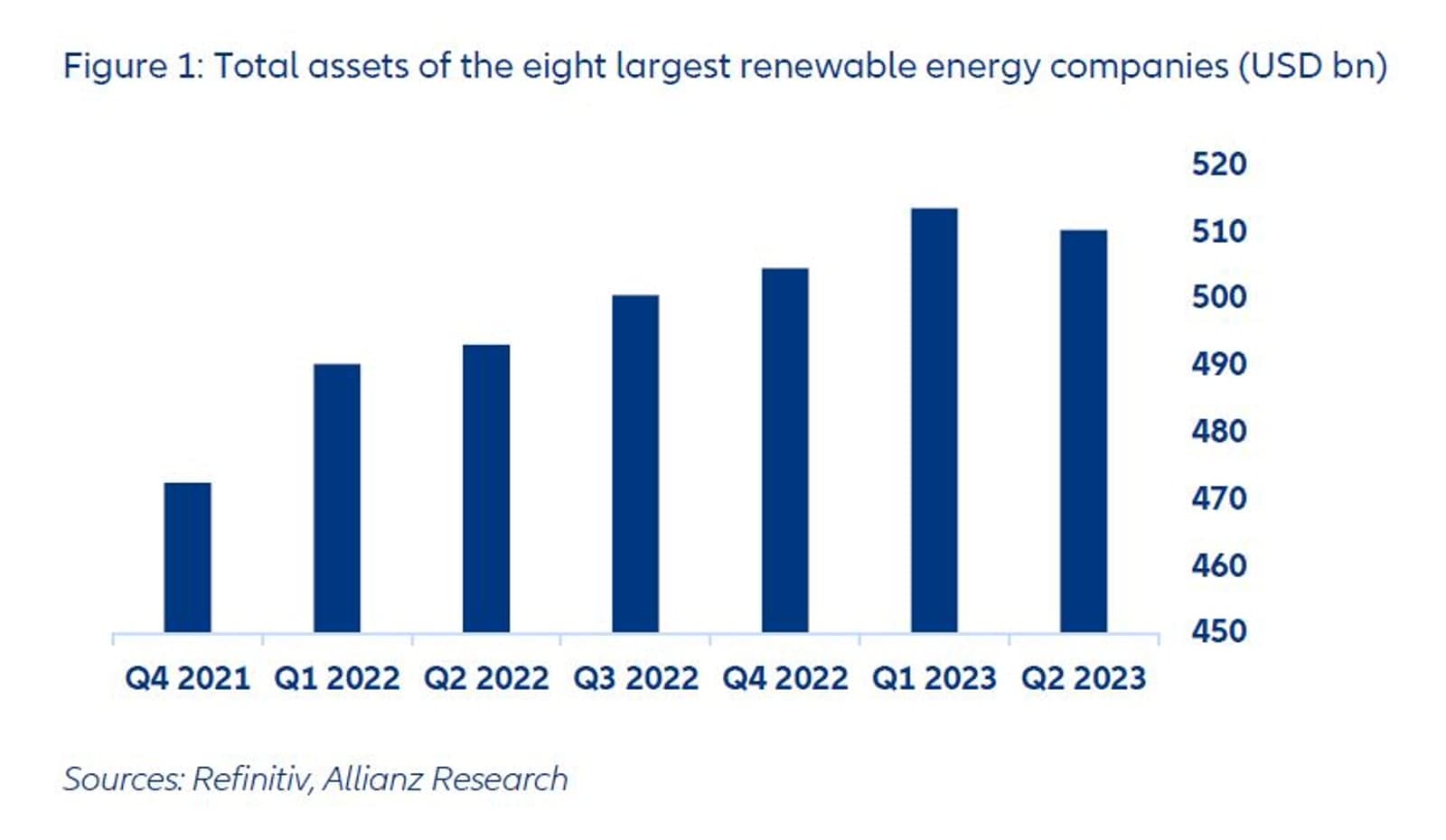
The eight largest renewable energy firms reported a $3bn decrease in assets in the first half of the year| with wind power projects in particular facing turbulent conditions.
The eight largest renewable energy firms reported a $3 billion decrease in assets in the first half of the year, with wind power projects in particular facing turbulent conditions.
This was highlighted in the latest What to Watch report published by global asset manager, Allianz, which shows the impact of rising costs and higher interest rates and the need for urgent policy support.
The case of Siemens Energy, a major player in the wind power sector, exemplifies the ongoing challenges: The company is seeking approximately EUR15 billion ($16.1 billion) in guarantees from the German government to stabilise its financial position after the discovery of defects in its newest onshore turbine models that will lead to losses and increased repair costs.
The whole sector is grappling with rising construction and financing costs, quality-control problems and supply-chain issues. Inflation and global energy-price fluctuations have also led to increased costs for wind power projects, casting doubt over the feasibility of many ventures.
Some projects in the US but also in the UK are at risk of being abandoned if governments do not offer support.
Have you read?
Ørsted shares fall after cancelling two US offshore wind projects
US offshore wind industry makes progress in Q3 despite woes
UK’s latest renewables auction yields zero offshore wind bids
As these projects were initiated before the energy crisis, with guaranteed feed-in-tariffs that were low, they are now becoming more and more unprofitable. Although balance sheets remain solid, firms have been writing down assets and providing lower guidance on earnings.
In total, between Q1 2023 and Q2 2023, the eight largest renewable energy firms reported a combined decrease of assets of $3 billion. Unsurprisingly, and as an indicator of further turbulence ahead, the Q3 earnings season started with another large impairment in wind assets of $4 billion by Orsted, one of the leaders in renewable energy.
Without government guarantees to act as a financial backstop for large industrial projects, climate targets could be at risk, according to Allianz.
Recent challenges underscore the need for a comprehensive reassessment of policies and support mechanisms for the renewables sector.
The UK has set a target of reaching offshore wind capacity of 50GW by 2030 (five times current capacities). However, these ambitions received a reality check when the last round of capacity auctions did not receive any bids as the current auction system does not provide sufficient returns on investment.
Ahead of the sixth round of auctions for Contracts for Difference (CFDs), industry representatives have suggested raising the bidding limits for new offshore wind farms by 25-70% to offset rising supply chain costs (the actual increase is reported to lie between 20%-50%).
In addition, renewable energy developers are lobbying the UK Treasury to eliminate the windfall tax on offshore wind farms and to enhance subsidies and tax incentives, for instance in the form of more generous capital allowances, which would offer tax relief to ease initial project costs.
Similarly, in Germany, wind-capacity expansion reached 1.3GW in 2023, just about a quarter of the highest additions seen in the last decade. The most recent onshore wind auction reflected this trend, with only 1.4GW of capacity being put forward by companies for development. This figure represents a decline from the 1.6GW offered in the preceding auction.
In response to the diminished interest and to sustain competition, Germany's regulatory body, Bundesnetzagentur, reduced the amount of capacity tendered from 3.2GW to approximately 1.7GW, a controversial move given the renewable targets.
Furthermore, the maximum rates for tenders increased from 5.88 cents to 7.35 euro cents per kilowatt-hour for onshore wind auctions and bidders asked for around 7.32 cents per kilowatt-hour.
So far, the responses from the UK and US (wind target: 630GW by 2035) governments have been comparatively less proactive than that of the EU (wind target: 420GW by the end of the decade).
The European Commission unveiled a wind power package of measures to assist developers, including measures such as a specific auction design (including that Member States index their auction prices and tariffs), financing support (develop de-risking tools and counter-guarantees with the EIB by the end of 2023 and increase clean-tech subsidies), level-playing-field (monitor possible unfair trade practices and activate the relevant policy instruments if necessary), addressing administration staff shortages (using digitisation to increase the numbers of permits that can be processed by current staff), and streamlining long approval procedures (offshore wind projects often waiting as long as five years for a green light).
As the demand for clean energy continues to grow and the expansion of wind power projects will remain essential to achieving global climate goals, addressing issues related to financing, quality control, supply-chain stability and government support will be crucial.