RENergetic: Community-empowered multi-vector energy islands
Guest/partner contributor
Posted on: 19 March 2024
The EU Horizon 2020 research project RENergetic aims to demonstrate the viability of turning defined urban areas into so-called urban energy islands.
The EU Horizon 2020 research project RENergetic aims to demonstrate the viability of turning defined urban areas into so-called urban energy islands.
By maximizing the level of energy autarky of a local energy system, RENergetic empowers renewable energy communities to inhabit energy islands based on an Economy of Quality, fuelling their involvement in processes traditionally hidden for local communities.
Optimising energy use: A trans-disciplinary approach
To achieve the goal of energy self-sufficiency, in a fully trans-disciplinary approach, the project focuses on a series of modular components that define the scope of research. These modular components, called ‘epics’ are:
- Heat supply optimisation.
- Local waste heat optimization.
- Heat demand response.
- Electric vehicle demand response.
- Electricity supply optimization.
- Electricity demand response.
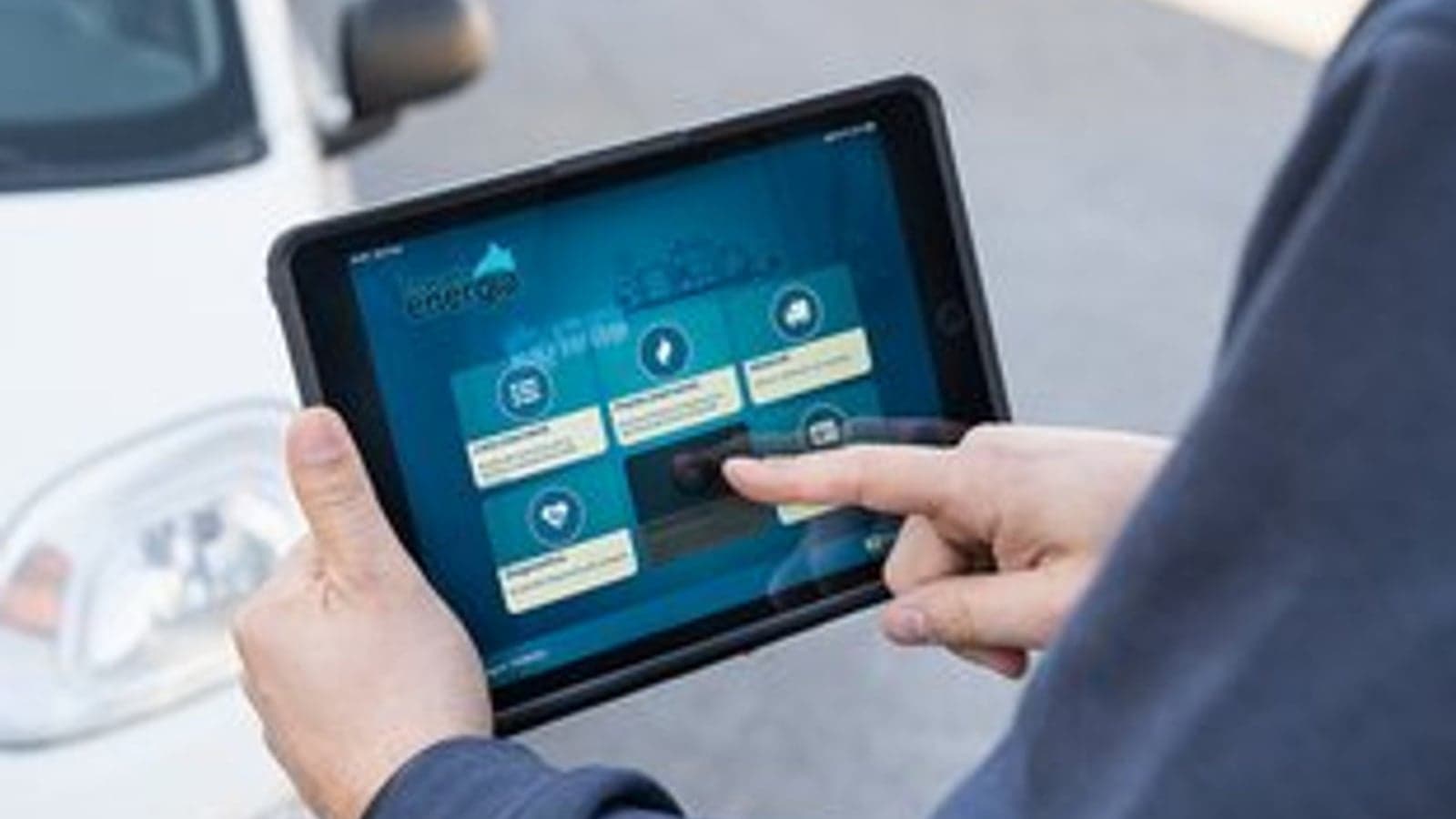
- Interactive GUI for energy managers and end-users.
- Social Campaigning.
Multi-vector optimisation: Balancing objectives
To implement these epics, a series of microservices is implemented as a software system, the functionality of which is determined by the collaboration of all affected disciplines, e.g., building physics, computer science, and behavioral psychology. Using this system, energy islands receive guidance on how to adjust their energy supply and demand for each of the energy domains which are electricity, heating, and mobility.
To avoid mismatching objectives of the individual domains, a multi-vector optimization approach is being developed that aligns the use of flexibility across energy domains. Furthermore, this approach is not only multi-vector but seeks to balance the objectives of self-sufficiency, reducing monetary costs, and reducing impact on the environment.
The recommendations from the services are made available through an application programming interface for automatic control. The EPIC “interactive platform” also makes these recommendations alongside key performance indicators accessible to users through a graphical user interface.
From Pilot Projects to widespread adoption: Studying the impact of RENergetic
To study the impact that the EPICs have on energy islands, trials are executed at three pilot sites within RENergetic. The pilots are:
- Warta Campus in Poznan, Poland,
- New Dokken in Gent, Belgium and
- the Hospital San Raffaele in Milan, Italy.
Each pilot has focused its effort on a sub-set of the epics. To enable the coverage of functionalities of the RENergetic Interactive system that targets the stability of the power grid, even for use cases that cannot be practically realized at one of the pilots, a virtual pilot is created. This virtual pilot provides a hardware-in-the-loop simulation platform and is used to verify the effectiveness of locally providing services for grid stability.
Building community acceptance
The collaboration with the pilots is the basis for the social side of RENergetic that covers the aspects of:
- Improving the design of the technical solutions by supporting the requirements analysis (as far as inhabitants are involved),
- Designing communication in a way to increase the acceptance or collaboration of the energy island inhabitants, and
- Rigorously analyzing the impact of foreseen measures e.g. in terms of social cohesion or rebound effects (i.e. increased consumption in spite of efficiency improvements).
This is achieved by a rich set of methods as collective energy actions, group-level exchange and technology acceptance and a series of surveys, and experimental trials.
Through this, the project can gain a deeper understanding of collectively driven motivators and barriers for collective actions in the energy island, best practices in communication and technical component design and impact created on social dimensions like social cohesion, norms or energy justice.
RENergetic: Paving the way for a viable economic model
Given the technical and social aspects of the RENergetic system, it is also vital to prove its economic viability. In doing so the RENergetic project has provided two major outcomes:
- A European analysis of regulative obstacles to energy islands across different regional levels
- Market analysis and description of RENergetic value propositions.
Impact assessment thus is viewed in terms of technical, economic, and social impact, represented by KPIs for these aspects. Through automatic data collection and calculation, a sub-set of these KPIs is integrated within the software solution.
Beyond the pilot: Replicating success
Finally, the efforts of the RENergetic project are intended to spread further than the individual pilots. Using the experience gained from the pilots a pathway to replicate the results at follower sites is defined.
To further support decision makers, an interactive experience in virtual reality is implemented. The virtual reality tool enables a quick re-creation of the existing energy island in a digital space.
Based on this configuration, it provides the users with hints towards which of the RENergetic EPICs best fit their use-case.
About the RENergetic consortium:
RENergetic involves several prominent European partners, both from academic and industrial segments: Inetum (Spain, France, and Belgium), Clean Energy Innovative Projects and Gent University (Belgium), Poznan University of Technology, Veolia and Poznan Supercomputing and Networking Center (Poland), Ospedale San Raffaele, Comune di Segrate and University of Pavia (Italy), Energy Kompass GMBH, Seeburg Castle University (SCU) in Seekirchen (Austria), University of Stuttgart, University of Mannheim and University of Passau (Germany).